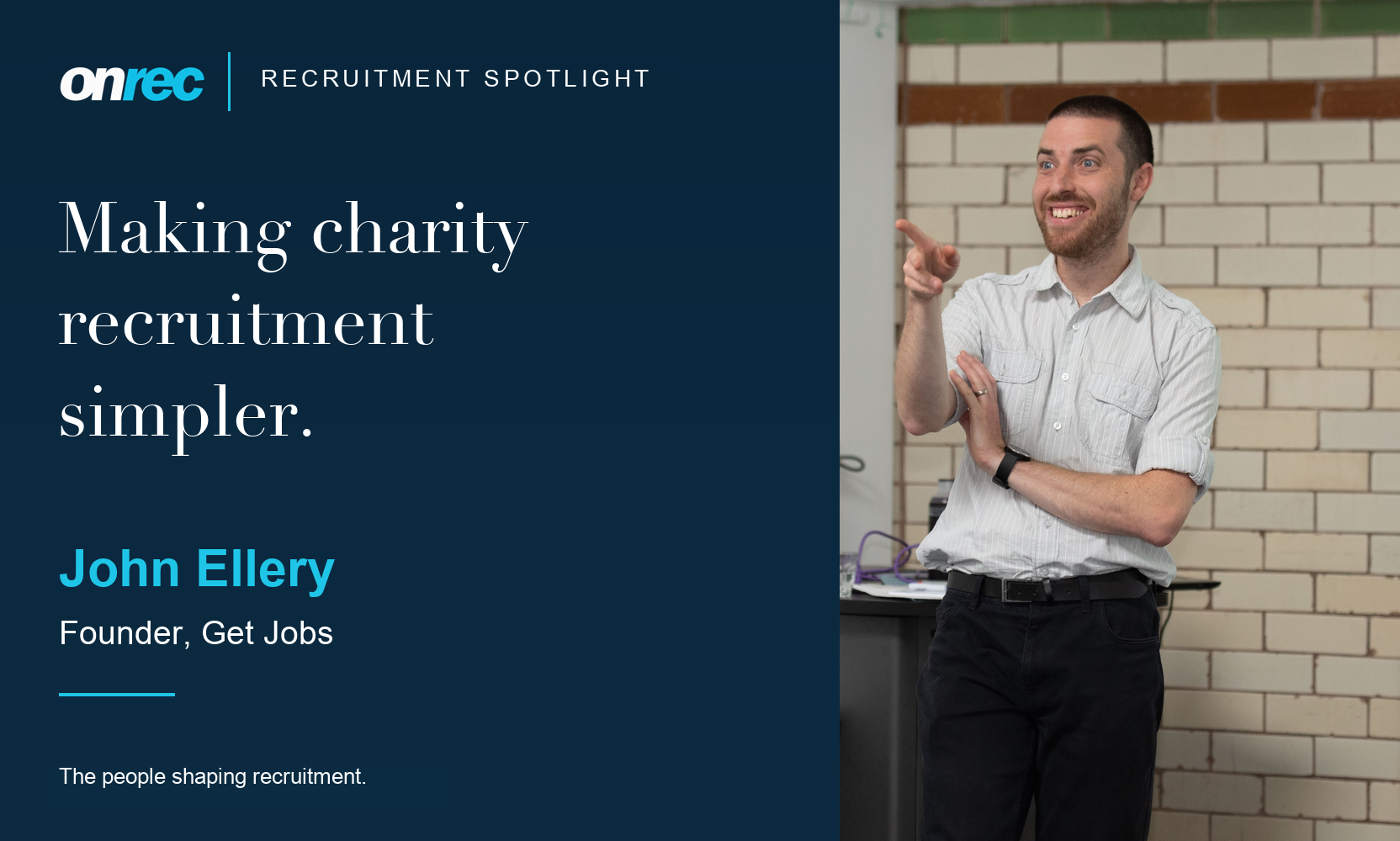
John Ellery, founder of Get Jobs, discusses why he launched a free charity-sector job board, the platform’s rapid early growth and the recruitment challenges facing smaller organisations.
“Keeping things simple doesn’t mean compromising on what we offer.”
— John Ellery, founder of Get Jobs
Building Get Jobs
John, you’ve spent 14 years working with the charity sector through Get Grants. What inspired you to move into recruitment and launch Get Jobs?
Get Jobs has been driven by requests from charities asking us to offer something different. At Get Grants, we are fortunate to speak to tens of thousands of organisations at our training and free events each year, and the cost of recruitment is a regular concern for small charities.
I wanted to create a jobs board shaped by the needs of smaller organisations rather than driven by profit. Having a “give it a go” attitude and a stubbornness to believe that anything is possible have also been useful personal drivers.
What gap did you identify in the charity recruitment market, and how is Get Jobs looking to do things differently from established job boards?
Through Get Grants, we heard that alongside the restrictive cost of advertising, many small organisations were frustrated by complicated sign-up processes, requirements to use ATS processes and confusing discount and pricing options.
I wanted Get Jobs to be as simple as it can be: a free service for any not-for-profit organisation to post roles, with no requirement even to create an account. For charities with a recruitment budget, there is an option to give vacancies more visibility through a Featured Job. We also trust recruiters to manage their application process by putting jobseekers directly through to their own system where possible.
Keeping things simple does not mean compromising on what we offer. For those who want it, we are integrated with many partners, offer AI moderation of vacancies, automatically issue API keys and instructions directly to accounts, and provide views and clicks data for each job as standard.
Growth and the changing charity recruitment market
You’ve grown from around 200 to 1,000 live vacancies since launching your new website in June. What has been driving that growth, and has the response surprised you?
While the growth in vacancies has been incredible, it has not come as a huge surprise because we believe the need for this space is significant. Over the first 12 months, we have built on the reputation and reach of Get Grants and made good progress.
Over the past three to six months, momentum has brought support and buy-in from a wide range of recruitment partners. We have been grateful for the backing of key charity-sector recruiters and agencies, who have promoted the platform to their clients.
With the reported closure of Guardian Jobs, how do you see the charity recruitment landscape changing? Are charities actively looking for more affordable or specialist alternatives?
For two decades, Guardian Jobs has been one of the go-to places for senior roles in the charity sector, but it remained relatively unreachable for less senior roles and, in particular, smaller organisations.
We can only guess why Guardian Jobs has decided to close, but charities tell us they are eager to explore more affordable alternatives. With questions remaining about how effective LinkedIn is for charity-sector recruitment, and recruiters unsure about the role AI will have for jobseekers, I think we may start to see the end of expensive job boards that promise the world but can underdeliver.
What are the biggest recruitment challenges facing charities right now, particularly smaller organisations working with limited budgets?
The biggest challenges are the quantity and quality of applications. While many organisations report huge increases in application numbers, they are not seeing an equivalent increase in the quality of applicants. This puts significant pressure on resources to assess large numbers of applications that do not always result in an interviewable candidate. For smaller charities without recruitment teams and specialists, that takes time away from other responsibilities.
This is where specialist job boards have an important role. You are unlikely to reach as many jobseekers as a general board, but you attract people who understand the sector and are eager to work within it.
Partnerships and looking ahead
You’ve already started working with major recruiters and agencies. What feedback have you received, and what are employers telling you they need from a charity-sector job board?
We have spoken to many major recruiters and agencies since establishing the board last year, but initially struggled to turn conversations into a greater number of vacancies being posted.
During our first 12 months, we operated through a WordPress website with limited functionality and simple job posting. While that was what small charities told us they needed, it became a barrier for larger recruiters that rely on integration, API processes and applicant data. Feedback from both groups helped shape the new website launched in June, which offers fuller functionality while retaining simplicity for organisations that want it.
Coming into recruitment from outside the industry, what has surprised you most about how the sector operates? Is there anything you think recruitment businesses could learn from the charity sector?
My biggest surprise has been the openness of recruiters, agencies and even other job boards to work in partnership with us. As a new entrant, we have been welcomed and supported. Many in the industry openly agree with the frustrations we were hearing from charities, and that openness on both sides has allowed us to build strong, supportive relationships with recruitment powerhouses.
If anything, it has reinforced how much recruitment businesses and charities have in common, particularly in their approach to partnership working and their commitment to achieving the best outcomes for clients. Personally, I have been very grateful for the support, encouragement and advice we have received. Without this willingness to support innovation that can challenge the status quo, we would not be growing so quickly.
Finally, what does the next 12 months look like for Get Jobs, and what would you most like to achieve as the platform continues to grow?
Compared with some established sector job boards, we know we have work to do to reach more jobseekers and become one of the go-to places for people looking for charity-sector roles. That is our big focus for the next 12 months: becoming a household name for jobseekers.
It is an ambitious aim, but based on the last six months, we are confident it is achievable.