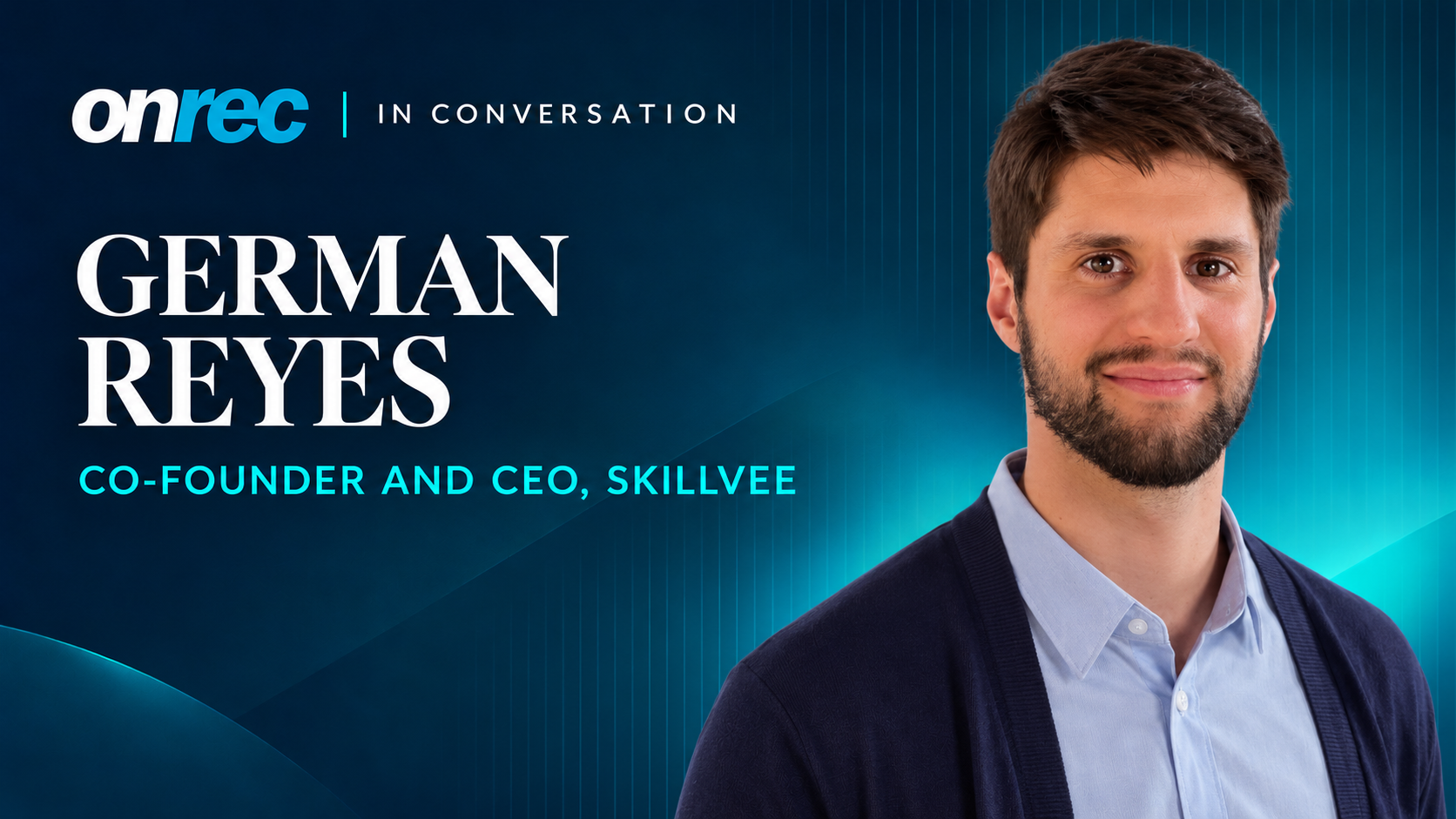
German Reyes, co-founder and CEO of Skillvee, discusses how recruitment teams can use AI-powered assessments without losing fairness, transparency or human judgement.
As AI-powered assessments become more common, how can employers be confident they're measuring genuine ability rather than simply rewarding candidates who know how to interact with AI?
Using AI well is now part of doing most office jobs well, so it should be part of what you measure. The best candidates use AI to move faster, then bring their own judgment to what it produces, deciding what to keep and what to change.
The way to assess that is to look at their thinking as well as the final answer. Ask candidates to explain their decisions. Which trade-offs did they weigh, and why did they discard the other options? In a sales role, that might mean asking why they offered a discount instead of longer payment terms, or why they took the deal to a more senior contact.
Someone who copied an answer they don't understand will struggle to explain it. Someone who used AI with good judgment can walk you through their reasoning step by step.
“The best candidates use AI to move faster, then bring their own judgment to what it produces.”
German Reyes, co-founder and CEO, Skillvee
Traditional CVs and interviews don't always reflect how someone will perform in a real role. Do you think realistic job simulations offer a better alternative, and where are their limitations?
Yes. A CV tells you where someone has worked, and an interview tells you how well they talk about their work. A simulation shows you the work. That gap has grown now that AI can polish a CV and coach people through interview answers. Research backs this: in a large 2022 review led by Paul Sackett, work samples ranked among the better predictors of job performance, while years of experience, the thing a CV shows best, barely registered.
Anyone can write “great at handling objections” on a CV. A simulated call with a difficult client shows within minutes whether it's true.
There are limits. A simulation only works if it accurately reflects the job the candidate will do. And some attitudes are hard to predict from a work sample: it shows how someone sells, but can't reliably tell you whether they have the drive to push through a bad quarter.
What should employers be looking for when evaluating the fairness and transparency of an AI-powered assessment tool?
Start with explainability. A model that turns a candidate into a score without showing why is a black box, and black boxes don't belong in hiring decisions. Every score should come with the evidence behind it, specific enough that a recruiter could read it and disagree. “Didn't ask about the client's budget before proposing a price” is evidence. “Communication: 62” isn't.
Then look at what the tool measures. Judging the work and the reasoning behind it is defensible. Inferring personality or ability from someone's face or voice is not.
Overall, you want a tool that's fair and inclusive for everyone. No one should be rejected automatically, every candidate should know in advance what's being evaluated, and anyone who needs a reasonable adjustment should always be able to ask for one and get an answer from a person.
“The simplest rule is that the AI gathers the evidence and a person makes the decision.”
German Reyes, co-founder and CEO, Skillvee
How can recruitment teams ensure that AI supports human decision-making rather than becoming a black box that determines who progresses?
The simplest rule is that the AI gathers the evidence and a person makes the decision. The tool should never reject a candidate on its own.
Make it easy to disagree with the tool, too. If recruiters can't see why a candidate got a certain score, they'll either accept it blindly or ignore it. If they can see the evidence, they can question it and overrule it when it's wrong.
Finally, use what the AI found to prepare the interview. If the assessment shows that a candidate offered a discount as soon as the client pushed back, the hiring manager can ask about it directly in a follow-up conversation: “Walk me through how you decided on that price.” That way the AI makes the conversation better instead of replacing it.
What do you think candidate assessments will look like in three to five years, particularly as AI becomes part of everyday working life?
They'll look much more like the job. Banning AI in an assessment will seem as odd as banning spreadsheets in a finance interview, so candidates will use the tools they'd use on day one and be judged on what they do with them.
CVs and written answers will count for less. One hiring manager told me his screening answers had started to look alike, with some candidates pasting in the same AI-written boilerplate word for word. Employers will get their evidence from watching people do the work and defend it.
I don't think the interview disappears. There will be fewer rounds, and the one that's left will start from evidence instead of small talk. Candidates will also expect something back for their time. If someone gives you an hour, they should get feedback on how they did, and today most of them hear nothing.
About German Reyes
German Reyes is co-founder and CEO of Skillvee, which builds job simulations for hiring. Candidates work through a realistic day in the role, get what they need from AI colleagues, and defend their work on a call. Employers use it to hire for sales, customer success, product and engineering roles. Before Skillvee, German had two exits in HR tech. He has an MBA from UC Berkeley.