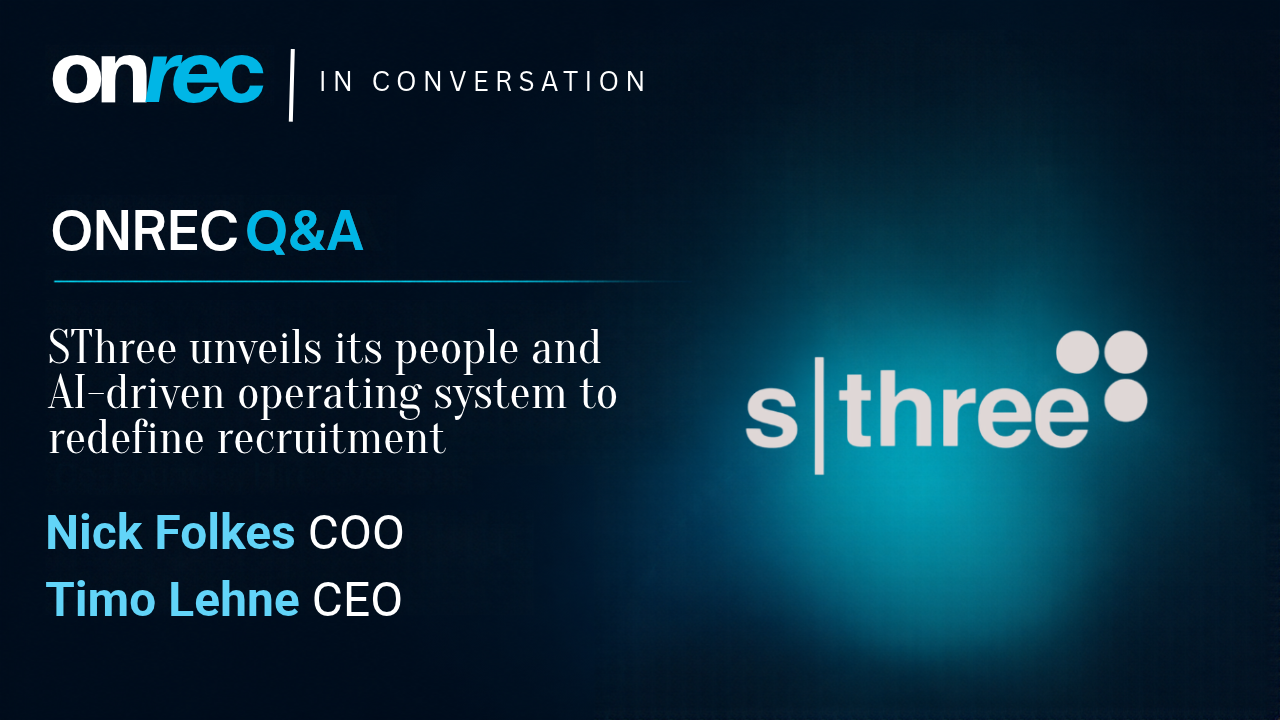
Q1. You’ve described this as the start of a new era for recruitment. What will change most significantly about the way recruitment businesses operate over the next few years?
Nick: The biggest change will be to the operating model itself. For decades, recruitment has grown in a straight line with headcount. More consultants meant more calls and more revenue, but every consultant still only has so many hours in a day. Most technology so far has been point solutions, where work goes back and forth between a system and a person. That slows things down and lets mistakes creep in.
What changes now is that the work flows end to end through one connected intelligence, from the first conversation about a role to the final invoice.
Timo: People make the decisions and own the relationships. That breaks the link between growth and headcount. It also changes what clients and candidates experience: speed, availability at any hour, and openness about what is happening and why. Transparency has long been our sector’s weak point, and I believe it will become a basic expectation.
Q2. SThree has developed an operating system coordinating 297 AI agents, with 140 already live. What can those agents do today that would previously have required consultants or support teams, and what impact are you seeing so far?
The part of the system that finds, interviews and shortlists candidates is live inside SThree today. When a consultant takes on a new role, agents with one defined job each gather everything we know about potential candidates at the same time, including CVs, employment history and qualifications. Another agent assesses each candidate against the role, and a separate agent checks that assessment. A voice agent then interviews the candidate at a time they choose, day or night, and a further agent writes up the report. Our longest interview has run for over 90 minutes, so this is a genuine competency assessment, not a tick-box screen.
That used to mean days of searching, calling and note-taking. Now the consultant receives a ranked shortlist with the reasons behind each ranking. So far the system has interacted with around 190,000 candidates, who rate the experience 4.5 out of 5. We can also add a new task in six to eight weeks.
3. You’ve emphasised keeping people at the centre of the process. As AI takes on more screening, interviewing and administrative tasks, how do you see the role of the recruitment consultant evolving?
Consultants will move from doing the work to directing it and applying judgement to it. The decisions that matter stay human. An SThree consultant always decides who is put forward to a client, and they can take over any piece of work at any time.
What a consultant brings can’t be found in a job spec. They know the client’s culture, how the team works, and what “good” really looks like in that business. When they apply that knowledge, it feeds back into the system and makes the next recommendation better.
Without the administrative load, consultants can spend their time where they add most value: advising clients on the workforce they need and the skills that will matter, rather than just filling the role in front of them. The role becomes more strategic and more advisory. Relationship-building, sector expertise and confidence working alongside AI will matter more than ever.
4. One of your ambitions is to tackle candidate ghosting by giving applicants greater visibility of their progress. How will this work in practice, and when do you expect candidates to start benefiting from it?
Timo: Anyone who has applied for a job and heard nothing back knows how demoralising it is, and it has damaged trust in our industry for years. Our answer is simple: everyone gets an answer at every step.
Candidates will be able to follow their application through every stage and see exactly where it has reached. If they are taken forward, they will hear what counted in their favour. If they aren’t, they will hear that too, including anonymised insight into what stood out to the client, so they can use it in their career. Candidates can also see what the system recorded about them after an interview and correct it if they think it has been misunderstood. Clients get the same openness. They will see why each candidate was recommended, with the assessment behind it, and can follow progress through to onboarding.
5. You’ve spent four years rebuilding processes and data before introducing the AI layer. What lessons have you learned that other recruitment businesses should consider before investing heavily in AI agents?
Nick: The first lesson is to fix your foundations first. When we started, our data was fragmented and every market worked differently. We rebuilt everything around one taxonomy and one process, so that the whole business now runs the same way from end to end. If you add AI to fragmented processes, you automate the fragmentation.
Second, this has to be led from the top as a strategy, not run as an IT project. It needs bold decisions and backing from the board.
Third, design for the end state. We chose to build an operating intelligence that runs whole processes rather than adding more point tools.
Fourth, build in governance, transparency and data ownership from day one. They are very hard to add later.
Finally, be honest that it is hard. Rebuilding how people work is painful, and we owe a great deal to our teams for seeing it through.
6. With AI increasingly assessing candidates and recommending shortlists, how are you ensuring fairness, transparency and accountability, particularly when an AI recommendation may be challenged?
Nick: These were built into the design from the start, not added later. The agent that assesses a candidate’s experience does not see who the candidate is, which reduces the risk of bias. A separate agent then checks that assessment. Candidates are always told when they are speaking with an AI agent.
Accountability sits with people. An SThree consultant always decides who is put forward to a client. An AI recommendation informs that decision but never makes it. Every step is recorded within our data and consent rules, so any recommendation can be traced back to the evidence behind it. If it is challenged, a consultant can review exactly what happened and why, and override it.
Transparency works both ways. Candidates can see what was learned about them and dispute anything they think is wrong. Clients see the reasoning behind each recommendation. We also test the system hard against manipulation, such as hidden text in CVs, so it can’t be gamed.
7. Looking ahead to 2030, do you believe recruitment businesses that embrace this kind of technology will have a significant advantage, and what will distinguish the most successful agencies?
Timo: Yes, but the advantage won’t come from the technology alone. Everyone will have access to capable AI models. What separates businesses will be what they connect them to.
The most successful agencies will have done the hard work underneath: clean data, consistent processes, and real expertise captured in a way AI can use. For us, that is 40 years of knowing how STEM hiring works. They will have redesigned how work flows rather than adding AI to old ways of working, which tends to bring only small gains.
They will also earn trust. Clients and candidates will expect openness, fast responses and clear reasons for decisions, and agencies that can’t offer that will struggle. Above all, the winners will use AI to make their people more valuable, not less.
Relationships, judgement and advice will still decide who clients choose to work with. AI gives consultants the time to focus on them.