Q1 Your research found that 29% of Gen Z workers use AI without their employer knowing. What's driving this secrecy, and should employers be concerned?
I think there are several factors at play here. Some people adopt tools faster than their organisation can govern them or train people to use them. Others aren't clear on what is permitted, or haven't been given the right tools and skills. Some may even worry that being open about using AI will make their employer question whether their role is still needed.
What struck me in our data is that these are often among the most engaged people. They report a better understanding of AI, and almost all (93%) want more training. So, employers should be concerned, but perhaps not for the reason they expect. When AI use is hidden, skills still develop, but outside any oversight of quality or risk, and any positive learning or use cases can't be shared. The goal should be to bring AI use out into the open, where organisations can build on it, with the right oversight in place.
Q2 More than a third of Gen Z respondents feel using AI at work is dishonest. What can employers do to change that perception and encourage more openness?
Employers need to make it clear that AI is a tool. What matters is the judgement people bring to how they use it, and that they take responsibility for the work they produce with it.
Young workers are entering the workplace having experienced varying messages about when AI use is and isn't acceptable. Employers can remove some of that uncertainty by being clear about when and how they want people to use these tools.
Clarity about expectations will only get us so far. People feel comfortable using AI when they are skilled enough to consider the output critically and stand behind the final result. Those skills will keep changing as the technology develops, so learning needs to sit alongside a career. That's why it is so important for organisations to provide time and support for individuals and teams to upskill and reskill continuously.
“You cannot close a skills gap that nobody thinks applies to them.”
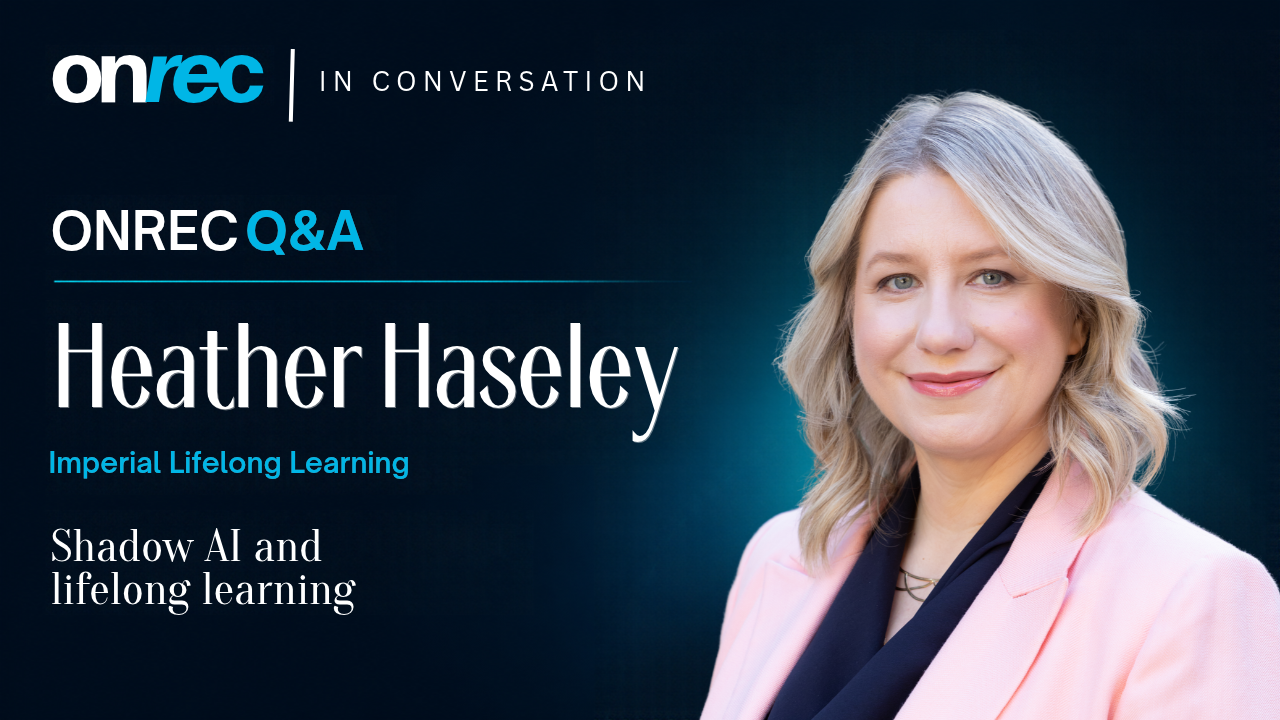
Heather Haseley, Chief Lifelong Learning Officer, Imperial Lifelong Learning
Q3 With AI changing the skills businesses need, where do you think the biggest gaps are emerging, and how should HR teams respond?
You cannot close a skills gap that nobody thinks applies to them. Our research found that people readily recognise a skills gap across their industry but are far less likely to see one in themselves. I think that may be the biggest gap of all, and it leaves employers with a distorted picture of where support is needed.
One way HR teams can respond is to embed lifelong learning as part of working life. That takes more than adding a single AI course to an existing training plan. If AI takes on the tasks through which people traditionally learned the skills of their profession, how do we make sure the next generation develops at least the same depth of knowledge and judgement as the generation before?
We need to rethink how skills are acquired from the ground up, from entry-level experience through to continuing professional development and executive training. That means employers and higher education working together to create opportunities for people to learn throughout their career, in a way that keeps pace with rapid technological change.
Q4 How can employers introduce AI policies that encourage responsible use without making employees afraid to experiment with new technology?
Experimentation is how people learn, so employers shouldn't discourage it. They do, however, need to create an environment where people feel able to try things openly, with clear guidance, training and support.
“They do, however, need to create an environment where people feel able to try things openly, with clear guidance, training and support.”
Heather Haseley, Chief Lifelong Learning Officer, Imperial Lifelong Learning
Effective and responsible AI use asks us to develop human skills. The value of anything an AI creates depends on the judgement and experience of the person behind the screen. Do they know how to tell a good answer from a merely plausible one? Do they understand the strengths and weaknesses of the tool they are using?
That judgement is built continually over a career. Policies should therefore give people clear boundaries, while leaving them enough space to experiment and learn with confidence.
Q5 Looking ahead to 2027, what's the one thing you think businesses should prioritise to make sure their workforce is ready for AI?
If I had to choose one thing, it would be to make lifelong learning part of how people work, rather than something they return to only when their role changes.
AI and other emerging technologies are developing too quickly for us to think of higher education as something we finish before beginning our careers. It needs to be continuous and responsive to how work is actually changing. Our research gives me real cause for optimism here: 85% of respondents are interested in formal education or training over the next two years.
Educators and employers now need to meet that appetite. That means giving people regular opportunities to keep their knowledge and skills current, experiment safely with emerging technologies and develop the expertise to use them well.