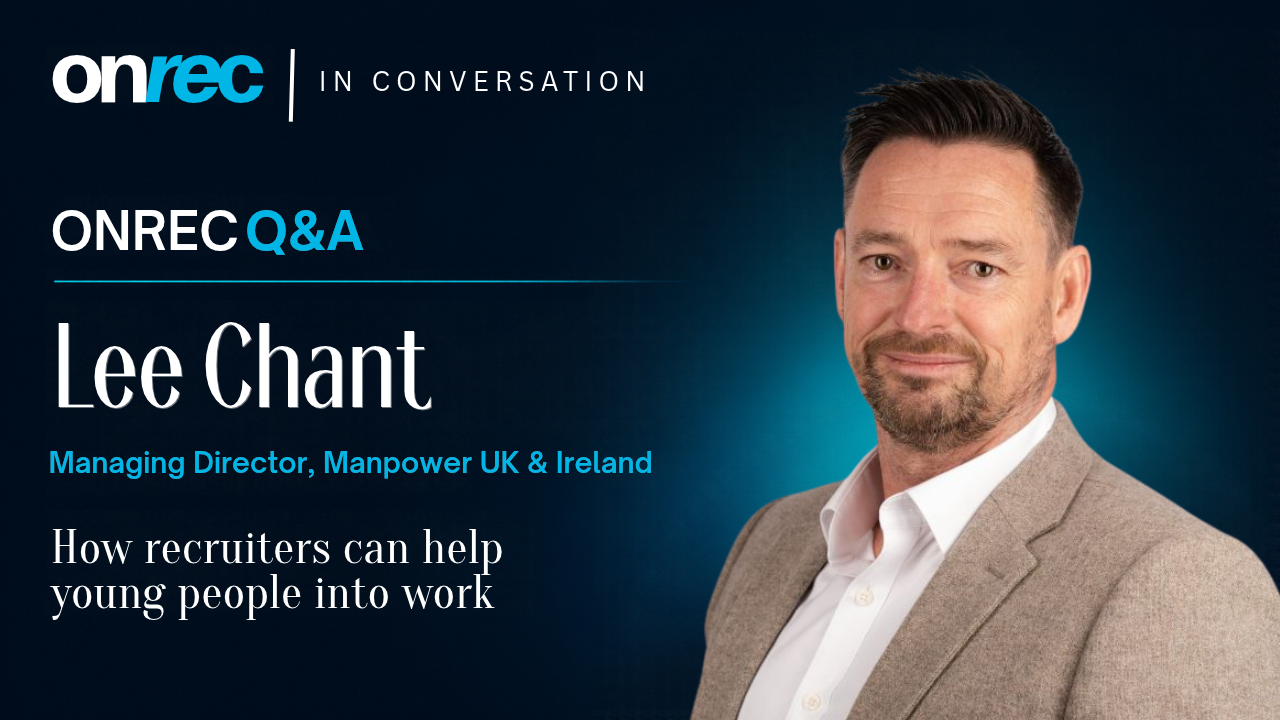
Following ManpowerGroup’s youth employment pledge, Onrec asked Lee Chant how recruitment agencies and employers can reach young people who are furthest from the labour market.
1. What are the biggest barriers preventing young people from entering employment, and where can recruitment make the greatest difference?
The biggest barriers are lack of experience, limited professional networks, lack of awareness of career pathways and low confidence among some young people, particularly those furthest from the labour market. The recruitment industry can make a significant difference by connecting potential with opportunity, challenging traditional hiring practices and helping employers access talented individuals who may otherwise be overlooked. Through our pledge we aim to encourage clients to thinking differently and to consider hiring young people. The pledge will also support young people through a series of tools aimed at building awareness and confidence.
2. What will the 100,000 opportunities commitment look like in practice, and how can agencies get involved?
Working with REC and their members we will drive a movement, committing to the creation of real pathways into work through permanent roles, temporary assignments, apprenticeships, internships and work experience. Around 870,000 people are working through recruitment agencies on a daily basis in the UK, so every agency can play a role, whether that's placing large volumes of candidates or working locally with employers, schools, colleges and community organisations to help young people take their first step into employment.
3. What changes would you like employers to make to give young people a fairer chance?
We'd like to see employers adopt more skills-first hiring practices and place greater emphasis on potential, attitude and aptitude rather than previous experience. Reviewing unnecessary qualification requirements, using strengths-based assessments and creating entry-level opportunities will ensure talented young people aren't excluded before they've had a chance to succeed.
“Securing a job is only the first step. Sustainable careers are built through ongoing support, including employability coaching, mentoring, skills development and clear progression opportunities.”
Lee Chant, Managing Director, ManpowerGroup UK & Ireland
4. What support will be most important in helping NEET young people build sustainable careers?
Securing a job is only the first step. Sustainable careers are built through ongoing support, including employability coaching, mentoring, skills development and clear progression opportunities. The most successful outcomes come when employers, recruiters and community partners work together to help young people build confidence and continue developing once they're in work.
5. How can recruiters help young people prepare for an AI-driven labour market?
Recruiters can help young people understand emerging skills needs and encourage continuous learning. While technical skills will evolve, qualities such as adaptability, curiosity, communication, problem-solving and resilience will remain critical. Our role is to help young people develop both digital confidence and the transferable skills that will support long-term employability.
6. How important is collaboration between recruitment businesses, employers, educators and communities?
Collaboration is essential. No single organisation can solve youth unemployment alone. Stronger connections between educators, employers, recruiters and community organisations help create clearer pathways into work, ensuring young people receive consistent support and don't fall through the gaps between education and employment. We all have a responsibility here.
7. What would success look like by the end of 2028?
Success is about more than achieving the targets around 100,000 work opportunities and placing 5,000 young people who are NEET into work. Success will be seeing more young people enter sustainable careers, more employers embrace skills-first hiring and stronger partnerships across industry and education. For ManpowerGroup, success will be measured not just by placements, but by progression, retention and the lasting impact we have on young people's careers and future prospects.
Key takeaways for employers and recruiters
- Review whether entry-level roles need experience or formal qualifications.
- Work with local educators and community organisations to widen access.
- Track retention and progression alongside placements.