AI has arrived in HR from two directions at once. HR people use chatbots for everyday work, and vendors add “AI” to every product they sell to HR. The first is a habit. The second is a purchase, and it needs a different skill.
Data from the PapaHR HR Index suggests the gap between the two is wide. Among HR professionals who completed our HR knowledge checklist:
- 81% say they can make good use of ChatGPT for routine daily tasks (n=67).
- 72% say they have had a demo of at least one HR system and a chance to test it (n=68).
- 42% say they know the possibilities and limitations of AI in HR automation (n=67).
- 21% say they can prepare a scorecard for evaluating automation systems (n=67).
In our HR audit checklist, 61% say their company has a budget for tools such as ATS, HRIS and recruiting tools (n=66).
These are self-reported answers from HR professionals who took free checklists in PapaHR between June 2024 and October 2026. They are not an audit or a representative sample, so treat them as a signal rather than a measurement. Method: papahr.com/en/hr-index.
Key takeaways
- Using AI in day-to-day work is not the same as being able to judge an AI product before a company buys it.
- Testing a tool on your own data and typical cases is essential; a vendor demo will show its strongest answers.
- Define the task, assess data protection and measure the return after three months.
Read together, the numbers describe a familiar pattern: many HR teams see demos, fewer know what AI can and cannot do, and only one in five say they can compare systems against their own criteria. That is how companies end up buying the best presentation rather than the best tool.
Using AI is not the same as judging it
I have taught AI in sourcing for about three years. In their homework, students send me the search queries ChatGPT wrote for them. Some are excellent. Some are primitive. The same tool gives very uneven results, and you only notice the difference if you understand how search works without it.
A vendor’s AI has the same problem, with one difference: in a demo, you see the best answer. Before you buy, ask to test the tool on your own data and your own typical cases, and look at the weak answers, not just the strong ones.
“If HR can answer these five, the AI conversation with finance becomes a business decision rather than a leap of faith.”
Mike Pritula, Founder, Mike Pritula Academy and PapaHR
Start with the problem and the number you want to change
Before any demo, write down which task you want to fix and how long it takes today.
At STB, a Ukrainian TV channel, I spent a lot of time on weekly recruiting reports before we had a recruiting system. I asked each recruiter for their figures, combined them, checked them and presented them to management. After we introduced an applicant tracking system, the report became one button. My only job was to make sure every recruiter kept their data in the system up to date.
That is the logic for AI too. If you know the hours a task takes now, you can check after three months whether the tool gave them back. If you cannot name the task, you cannot measure the return, and neither can your CFO.
Build a scorecard before the first demo
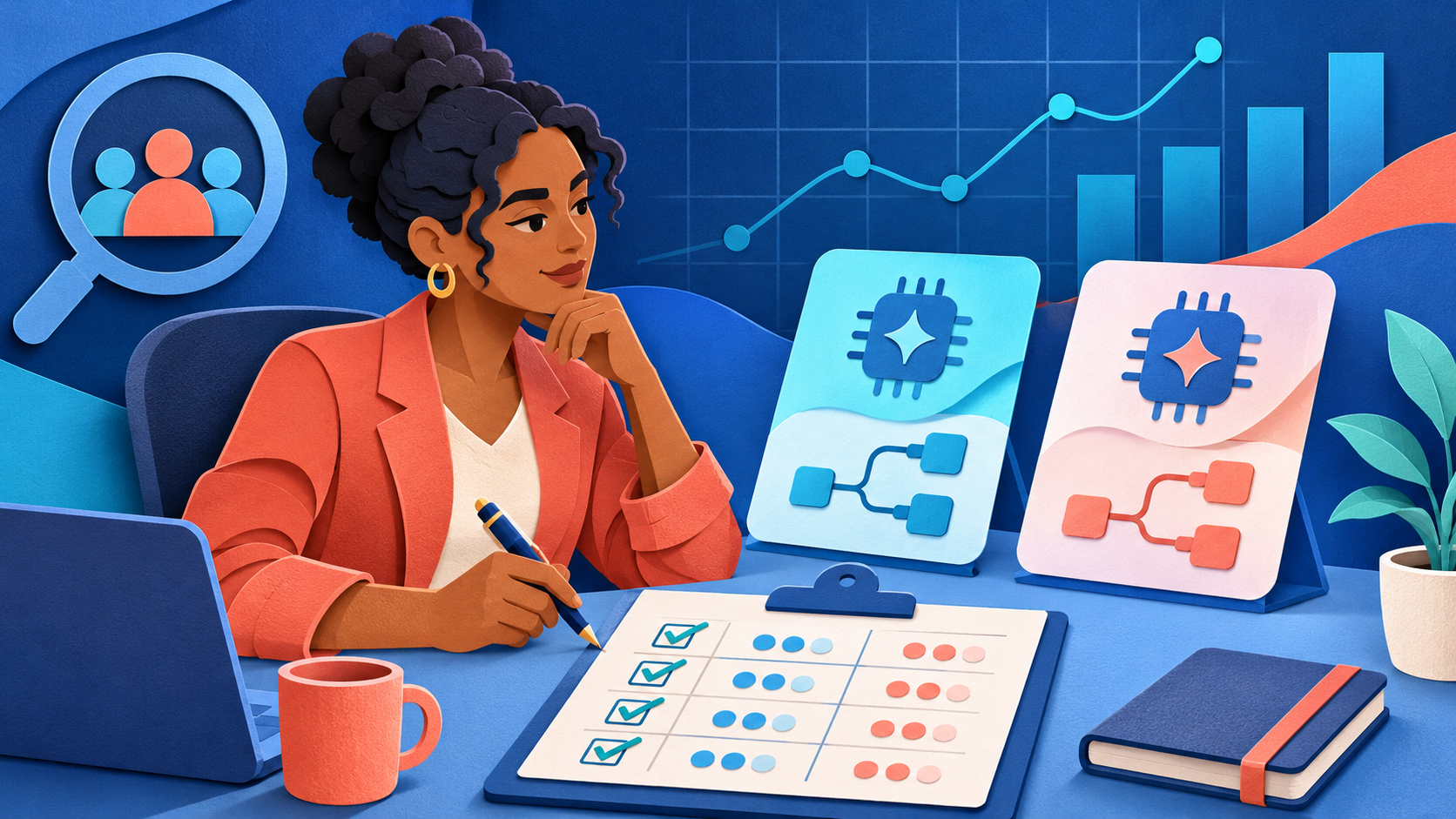
When I chose automation systems for the companies I worked in, I did not choose by impression. I made a table: my criteria in the rows, the systems in the columns, and a score for each system on each criterion. It gives you an objective picture of which system fits best.
Two practical notes. Write the criteria before you meet vendors, otherwise each demo quietly rewrites them. And do not accept the first price. When a company is growing and can promise more users, providers will often negotiate; with different providers, I have had discounts of up to 50%.
Ask where the data goes
Recently I read the homework of a student on my course about AI in HR. Her task was to build criteria for choosing an AI system. She started from data security and GDPR compliance, and listed what the system had to guarantee. That is the right place to start: in HR, AI works with people’s personal data, and trust is easy to lose.
Four principles are worth turning into questions for any vendor:
- Transparency: can you tell employees which data is collected and why?
- Consent and control: is data processed only where people have agreed, and can they see it?
- Minimisation: does the tool collect only what it needs?
- Security: how is data stored and transferred, and who inside the vendor can access it?
Plan the rollout, not just the purchase
A tool nobody uses has no return. At iDeals, I had to introduce several systems at once, and I knew that usually creates resistance. So we worked on emotions as well as logic. We put up posters and invited everyone at 4pm on a Friday. I told people they did not need to memorise anything: we would simply show what we now had, and then there would be a party. After the presentation we had cocktails and cupcakes in the kitchen. The rollout went smoothly, without resistance.
You do not need cupcakes. You do need a plan for the first weeks: who shows the tool, who answers questions, and how you remove the fear that the new system is a test.
Five questions before you sign
- Which task will this tool change, and how long does that task take today?
- Did we test it on our own data and cases, including the ones where it failed?
- Did we score every option against the same criteria, written before the demos?
- Where is our employees’ data stored, who can access it, and can we explain that to employees?
- How will we measure, after three months, whether it paid off?
If HR can answer these five, the AI conversation with finance becomes a business decision rather than a leap of faith.
About the author
Mike Pritula has more than 20 years of experience in HR, including roles at Wargaming, iDeals and the Ukrainian TV channel STB, and is the #1 HR instructor on Udemy. He is the founder of Mike Pritula Academy, an online HR school, and PapaHR, an HR system for small companies. He is based in Kyiv.