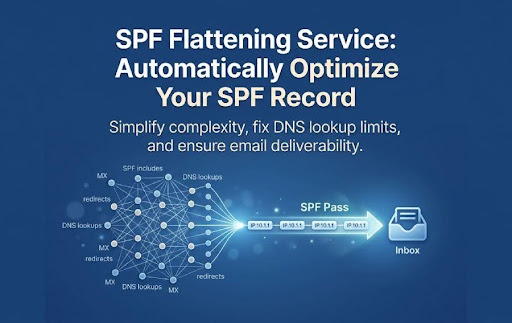
Instead of asking receiving email servers to follow a long SPF chain of third-party references, a flattened SPF record publishes the resulting IP addresses directly in DNS.
This matters because SPF, or Sender Policy Framework, is a core email authentication standard used to verify whether a sending server is authorized to send mail for a domain. When SPF validation works correctly, legitimate business emails from addresses such as sales@example.com or support@example.com are more likely to achieve an SPF pass and reach the inbox. When SPF validation breaks, the result can be SPF failures, an SPF error, or even SPF delivery failure depending on the receiver’s SPF enforcement and DMARC policy.
Flattening vs. Standard SPF Includes
A traditional SPF record often relies on an SPF include, such as:
v=spf1 include:_spf.google.com include:sendgrid.net include:mailgun.org -all
Each SPF include can trigger additional DNS lookups. If those include terms reference more include, redirect, MX lookups, or nested mechanisms, the total can grow quickly. An SPF flattener converts those references into a flattened SPF record containing the actual IP addresses used by the relevant email service providers.
Why It Supports Email Deliverability
Email deliverability depends on consistent authentication signals across SPF, DKIM, and DMARC. A valid SPF record helps prove SPF authorization, while DKIM signs the message and DMARC tells receivers how to handle alignment and policy enforcement. A reliable flattened SPF record reduces authentication uncertainty and helps maintain email deliverability for business emails sent through multiple email services.
The SPF 10-DNS-Lookup Limit
SPF has a strict SPF lookup limit: no more than 10 DNS lookups are allowed during SPF validation. This DNS lookup limit is one of the most common causes of SPF failures for organizations that use several cloud platforms, CRMs, marketing tools, ticketing systems, and email security vendors.
What Counts Toward the DNS Lookup Limit
Mechanisms such as include, redirect, a, mx, exists, and some SPF macros can generate DNS lookups. An SPF include may look harmless, but if it expands into several more DNS lookups, the full SPF chain can exceed the DNS lookup limit.
Common Lookup-Generating Mechanisms
The following can contribute to the DNS lookup limit:
-
include for third-party email services
-
redirect to another SPF record
-
mx mechanisms that require MX lookups
-
a mechanisms that resolve hostnames
-
SPF macros and exists mechanisms
-
Nested include terms from email service providers
Why Void Lookups Matter
Void lookups occur when a DNS query returns no useful result. Too many void lookups can also trigger SPF failures. A good SPF flattening tool identifies void lookups, reduces unnecessary DNS lookups, and helps keep the SPF record compliant with SPF rules.
Common Causes of SPF Failures
SPF failures usually happen because the SPF record is too complex, outdated, or incorrectly maintained. One major SPF limitation is that DNS evaluation must finish within the 10-lookup boundary. Another issue is SPF record length, especially when too many IP addresses are published without proper organization.
Outdated or Incorrect Provider Data
An Outdated SPF record can authorize old senders while missing current authorized IP addresses. If an email service provider changes its infrastructure and the domain owner does not update SPF record data, legitimate mail may produce an SPF fail. This is where SPF automation becomes valuable.
Manual SPF Flattening Risks
Manual SPF flattening creates a static list of IP addresses. That may work temporarily, but it creates a maintenance burden because vendors frequently change sending infrastructure. Without a cron job, monitoring process, or automatic SPF service, teams must repeatedly re-flatten SPF record data by hand.
Split SPF Records and Syntax Problems
Some administrators try split SPF records or an SPF record split to work around character limits. This often causes SPF validation problems because a domain must publish only one SPF record. Multiple SPF records can trigger an SPF lookup error or SPF error. Similarly, unsupported ideas like SPF exclude mechanisms may be confused with real SPF rules, creating SPF compliance issues.
How an SPF Flattening Service Automatically Optimizes Your SPF Record
An SPF flattening service continuously resolves third-party include terms, identifies authorized IP addresses, and publishes an optimized flattened SPF record. Unlike one-time manual SPF flattening, a dynamic SPF solution monitors provider changes and updates the record automatically.
How the Automation Works
A modern SPF flattening tool performs several steps:
-
Reads the current SPF record from DNS
-
Resolves each SPF include, redirect, MX, ip4, and ip6 mechanism
-
Counts DNS lookups against the DNS lookup limit
-
Detects void lookups and excessive SPF record length
-
Generates a flattened SPF record containing IP addresses
-
Performs SPF validation before publishing or recommending changes
This type of SPF record automation reduces the risk of SPF failures.
Dynamic SPF and Re-Flattening
With Dynamic SPF, the service checks provider SPF records regularly and re-flattens SPF record data whenever sending IP addresses change. This SPF update frequency may vary by provider and risk level, but the goal is the same: keep the flattened SPF record accurate without forcing administrators to update SPF record entries manually.
Examples of SPF Flattening Providers
Some organizations use third-party SPF service platforms such as Valimail, Valimail Instant SPF, or tools available through providers like dmarcduty.com. These services typically combine SPF automation, SPF validation, monitoring, and reporting. The best SPF flattening tool should integrate cleanly with DNS and provide visibility into every SPF include and IP address it authorizes.

Key Benefits: Fewer Errors
The most immediate benefit of SPF flattening is fewer SPF failures caused by excessive DNS lookups. A well-managed flattened SPF record helps avoid permerror conditions, SPF lookup error events, and SPF delivery failure scenarios.
Better SPF Validation Results
Because receiving email servers do not need to chase long include chains, SPF validation becomes simpler and more predictable. The domain is less likely to exceed the DNS lookup limit, and legitimate senders are more likely to achieve SPF pass results.
Key Benefits: Easier Maintenance
SPF maintenance becomes difficult as organizations add more email services. Marketing automation, invoicing systems, help desks, and security gateways may each require an SPF include. Over time, the SPF record becomes fragile.
Reducing the Maintenance Burden
A dynamic SPF solution reduces the maintenance burden by keeping IP addresses current. Instead of assigning an administrator to inspect every SPF include, track every vendor update, and manually update SPF record data, an automatic SPF service manages the flattened SPF record continuously.
This is especially important for companies using many email service providers. A third-party service with SPF record automation can monitor changes and prevent an Outdated SPF record from damaging email deliverability.
Key Benefits: Stronger Domain Protection
SPF flattening also supports domain protection by clarifying which authorized IP addresses can send mail for the domain. When combined with DKIM and DMARC, SPF helps protect against spoofing and unauthorized use.
Alignment with DMARC and SPF Enforcement
DMARC depends on authenticated identifiers aligning with the visible From domain. If SPF validation fails because of DNS lookups or malformed SPF rules, DMARC enforcement may reject or quarantine legitimate mail. A reliable SPF solution improves SPF compliance and gives security teams better control over SPF enforcement.
Choosing the Right SPF Flattening Service
The right SPF flattening service should do more than produce a one-time flattened SPF record. It should provide ongoing SPF validation, monitor DNS lookups, and alert administrators when the SPF record approaches the DNS lookup limit.
Capabilities to Look For
A strong SPF flattening tool should offer:
-
Automatic detection of every SPF include
-
Continuous monitoring of IP addresses
-
Support for ip4, ip6, include, redirect, and MX mechanisms
-
Alerts for void lookups, SPF record length, and SPF lookup limit issues
-
Safe SPF record automation with rollback options
-
Visibility into third-party service dependencies
-
Compatibility with DMARC and DKIM reporting workflows
It should also explain why a flattened SPF record was generated, which email services are represented, and whether the domain is at risk of SPF failures.

Implementing an SPF Flattening Service
Implementation usually starts with an SPF audit. The service reviews the current SPF record, identifies DNS lookups, maps the SPF chain, and confirms which email servers and email service providers are authorized to send.
Deployment Steps
A typical deployment process includes:
-
Inventory all business email senders
-
Confirm authorized IP addresses for each provider
-
Run SPF validation against the current SPF record
-
Generate a flattened SPF record with the SPF flattening tool
-
Publish the optimized SPF record in DNS
-
Monitor SPF pass, SPF fail, and SPF error results
-
Adjust SPF update frequency based on provider changes
For advanced environments, the SPF flattening service may work alongside a cron job, API integration, or managed DNS workflow. The goal is to keep the flattened SPF record accurate, reduce DNS lookups, and preserve email deliverability without introducing unnecessary SPF alternatives or risky split SPF records.