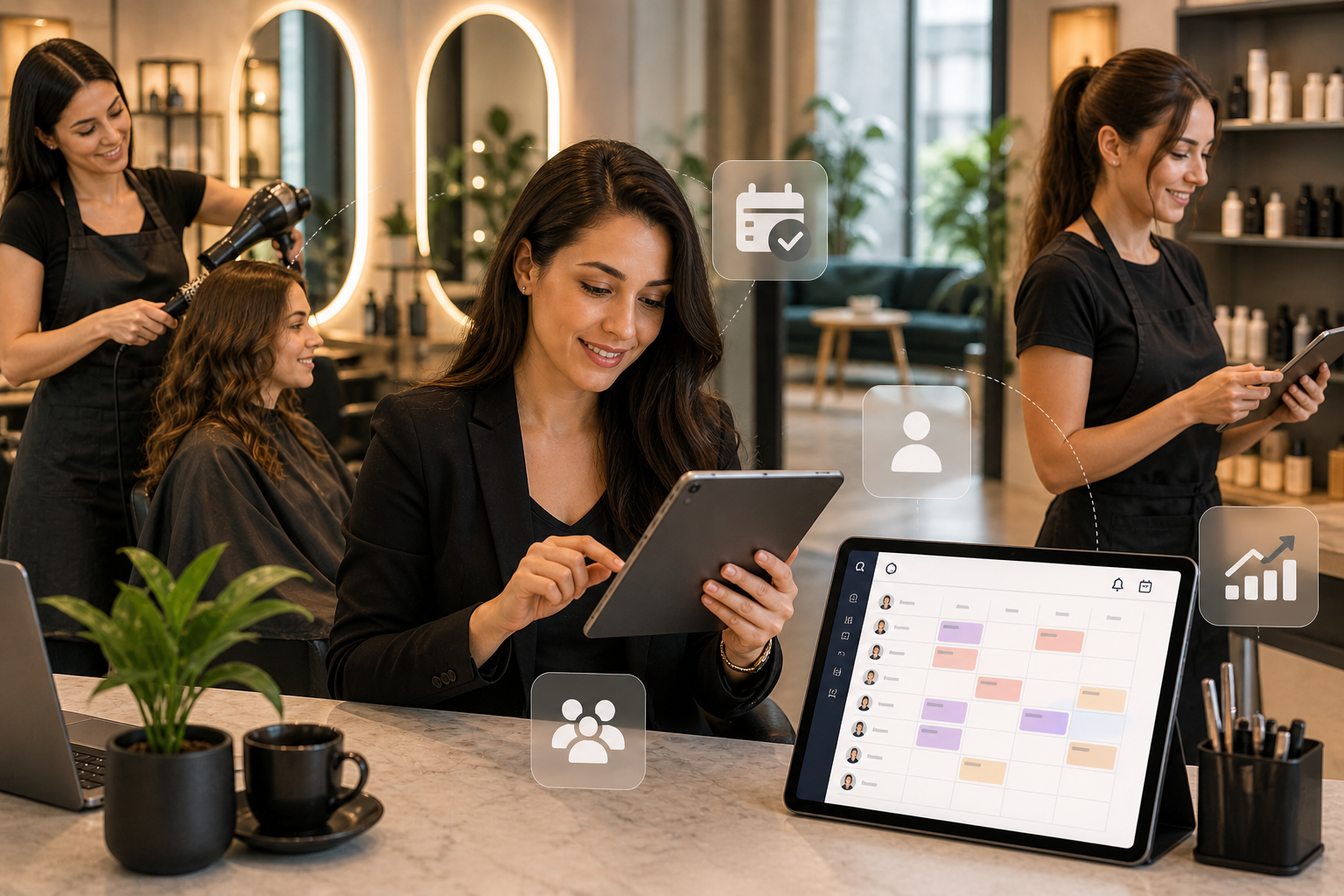
Owners of hair salons in the United States have started abandoning the conventional ways of management to embrace digital tools. The success of a salon in the long term depends on how well appointments are handled as the industry gets increasingly competitive. Salonist is a full-fledged platform that caters to the operational requirements of modern hair businesses. It offers salon owners the means to keep their business environment professional and profitable by combining scheduling, client data, and payment processing.
The Changing Expectations of U.S. Salon Clients
The modern consumer in the U.S. marketplace is mobile-first. Comfort is no longer a luxury; it is a necessity. Clients desire to make their hair appointments when they are commuting, have a lunch break or when they are at night and have some time to relax. They do not want to play the phone game with a receptionist anymore or wait till a salon opens its doors to check the time slot.
Moreover, customers demand a great level of personalisation. They like getting a text notification of their appointment and a follow-up message. With a saturated market, the salon with the least frictionless booking experience tends to have the most repeat business. The best method of delivering these changing demands to the owners is transitioning to a professional Hair Salon Appointment software.
Challenges Hair Salon Owners Face Without Smart Booking Systems
Relying on manual processes such as paper diaries or basic spreadsheets—creates several significant risks for a salon’s bottom line:
➔ Inconsistent Scheduling: In the absence of a centralised system, one can easily overbook a stylist or create huge and unproductive gaps during a day.
➔ The No-Show Epidemic: In the absence of automated reminders, a large proportion of clients merely forget their appointments. In the case of a hair salon, a vacant seat represents the loss of income that can never be reclaimed.
➔ Lost After-Hours Revenue: If your booking process is tied to your phone line, you are essentially closed to new business the moment your staff goes home.
➔ Data Fragmentation: When client notes are written on scraps of paper or kept in different places, it is impossible to track a client’s history or colour formulas accurately.
What Makes Salonist a Trusted Choice for Successful Salon Owners
Reliability, security and industry preferential functionality are appreciated by successful salon owners. Salonist has gained its reputation by offering a platform that appreciates the rhythm of a hair salon. It is not a generic scheduling application; it is developed as a beauty industry one.
Shop owners put their faith in the platform as they have one source of truth about their business. No matter what they are viewing, staff commissions, inventory, or the schedule the following day, the information is accurate and real-time. Such transparency enables owners to make better decisions regarding hiring, pricing and marketing as opposed to making decisions based on guesswork.
Key Features That Drive Success
The platform’s success is built on a suite of features that specifically target the friction points of salon management.
a. Seamless Online Booking Experience
The hair salon's online booking portal is the main touchpoint to new and returning customers. The interface offered by Salonist can be integrated with the salon website directly or connected with social media, such as Instagram and Facebook. It is a simple process: the client goes to the service, picks their stylist, and finds a time that fits them. This 24/7 availability has made the salon always open to the business.
b. Automated Reminders & Notifications
Automation is used to eliminate the communication load on the staff. Salonist will send automatic SMS and email messages as reminders, which are timed by the owner. This makes the appointment remain in the mind of the client. Moreover, when a reservation is changed or cancelled, the system automatically changes the calendar and informs the appropriate parties, which maintains the working process at a high level.
c. Client Management & Personalisation
The software acts as a digital filing cabinet for client data. It stores:
➔ Service History: Every cut, colour, and treatment the client has ever had.
➔ Chemical Formulas: Critical for ensuring colour consistency between visits.
➔ Personal Preferences: Remarks on their coffee preferences or their favorite areas of discussion. This information can enable stylists to offer a personalized experience that makes customers feel important and appreciated.
d. Staff Scheduling & Performance Tracking
The greatest asset of a salon is its team. Salonist enables operators to have a complex rota, monitor the performance of individual stylists, and automatically compute commissions. The owners can offer focused coaching and rewards by viewing the stylists with the highest retention rates or the highest retail sales.
e. Integrated Payments & Billing
Check out at the conclusion of a service must be speedy and professional. Salonist combines with some of the top payment processors to accept credit cards, contactless payments, and digital vouchers. It also makes the point of sale of retail products simpler, such that the bottle of shampoo being sold at the desk has been automatically subtracted from the inventory.
How Online Booking Impacts Revenue Growth in the U.S. Market
In the U.S., the implementation of hair salon online booking has a direct, measurable impact on Return on Investment (ROI).
➔ Increased Appointment Volume: Salons that offer online booking typically see a 20% to 30% increase in total appointments, largely due to "impulse bookings" made after hours.
➔ Higher Ticket Values: During the online booking process, the software can suggest "add-on" services, such as a deep-conditioning treatment or a brow wax. Clients are often more likely to click a button for an extra service than they are to ask for it in person.
➔ Improved Staff Utilisation: By filling gaps in the schedule with a "Waitlist" feature, the salon ensures that stylists are productive for as much of the day as possible.
Why U.S. Hair Salon Owners Prefer Automation Over Manual Processes
The shift toward automation is driven by a need for efficiency. In a high-rent environment like the U.S., every minute of a stylist's time is valuable.
➔ Error Reduction: Automation removes the risk of double-booking or miscalculating a bill.
➔ Labour Savings: With the automated booking and reminder, in many cases, the salons can reduce the number of administrative personnel, which will considerably decrease the overhead costs.
➔ Focus on Artistry: Stylists are not managers, but artists. Automation enables them to remain behind the chair and perform what they have been trained to do instead of being on the phone and filling out paperwork.
Tips for Choosing the Right Booking Solution for Your Hair Salon
Not every system of booking is created equal. In choosing a platform, take into considerations:
➔ Scalability: Will the software grow with you if you open a second or third location?
➔ Ease of Use: Is the interface simple enough for your least tech savvy staff member to use?
➔ Customer Support: Does the provider offer reliable support if the system goes down on a busy Saturday?
➔ Mobile Accessibility: Are you and your employees able to check the schedule using their phones even when not at the salon?
➔ Data Portability: If you decide to change systems in the future, can you easily export your client data?
Conclusion
Trust is the foundation of any effective hair salon and the relationship that the owner of the salon would have with their tools, the salon and the clients. The reason why salonist has emerged as a popular platform is that it offers a high-tech and trustworthy experience that streamlines the intricacies of day-to-day operations.
With the adoption of a professional hair salon appointment system, the issues of no-shows and administrative clutter can be resolved. The outcome is a company that operates more efficiently, retains its employees in a better mood and ends up earning more profits. The appropriate software is not only a help in the digital era, but also a competitive requirement.