
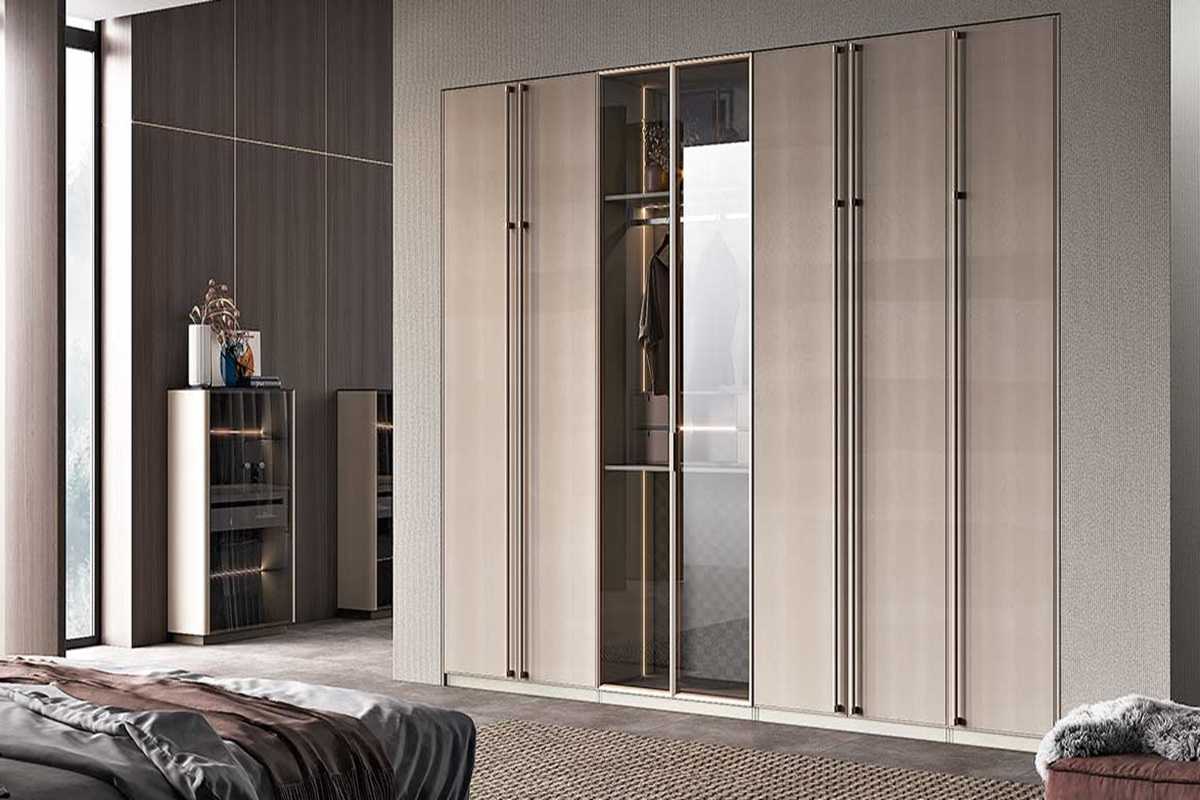
The Challenge of Choosing a Closet Manufacturer in China
China is home to tens of thousands of furniture manufacturers, but not all of them are built the same. For contractors, interior designers and property developers sourcing from overseas, the challenge isn‘t finding a supplier — it’s finding one that delivers consistent quality, meets international standards, and provides reliable support after the sale.
Among the many closet manufacturers in China, OPPEIN stands apart. With over three decades of experience, more than 20,000 employees, and a global footprint spanning over 100 countries, the company has helped redefine what buyers can expect from Chinese manufacturing. But setting a standard isn‘t about size alone — it’s about the specific choices a manufacturer makes, from how it builds its factories to how it defines quality.
Here is a fact-based look at how OPPEIN has become a benchmark for closet manufacturing in China, and why that matters for anyone evaluating suppliers.
1. Manufacturing at Scale Without Sacrificing Precision
The single biggest risk when working with unknown closet manufacturers in China suppliers is inconsistency. You receive a terrific sample, but the bulk order shows uneven finishes, misaligned doors, or hardware that doesn’t match the original.
OPPEIN solves this problem through vertical integration and automation. The company operates five major manufacturing bases — in Tianjin, Qingyuan, Wuxi, Chengdu and Wuhan — covering over 3 million square meters of production space. In 2021 alone, annual wardrobe output reached nearly 2.93 million units.
These aren‘t traditional assembly lines. In the company’s intelligent manufacturing base in Wuhan, single fully automated production lines are designed to process 600 orders per day; with five such lines running, the facility achieves a daily capacity of 3,000 orders. The base itself required 34 months to complete, spans 560,000 square meters (roughly 78 football fields), and reached ¥570 million in output within its first year of operation.
Why does scale matter for a closet manufacturer in China? Because volume manufactured under automated systems is inherently more consistent than output from workshops that rely on manual labor. Whether you need 50 wardrobes or 5,000, the final product from OPPEIN will match the original specifications — not guesswork, but precision manufacturing at industrial scale.
The company‘s commitment to quality has received formal recognition: its Qingyuan manufacturing base was certified as a “National Green Factory” in 2025, and its quality management system has been assessed at the 4σ advanced industry standard level, with a first-pass yield exceeding 98% and internal quality loss rates below 1%.
2. Leading the Industry in Environmental Standards
One of the most overlooked aspects of closet manufacturing is what‘s inside the boards — both in terms of safety and emissions. OPPEIN has taken a leadership role that few closet manufacturers in China can match.
The company holds ISO 9001 (quality management) and ISO 14001 (environmental management) certifications, as well as FSC certification for responsible wood sourcing, and is CARB compliant for low formaldehyde emissions. Its formaldehyde-free boards are certified under both US NAF and US CARB standards. The company also carries China‘s official “China Environmental Label” (the “Ten Circles” mark) for its wood-based furniture products.
The most significant indicator of OPPEIN‘s standard-setting role, however, is its participation in writing industry rules. The company has served as one of the primary drafting units for three Chinese national standards covering formaldehyde emission limits, odor grading and evaluation, and VOC emission classification for wood panels. These standards were developed in collaboration with the China National Forestry and Grassland Administration, the National Technical Committee for Wood-based Panels Standardization, the Chinese Academy of Forestry, and multiple research institutions.
GB 18580-2025, the compulsory national standard on formaldehyde emissions that OPPEIN helped draft, raised the mandatory limit to E0 grade (≤0.050 mg/m³) for the first time — setting a new baseline for the entire domestic panel industry. OPPEIN also co-authored T/CNFPIA 3041-2025, a standard focused on formaldehyde-purifying decorative wood panels.
Materials that you find inside OPPEIN wardrobes include the company‘s own “Eco-baked Paint” panels, which have demonstrated formaldehyde purification technology capable of breaking down airborne pollutants at a consistent 82.4% efficiency rate.
3. Global Design Capabilities Recognized by International Awards
Design is where OPPEIN has built a reputation that extends well beyond China. The company maintains a design center in Milan, Italy, and has established an International Designer Alliance working with renowned Italian designers.
Its wardrobe collections have won multiple international competitions. The “Star Atlas” (Xingtu) series, part of the company‘s high-end whole-home customization line, earned a Gold Award at the 2022 MUSE Design Awards in New York, in a contest that received nearly 40,000 entries from over 100 countries. In 2025, OPPEIN won the Bronze A‘ Design Award in the Furniture Accessories, Hardware and Materials Design Category for the company‘s Purify formaldehyde-purifying green panel — a designation given to the top 10% of designs submitted globally.
For buyers evaluating a closet manufacturer in China, design awards may seem secondary. But they matter because they indicate that a manufacturer‘s in-house design team can deliver products that appeal to international consumers, not just price-sensitive local buyers. OPPEIN bridges that gap: European-influenced aesthetics, powered by Chinese manufacturing and logistics.
4. A Truly Global Footprint
You cannot claim to set standards if your products only serve one market. OPPEIN exports to over 100 countries worldwide and, as of late 2025, its branded stores cover 62 countries and regions across six continents. The company has completed more than 180,000 international projects since its founding, serving over 15 million families.
In 2025, OPPEIN‘s overseas channel revenue reached ¥471 million, representing year-over-year growth of 9.66% despite a challenging global environment. Within that total, the overseas distribution channel grew by more than 20%, with particularly strong performance in Southeast Asia, Europe and the Middle East — each exceeding 30% growth.
The company‘s global distribution network has expanded significantly. In 2024 alone, OPPEIN opened more than a dozen new showrooms overseas, including a flagship store in Panama, whose newly inaugurated president attended the ribbon-cutting ceremony in person.
For contractors and designers outside China, this global reach has a practical implication: it creates accountability. A closet manufacturer in China that has shipped millions of units to customers in 100+ countries cannot afford to deliver inconsistent products or disappear after a complaint. OPPEIN has built its reputation on exactly that kind of durability — not just of products, but of the partnership itself.
5. Innovation Embedded in Every Order
The final piece of the standard-setting puzzle is operational. OPPEIN has built a digital platform capable of handling massive non-standard customization — every order is unique, yet every order is manufactured with assembly-line efficiency. The company's 2025 Manufacturing White Paper outlines the goal of building a fully digital platform, integrating laser-cut paneling, ERP systems, and CNC processing centers into a single workflow.
OPPEIN holds 788 authorized patents (including 20 invention patents), has participated in drafting 27 industry standards (leading 7 of them), and has published 33 specialized academic articles on furniture manufacturing and materials science. Its Eco-baked Paint panels and Nano-Active Purification Technology are proprietary innovations that address real health concerns — not just marketing claims.
For a closet manufacturer in China, innovation often remains stuck in R&D labs. At OPPEIN, it appears on the production floor, inside the panels, and across the supply chain.
The Bottom Line
Setting a standard is not about announcing it — it is about demonstrating it, day after day, across every part of the business. OPPEIN has done so by building factories at a scale that ensure consistency, leading the industry in environmental standards, winning international design recognition, serving customers across six continents, and embedding innovation into every unit produced.
If you are currently evaluating closet manufacturers in China and you value quality, transparency, and global accountability, OPPEIN deserves a close look. Visit the company‘s official website to explore product lines, request samples, or schedule a virtual or in-person factory tour. A standard-setter does not need to hide how the work gets done — and OPPEIN invites you to see exactly that.












