
Streaming as a career: why visibility is the bottleneck
Creator work now sits alongside freelancing and contract roles as a recognised way to earn. On Kick, the first step is the Affiliate programme, which requires 75 followers, five hours streamed and five streams, plus two-factor authentication. From there, income comes from subscriptions, tips and, later, brand deals.
The hard part is being seen. Kick's category pages sort streams by current viewers, so a new channel starts at the bottom of the list. That is the gap paid viewer services say they fill, and it is why they turn up in so many creators' budgets.
Know the rules first
Kick's rules, like Twitch's, prohibit artificially inflating viewer counts. The platform can remove views or take action against channels it believes are doing so. No provider can change that, and a seller who says otherwise is making a promise it cannot keep. Treat paid viewers as a short-term visibility tool with a known downside, not as an audience.
The checklist: what to look at before you pay
1. Delivery
Find out how viewers appear once a stream begins and whether they build up gradually or arrive all at once. A sudden jump from zero to several hundred looks odd to anyone watching, including potential sponsors.
2. Duration options
Some services sell viewers for a single stream, others for a set number of hours, days or a monthly plan. Match the package to your schedule; paying for hours you do not stream is wasted money.
3. Start time and control
Check whether you can choose when delivery begins, pause it or change it during a stream. A clear dashboard showing what is running is worth more than a long feature list.
4. Refill and refund terms
Read the terms before buying. What happens if delivery stops early, if the platform removes views or if you cancel? Clear written terms are a better sign than confident marketing.
5. Support
Streams happen in the evening and at weekends. Look for support that answers during the hours you stream, through live chat or tickets, and test it with a question before you buy.
6. Payment methods
Card payments through a recognised processor give you more protection than unusual payment routes. Be wary of sellers that accept only one obscure method.
7. Trials
A short free or low-cost trial lets you check delivery and the dashboard without committing to a large package.
Types of service compared
|
Service type |
Typical strengths |
Typical drawbacks |
|
Cheap reseller panels |
Low prices, many services in one place |
Little control over timing, limited support, vague terms |
|
Dedicated live-stream services |
Built for live streams, duration options, dashboards, trials |
Higher price per hour |
|
Private sellers on forums |
Flexible arrangements |
Hard to verify, little recourse if something goes wrong |
|
Paid social media ads |
Allowed by the ad platforms, targeted audiences |
Costs add up quickly, results depend on the content |
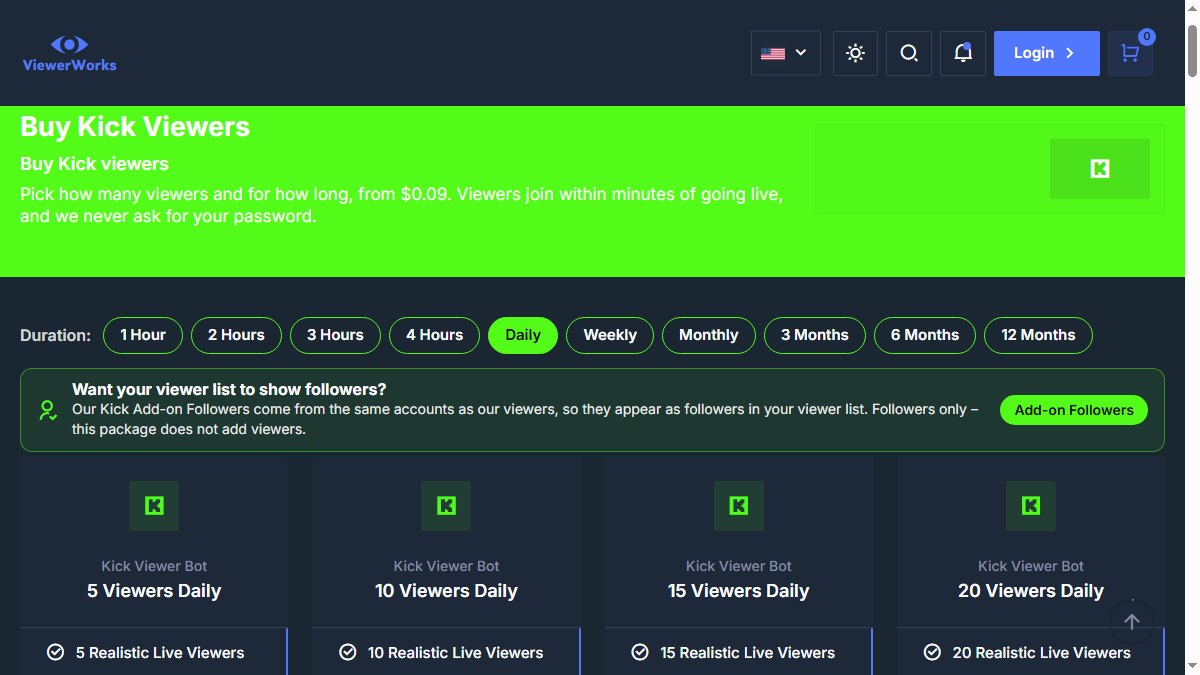
Dedicated services such as ViewerWorks fall into the second group, with duration-based Kick packages and a trial. As with any provider in this market, the platform rules above still apply.
Combining paid visibility with organic growth
Paid viewers do not chat, subscribe or return next week. If you use them at all, treat them as one small part of a wider plan:
• Stream on a fixed schedule so that new visitors know when to come back.
• Choose smaller categories, where a modest viewer count already puts you on the first screen.
• Cut short clips for TikTok, YouTube Shorts and Instagram after every stream.
• Collaborate and raid with creators of a similar size.
• Track average viewers, chat activity and follower growth separately, so you can see what organic viewers are doing.
A career view of the spend
Anyone treating streaming as a job should handle promotion like any other business cost. Set a monthly budget, record what you spend and compare it with followers, subscribers and income over several weeks. If paid visibility does not move the organic numbers, stop.
The skills that build a streaming career, from presenting and editing to community management and negotiating with brands, also transfer to roles in marketing and media. None of them can be bought, and they are what employers and sponsors look for in the end.

