A brain injury can have a significant and long-lasting impact on an individual's working life. While some people experience visible physical impairments, others live with less obvious cognitive, psychological or fatigue-related difficulties that can affect workplace performance and wellbeing.
For employers and HR professionals, supporting employees with a brain injury is not only about meeting legal obligations. It is also an opportunity to retain valuable talent, promote inclusion and create a workplace culture where people can thrive.
Whether an individual is returning to work following a brain injury or joining an organisation for the first time, the right support can make a substantial difference to both employee outcomes and organisational success.
Understanding the impact of brain injury in the workplace
No two brain injuries are the same. The impact will depend on factors such as the severity of the injury, the area of the brain affected and the individual's recovery journey.
Employees may experience a range of challenges, including:
- Difficulties with concentration and attention
- Memory problems
- Fatigue and reduced stamina
- Sensitivity to light or noise
- Communication difficulties
- Challenges processing information or multitasking
- Emotional and behavioural changes
- Ongoing pain or physical symptoms
Many of these difficulties are invisible. Employees may appear fully recovered while continuing to experience significant challenges that affect day-to-day work. For employers, understanding hidden disabilities is essential to avoiding misunderstandings and providing effective support.
Understanding employer responsibilities
Employers and prospective employers should be mindful of their obligations under the Equality Act 2010. Depending on the circumstances, a brain injury may amount to a disability, requiring employers to consider reasonable adjustments to remove workplace barriers.
While each situation will depend on the individual, organisations that take a proactive and collaborative approach are often best placed to support employees effectively while reducing legal and employee relations risks.
Creating an inclusive recruitment process
A candidate may choose to disclose that they have sustained a brain injury during the recruitment process, although they are under no obligation to do so.
Where a disclosure is made, employers should remain focused on the individual's skills, experience and suitability for the role. However, consideration should also be given to whether adjustments to the recruitment process would help the candidate perform at their best.
Examples may include:
- Providing a quiet interview environment
- Minimising distractions such as noise or harsh lighting
- Allowing additional time during interviews or assessments
- Offering breaks where needed
- Rephrasing questions on request
- Allowing candidates to refer to notes
- Offering alternative assessment formats, such as virtual or telephone interviews
Where written assessments form part of the recruitment process, employers should discuss whether any adjustments would assist the candidate in demonstrating their abilities fairly.
Supporting employees returning to work
Successful support begins with understanding how the brain injury affects the individual rather than relying on assumptions.
Employers should encourage open conversations about any challenges the employee is experiencing and discuss what support or adjustments may help them work effectively.
It is important to recognise that some difficulties only become apparent once an employee returns to work. During rehabilitation, individuals are often removed from the demands and pressures of the workplace. As they resume their role, they may become aware of limitations they had not previously identified.
This can be an emotionally challenging period and may affect confidence, wellbeing and mental health. Managers who approach these conversations with empathy, patience and flexibility can play an important role in supporting a successful return to work.
Making effective workplace adjustments
Reasonable adjustments should be tailored to the employee's circumstances and role. Common examples include:
Flexible working
Flexible working can help employees manage fatigue, rehabilitation appointments and ongoing symptoms. Adjustments may include flexible start and finish times, reduced hours, hybrid working, and home-working arrangements.
Assistive technology
Technology can help reduce workplace barriers, including speech-to-text software, dictation tools, screen readers, task-management and reminder applications, and adapted keyboards or other specialist equipment.
Adapting the work environment
Simple changes can have a significant impact on comfort, wellbeing and productivity, including reducing background noise, adjusting lighting, providing ergonomic equipment, and creating quiet spaces for focused work or rest breaks.
Reviewing workloads and responsibilities
In some circumstances, employers may need to adjust workload expectations, prioritise key tasks, extend deadlines where appropriate, reduce competing demands, redistribute certain responsibilities, and provide additional supervision or support.
These measures can enable employees to perform effectively while rebuilding confidence and capability.
The role of Occupational Health
Occupational health professionals can provide valuable support to both employers and employees following a brain injury.
Occupational health assessments can help organisations understand how an injury affects an employee's ability to carry out their role and identify practical workplace adjustments.
They can also provide guidance on return-to-work planning, reasonable adjustments, risk management, sickness absence management and ongoing workplace support.
For HR teams and managers, occupational health input can provide an objective framework for decision-making and help ensure support remains appropriate as an employee's needs evolve.
Why a phased return to work matters
A phased return to work is often one of the most effective ways to support an employee following a brain injury.
Rather than returning immediately to full duties, employees gradually increase their working hours and responsibilities over an agreed period. This allows both parties to assess progress and identify additional support needs before problems become barriers to long-term success.
A phased return can help employees rebuild confidence gradually, reduce anxiety about returning to work, manage fatigue and other symptoms, re-establish routines, and better understand their capabilities in a working environment.
For employers, a phased return can support compliance with legal obligations, reduce the risk of setbacks and prolonged absence, improve retention, enable earlier identification of workplace challenges, and provide opportunities to review support arrangements.
A well-managed phased return often results in a more sustainable and successful long-term outcome for both the employee and the organisation.
Prioritising communication and workplace inclusion
Open and ongoing communication is one of the most important factors in supporting an employee following a brain injury.
Recovery is rarely linear, and support needs may change over time. Regular check-ins provide opportunities to discuss progress, address concerns and adjust workplace support where required.
Maintaining communication can also help reduce feelings of isolation, which are common among individuals adapting to life after a brain injury.
Employers should also be mindful of confidentiality. Some employees may not wish to share details of their injury with colleagues, and these preferences should be respected. At the same time, organisations should ensure employees are protected from inappropriate comments, assumptions or discriminatory behaviour.
Disability awareness training can also help managers and teams better understand hidden disabilities and contribute to a more inclusive workplace culture.
Key takeaways for employers and HR teams
Returning to work following a brain injury can present complex challenges, but with the right support in place, it can also be a positive and successful experience for both employee and employer.
By taking a person-centred approach, engaging in open dialogue and implementing appropriate adjustments, employers can help individuals perform at their best while building confidence and independence.
Beyond legal compliance, effective support can improve employee retention, reduce absence, strengthen engagement and reinforce an organisation's reputation as an inclusive employer. Creating a workplace where employees feel valued and supported ultimately benefits both people and business performance.
For more information, please visit our Returning to work after brain injury hub and our BBK Manifesto 2026: Create workplaces that work for everyone.
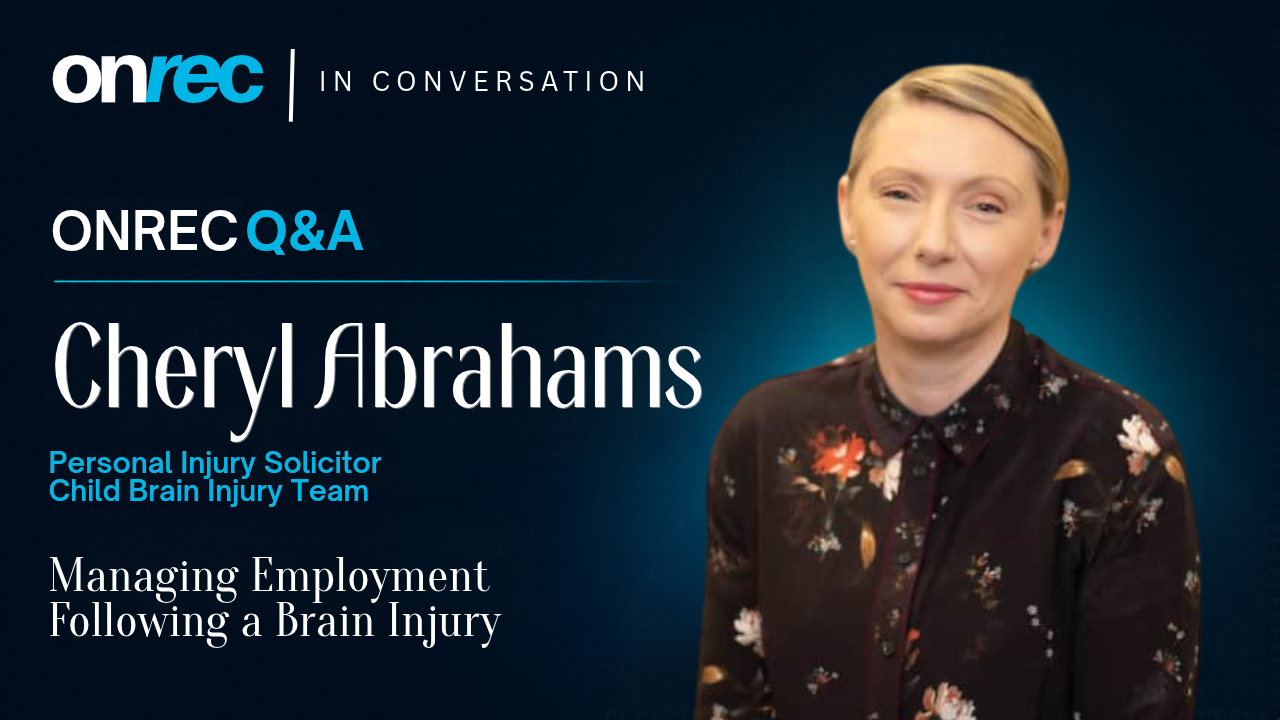
Cheryl Abrahams is a personal injury solicitor and a Partner in the Child Brain Injury Team at Bolt Burdon Kemp.