
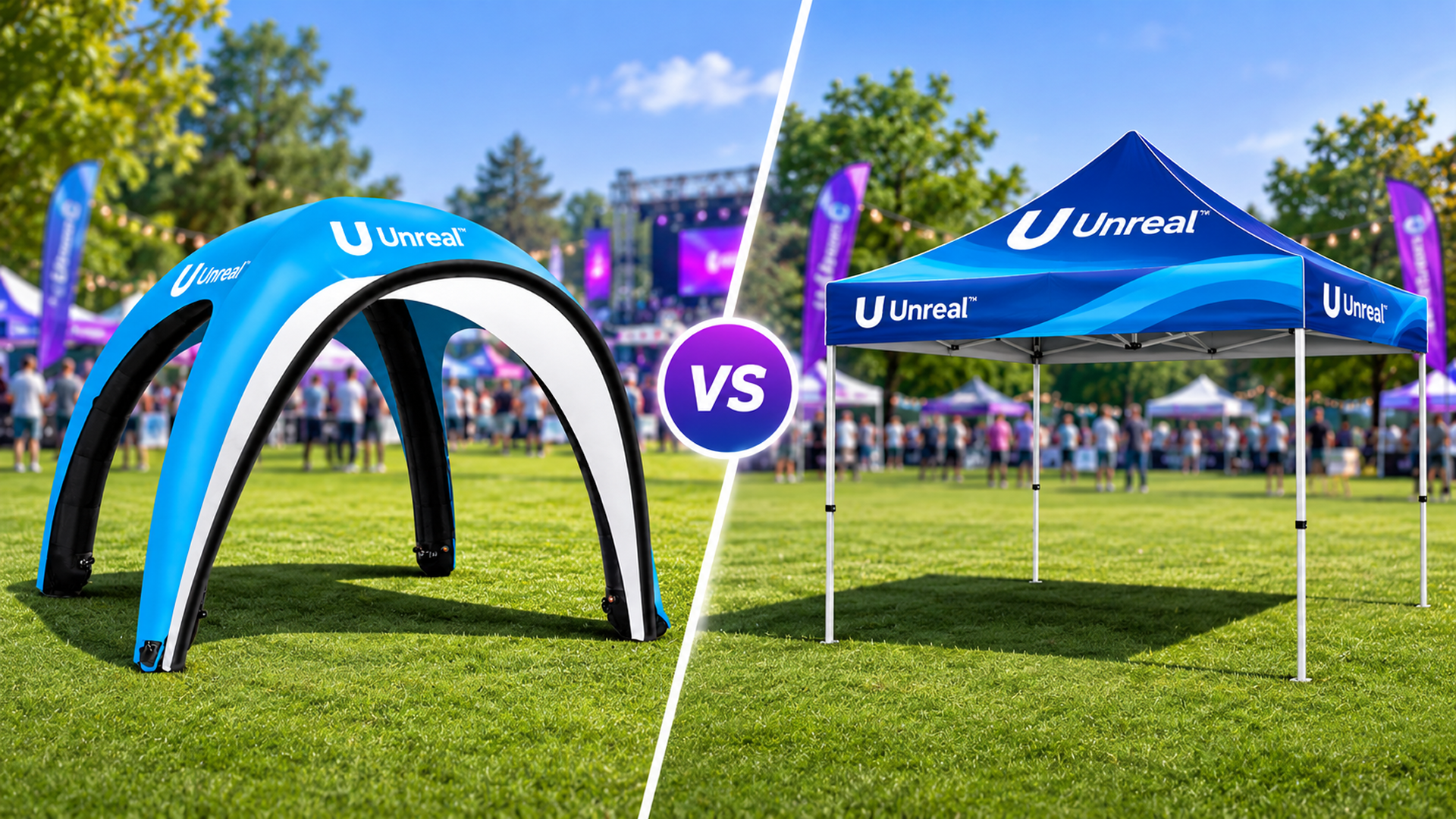
If your team runs events every weekend with tight load-in windows, the right tent is the one your crew can set up, strike and transport reliably. Pop-up canopies generally suit frequent, standard-size bookings, while inflatable canopies make more sense for fewer, high-visibility appearances. The practical comparison really comes down to setup systems, crew skills, storage and the total effort each format demands across a season.
Two Different Setup Systems
These two formats solve the same problem in very different ways. A pop-up canopy uses a folding metal frame that the crew manually expands, locks into position and then raises to the chosen height. Its structure is rigid once the joints and legs are secured.
An inflatable canopy replaces poles with air-filled beams. A pump fills the chambers until the frame holds its shape, and the fabric roof usually stays attached to the beams.
Beyond that basic difference, details vary widely by model. Pump types, packed size and weight, whether parts can be repaired or replaced individually, and how much access space the crew needs on site all differ between manufacturers. Compare specification sheets side by side instead of relying on general assumptions about either category.
When an Inflatable Canopy Works Well
Inflatables tend to earn their place where visibility matters more than repetition. Think of product launches, large festival sponsorship zones or a flagship trade show appearance.
For teams that make a handful of marquee appearances each year, an inflatable tent can suit a larger campaign where the crew has time, space and training to handle air-frame setup properly. The curved, oversized form draws attention in ways a standard frame usually cannot.
Plan for the operational side, though. Pump power requirements depend on the model: some need power only during inflation, while others may call for a continuously running blower. Confirm this before booking a site without electricity.
Anchoring is equally important. Air-supported structures still need secure tie-downs, stakes or ballast suited to the ground surface, installed according to the manufacturer's instructions. Assign trained crew members who understand both the inflation and anchoring steps.
When a 10x10 Pop-Up Works Better
Teams on a busy market circuit often find that a pop-up frame fits their routine better. Many farmers markets, craft fairs and community events allocate standard 10x10 plots, and a matching canopy drops neatly into that footprint without awkward overhang.
Alignment is also easier. When neighbors use similar frames, booths line up predictably and walkways stay clear, so returning crews settle into a familiar layout.
Custom canopy tents 10 x 10 works well for regular standard-size bookings, though options differ: some configurations include a frame and printed top together, while others offer components separately. Choose the combination that matches what you already own.
Transport is usually simpler, since folded frames fit in many vans and some come with wheeled bags. Accessory choices such as sidewalls, half walls, weights and printed valances let you adapt one base setup for different events without buying a new structure.
Make the Choice Using Your Actual Event Calendar
Before deciding, pull out last year's schedule and look at the patterns. Several factors should shape the decision:
-
Frequency: How many events do you run per month, and how many days apart?
-
Crew size: How many trained people are available at each site?
-
Time windows: How long does each venue allow for load-in and teardown?
-
Storage and transport: Where will the tent live between events, and what vehicle carries it?
-
Footprint and environment: Do most venues assign fixed plots or open ground, and are sites typically paved, grassy or exposed?
-
Maintenance and total cost: What will cleaning, repairs, replacement parts and staff hours add up to over a season?
Consider two scenarios. A coffee roaster attending three markets every weekend with a two-person crew likely benefits from a pop-up that fits standard plots and loads into a small van. A beverage brand appearing at four large festivals a year, each with a dedicated setup crew and generous open space, may justify an inflatable centerpiece. Teams with mixed calendars sometimes own both formats.
Matching the Tent to the Workload
Neither format wins in every single situation. Pop-up canopies usually suit frequent bookings, small crews and standard plots, while inflatables can justify their extra planning at occasional high-profile campaigns. Base the final decision on your real event calendar, crew capacity and venue conditions. Whichever you choose, follow the manufacturer's guidance and take the structure down when weather turns unsafe.
Frequently Asked Questions
How much wind can a pop-up canopy handle?
There is no universal wind rating for pop-up canopies. What a tent can handle depends on its frame, roof, sidewalls, anchoring and the ground surface. Follow the manufacturer's stated limits and the venue's weather plan, and take the canopy down as wind builds. The National Weather Service warns that tents are not safe shelter during thunderstorms.
Do inflatable tents need to stay plugged in?
It depends on the design. Some inflatable tents use sealed air chambers that need a pump only during setup. Others rely on a blower that runs continuously to keep the frame inflated. Check the product's specification sheet before booking a site, and plan for a generator or power hookup if your model needs constant airflow.
Can one person set up a pop-up canopy alone?
Some smaller or lighter frames can be raised by one person. Many manufacturers still recommend two people, because lifting and expanding the frame evenly is easier and safer with help, especially in a breeze. Read the setup instructions for your model, and schedule enough crew for each event rather than counting on a solo setup.

