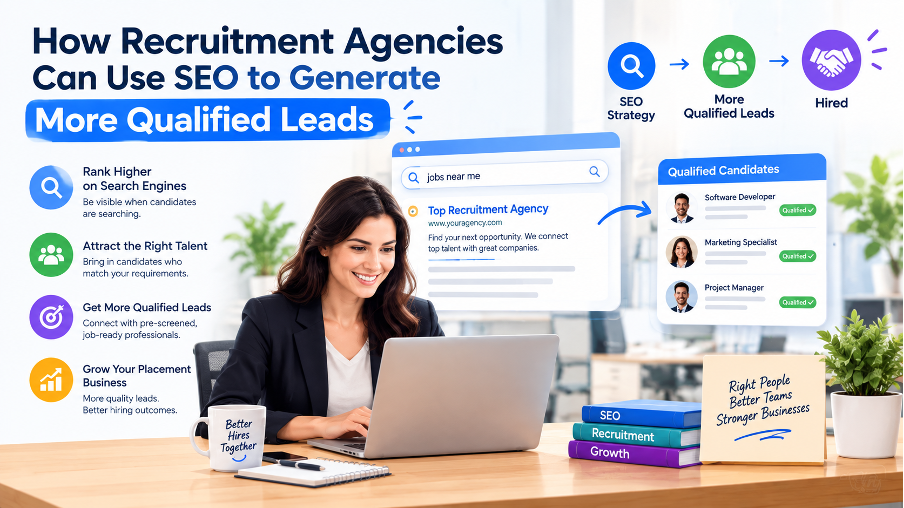
Most of them want more employer clients, better access to good candidates, and a reliable flow of new openings. Still, using only referrals, job sites, cold emails, and ads often makes leads cost more. It can also feel random from month to month.
There is another option: search engine optimization. With SEO, an agency can focus its own site on the kinds of searches people type when they need help hiring. This includes topics, job service needs, local areas, and industry keywords. If done right, the agency shows up to users who are already looking for recruitment support.
SEO is not only about getting more visits. A smart plan can bring in companies that want staffing help. It can also reach candidates who are seeking recruiters for specific fields. And it can help organizations that are trying to fill tough positions.
Some agencies do not have an in-house SEO group. For them, bringing in outside help may be simpler. White label SEO support can let recruitment businesses and marketing partners offer SEO work without setting up a full internal team.
Why SEO Matters for Recruitment Agencies
Hiring work starts with intent. A firm might look for a staffing agency because five roles need to be filled right away. A different company may hire a recruiter who focuses on a niche because it cannot get enough people for a technical job. Job seekers can also reach out to recruitment agencies when they want openings that are hard to track on their own.
These searches are not all the same, yet they share one trait. The user is already hunting for answers, support, or a way forward.
That is where SEO can help. It can put a recruiting firm in front of people while they search. Rather than chasing every lead with cold outreach, the agency can publish pages that address the exact questions people type into search boxes.
For instance, a recruiting firm focused on tech hiring might aim at terms like IT hiring agencies, software developer hiring, cybersecurity hiring, tech staffing, and local recruitment services for named areas.
The aim should not be just to show up for wide, general terms. The better aim is to draw in the right crowd.
A page that brings in 1,000 visits but only a few leads can be less useful than a page that brings 100 visitors from companies that are actively looking for recruitment help.
Start With a Clear Recruitment SEO Strategy
Recruitment agencies should set clear goals for SEO before writing anything or adjusting pages.
● Not every firm wants the same outcome.
● Some agencies need employer leads.
● Others want to bring in candidates.
● A number of agencies want both at once.
● Some niche firms also target one field, one job type, or one region.
● Your SEO plan needs to match that setup.
For instance, an agency that works with healthcare employers can center its pages on topics like medical staffing, nurse recruitment, and healthcare hiring needs. It may also cover specialist roles tied to that work.
A finance focused agency can aim at searches for accounting recruitment, finance staffing, CFO hiring, and roles in financial services.
● Location is another key point.
● An agency based in London should not always chase broad national traffic.
● If most of its work is local, then pages aimed at local search terms can fit better.
● Start by listing the agency’s services, industries, target areas, and ideal clients.
● Also note the roles that bring the most value.
● Use these facts to guide keyword research and your site structure.
Research Keywords Based on Search Intent
Keyword research plays a big role in recruitment SEO. Still, agencies should not pick terms only because the numbers look high.
Search intent is the key part. It often tells you what the person truly wants.
● Think about two searches.
● One person types “what does a recruitment agency do.”
● Another person types “IT recruitment agency in Manchester.”
● Those two users are not at the same point.
● The first one may be learning about the industry.
● The second one may be ready to hire help.
● You can use both, but they fit different steps in the buyer journey.
A recruitment site should group keywords by intent. You can split them into commercial, informational, local, and candidate-led themes.
For commercial intent, examples include: recruitment agency, recruitment services, specialist recruitment agency, staffing agency, and recruitment services for a specific industry.
For informational intent, people may search things like: how recruitment agencies work, how to hire technical employees, how long recruitment takes, or how to improve candidate sourcing.
For local intent, keywords can mix recruitment services with a city or region.
For candidate-focused intent, terms can include: recruitment agency for engineers, technology recruitment agencies, finance recruiters, or specialist recruiters for healthcare professionals.
When you map keywords this way, the site can pull in visitors from many stages. It also keeps the SEO plan tied to what the agency actually offers.
Create Dedicated Service Pages
A frequent issue on job board and recruitment sites is trying to cover too many services on one page.
For instance, one agency might list executive search, short term staffing, permanent hires, contract roles, specialist recruitment, and international recruitment.
When all of that shows up on a single general page, search engines can struggle to figure out what the page is really about.
One fix is to build separate pages for each service.
You could split it into individual pages for executive recruitment, temporary staffing, permanent recruitment, contract hiring, specialist recruitment, and hiring for specific industries.
Each page should spell out the service in a clear way. It should also match what the target visitors care about.
So an executive recruitment page can talk about senior level hiring, leadership roles, reviewing candidates, confidentiality, and how the agency runs the hiring process.
A technical recruitment page can focus on finding software engineers and developers, cybersecurity talent, cloud specialists, and other technical candidates.
With this setup, the site can show up for more focused search terms. It also helps visitors find the right contact path faster.
Build Industry-Specific Recruitment Pages
Recruitment firms are often set up for particular industries.
That focus can help search rankings a lot.
Instead of writing the same broad posts for “recruitment,” an agency can make separate landing pages for each key field it supports.
Then each page can be built for the jobs people actually search for.
For example, a tech staffing group could set up pages for software hiring, cybersecurity roles, data science jobs, IT staffing, and cloud positions.
A healthcare-focused firm might create pages for nursing hiring, medical staffing, allied health jobs, and leadership level searches.
This same method can be used in finance, construction, engineering, education, logistics, legal services, and other areas too.
When pages are built for one industry, the agency can show real knowledge.
It also helps match search intent that fits what the firm sells.
One more thing.
Do not just swap the industry name inside the same repeated layout.
Each page should include fresh details that fit that industry’s hiring needs and expectations.
Use Local SEO to Capture Nearby Employers
Local SEO matters a lot for recruitment agencies that take on clients in certain cities or nearby areas.
Many firms look for help with job hiring by typing location terms into search. You might see searches like “recruitment agency in Birmingham,” “recruitment consultants in Leeds,” or “IT recruiters in London.”
To show up for those searches, the agency should handle its Google Business Profile well. It also needs the same business details across directories. Location pages are important too. Local citations and topic relevant local content can also lift visibility.
The website should clearly show where it works. Service areas should not be hard to find.
A strong location page should spell out who the agency serves. It should also list the recruitment services it offers. The page should cover which industries it supports. It should explain why the agency’s local experience is useful.
For instance, an agency that serves Birmingham could write about hiring trends there. It can also cover big local employment sectors, how local talent looks, and the hiring issues that often come up for area businesses.
That approach brings more value than just adding the word “Birmingham” to an older page.
Optimize Recruitment Website Content for People
Search engines read and rank pages better than before. Still, recruitment agencies should focus on the people they serve.
A job seeker or hiring contact may land on a recruitment site and want answers fast.
● They often ask things like these.
● Can the agency work with my field?
● Does it place people in my kind of job?
● Which areas does it cover?
● What does the process look like?
● How soon could I hear back?
● What happens after I send a message?
● The page should address these points in plain language.
● Use headings that say what the page is about.
● Keep the paragraphs short.
● Add simple examples that fit the service.
● End with a clear next step so the visitor knows what to do.
● Also, do not stuff pages with the same search terms over and over.
● Use keywords only when they truly help explain the topic.
● A strong page should sound like a real recruitment team wrote it.
● It should help the reader, not try to game search results.
Publish Content That Solves Hiring Problems
A hiring blog can help SEO if it tackles real hiring issues.
It should not only chase keywords.
Instead of posting the same kind of article every week, agencies can write about what people are already asking.
● That includes clients and job seekers.
● For employers, the posts can cover ways to cut time-to-hire.
● They can also explain how to get more specialist applicants.
● Another option is guidance on how to set up technical interviews.
● You can also cover how to keep staff longer.
● And there is room to discuss how to hire roles that are hard to fill.
● For candidates, topics may include interview prep.
● They can share CV tips and advice on improving a resume.
● Salary talks are another common need.
● Career planning also fits well.
● So do industry trends.
● And some posts can offer niche guidance for specialist paths.
● When the blog answers these needs, readers may not contact the agency right away.
● Still, they can become future clients or future candidates.
● As time goes on, strong posts can also back up the main service pages.
● They can do this with internal links.
For instance, a post on hiring software developers can point to the agency's technology recruitment service page in a natural way.
Build Strong Internal Linking
Internal links get missed a lot in recruitment work.
Many sites end up with dozens, or even hundreds, of pages.
In that situation, internal links help search engines figure out what each page is about and how pages connect.
● Internal links also make it easier for people to keep browsing.
● A visitor might start with a guide or an info page.
● Then they can reach a page that matches what they actually want to do next.
● For example, an agency may post a piece called “How to Hire a Cybersecurity Specialist.”
● Inside that article, it can point to the cybersecurity hiring service page.
● A separate post focused on executive hiring can link to the executive search page.
● A page about hiring in a certain area can link to recruitment services for that same area.
● This approach builds a clear site path.
● Internal links should feel normal in the content and actually help readers.
● The goal is not to drop links on every line.
● The goal is to send users to the most fitting pages when it makes sense.
Improve Technical SEO
Great hiring copy does not always win if the site is having tech trouble.
Technical SEO is about a set of core checks. These include crawling and indexing. It also covers page speed, mobile use, and redirects. Canonical tags matter too. Structured data helps search engines read pages. You also need to watch for broken links, duplicate text, and weak site structure.
Recruitment sites often get messy fast. They may have job posts, guides for candidates, pages for an industry, and pages for each location. Content can also change often.
Job pages alone can push URL counts very high.
For agencies, it helps to track what pages search engines are really listing. You should also see if low value or repeated pages are wasting crawl time.
Google Search Console can be a useful place to look. It shows details on indexing, search results, the queries that show up, and technical problems.
Doing a steady technical SEO review can catch issues early. That way, organic reach is less likely to take a hit.
Optimize Job Pages Carefully
Job ads can bring in search visitors. Still, they need steady upkeep.
Many agencies post listings and later take them down. Sometimes the page vanishes when the role is no longer open. If that happens with no plan, people hit broken links.
It helps to set a clear routine for listings that have passed their end date. What you do next can vary.
In some cases, you can send the old job URL to a related category page. In other cases, you can swap it for a newer page that matches the intent. In some situations, the page should simply be removed in a clean way.
The best option depends on how the site is built and how useful that old link is for users. Also, it can be worth using structured data for job pages when it fits. This can help search engines read the content more clearly.
Overall, the aim is a job page setup that stays healthy over time. You do not want to let large numbers of old URLs pile up.
Use Case Studies to Build Search Visibility and Trust
Case studies can help with search visibility and also with conversions.
A staffing firm can share stories about how it filled hard roles. It can also describe how it sped up hiring or found niche candidates.
Rather than only sounding like an ad, a case study can lay out the full situation. It can start with the early problem and the hiring issue the client faced. Then it can outline what the agency did. If the client allows it, the page should include results that can be measured.
These pages may also rank for long-tail searches. That matters when someone searches for a specific hiring need.
For instance, a write-up about landing specialized engineering talent can pull in employers who are stuck in the same kind of search.
At the same time, those pages give buyers a clearer look at the agency’s process.
Build Authority Through Relevant Links
Backlinks still matter for SEO. But for recruitment firms, the main goal should be fit and trust, not link counts from random sites.
You can look for chances in places that already match the hiring world. That might include trade magazines, business groups, recruiting forums, professional associations, local business papers, HR focused sites, and niche industry pages.
A recruitment agency can also help in a direct way. Share clear expert views, release a report, use real hiring numbers, or work with others on resources for the field.
One simple example is an annual salary report. The agency could build it from its own market checks. Then other sites might cite those findings when they talk about pay trends.
Content like that often earns mentions on its own, and links can follow without forcing anything.
The same idea can apply to digital marketing firms that support recruitment clients. If the work is done by a white label SEO partner, the partner can manage the link work in the background. The main agency still stays in charge of the client relationship.
Consider Outsourcing SEO When Resources Are Limited
Recruitment firms know how to hire and how to find candidates. Many of them do not have staff focused on SEO, such as technical SEO, content planning, link work, reporting, or search performance.
If a business wants in house SEO, it needs more than hires. It also needs software, training, day to day oversight, and steady budget.
For some teams, it is simpler to hand off a few SEO tasks instead of building a full group.
A white label SEO provider can do the SEO work, while the hiring or staffing agency offers it under its own name. This can help when the recruitment firm teams up with a marketing partner, or when a digital shop runs SEO for hiring clients.
This setup does not strip the agency of control. The agency still sets the business targets, the audience to reach, the brand rules, what reports should include, and how success is measured.
How White Label SEO Can Support Recruitment Marketing
White label SEO can let an agency take on search work without building a full in house team.
The exact scope depends on the vendor and the contract terms.
In many cases, the outside group can do keyword research, technical checks, content support, on page edits, and link work.
They may also handle local SEO, analytics, monthly reports, and the ongoing plan.
For campaigns aimed at hiring, the agency can keep its main focus on recruiting and let SEO specialists run the search tasks.
Still, the agency has to keep control of quality.
It should look over the plan, make sure the content matches what the agency knows, and confirm that the reports make sense to leadership.
A good outsourcing setup should feel like part of the team, not like a separate vendor step that slows everything down.
Choose the Right SEO Partner
Not all SEO vendors fit a recruitment firm.
Recruitment sites serve many groups. Employers want to hire. HR teams manage roles. Hiring managers review candidates. Candidates compare options. Job seekers look for openings.
So an SEO partner should know the split between job seeker traffic and employer lead generation. These are not the same goal.
If an agency is looking at white label SEO, it should check the vendor’s track record first. Look at how they report results. See what the content actually looks like. Review their technical work. Notice how they handle updates and questions. Also ask how they plan to build links.
Recruitment companies should also ask what “success” means in plain terms. Organic traffic matters, but it should not be the only score.
Better signals include qualified inquiries, real leads from search, visibility for key terms, activity on service pages, conversions, and local reach where it matters.
Track Qualified Leads Instead of Traffic Alone
Good SEO reporting ties search results to real business results.
A recruitment firm can get a lot of unpaid traffic and still end up with a small number of messages from employers. Another firm might bring in fewer visitors, but those visitors may be companies looking for very specific hiring help.
The second case can matter more for getting leads. Even so, the numbers should be checked against what the agency is trying to reach.
Tools like Google Analytics and Google Search Console show how people find the site and what they do once they arrive. A CRM system can then show how strong the leads are and whether they turn into real deals.
Agencies should also note which landing pages lead to inquiries. They should connect those inquiries to the organic searches that brought the visitors in.
As time goes on, these findings can guide changes to the SEO plan.
Create Content Around Recruitment Trends
Recruitment agencies often learn a lot about the hiring market.
They talk with employers, job seekers, hiring managers, and other industry contacts every day.
That daily contact can turn into fresh writing.
An agency can share its view on hiring patterns and real obstacles in the process.
It can also cover pay movement, skill gaps, interview methods, staffing plans, and newer job categories.
Instead of reusing common details from other sites, the agency can add practical value from its own work.
For instance, a tech focused agency could look at which skills clients ask for most often.
Then it can spell out how it gathered the data and what it can and cannot claim.
This helps avoid presenting company observations as if they apply to every market.
When done this way, the work can still help with search reach.
At the same time, it can show the agency knows its niche.
Make Conversion Paths Clear
● Getting traffic to a site is not the whole SEO job.
● After the page loads, the visitor needs an obvious next move.
● Recruitment agencies should help employers take action fast.
● That means making it simple to ask for recruitment help, talk about a role, send a hiring brief, or reach a consultant.
● The call to action should fit what the page is trying to do.
● For example, a service page can point people to a discussion about their hiring needs.
● An employer guide can offer a call or a way to get in touch.
● A candidate guide can steer job seekers to the right listings.
● The goal is to cut down on friction.
If someone has to hunt through multiple pages just to find contact details, the agency may lose a good lead.
Use SEO to Support Other Marketing Channels
SEO does not need to run on its own.
Recruitment firms can link search results with other channels like LinkedIn, email, paid ads, social posts, PR, and employer brand work.
For instance, a new recruitment report on your site can be shared on LinkedIn. Key numbers from that report can turn into social posts. The report may also earn links from trade sites that cover your niche.
In the same way, a strong SEO article can be turned into a newsletter item or used as a sales handout.
That approach helps you get more out of the same research and the same content spend.
What Makes the Best White Label SEO Services Useful for Agencies?
Agencies that shop for SEO outsourcing should not start and stop with a basic deliverables checklist.
● Pick a provider that actually matches how your team works day to day.
● You also want reporting that is easy to read and not buried in vague charts.
● Updates should come on time and through channels your staff can use.
● The site content and keyword choices should fit the client's niche, not a generic template.
● SEO next steps should tie back to real business aims, like leads and growth.
● Any technical changes should be written down so nothing gets lost or repeated.
● If you run more than one recruitment client, growth matters too.
● You need a system that can add more campaigns as demand rises, while still keeping quality steady.
Because of this, many firms look at white label SEO support instead of juggling separate freelancers for each job.
In the end, the decision should come down to what the provider can do, how open they are, how they keep checks in place, and how well they follow what the client expects.
Measure SEO Performance Over Time
SEO usually does not bring leads the same day you publish.
Recruitment firms should set a clear time window to track results.
They should also watch how those results shift month to month.
● What to look at includes several basics:
● organic impressions and clicks,
● search rankings for key terms,
● non-branded traffic,
● organic inquiries,
● conversion rate,
● local visibility,
● and the number of qualified leads.
The agency also needs to see which specific pages drive business results.
If one industry page brings steady employer inquiries, it can make sense to add more content.
It can also be worth adding internal links to strengthen that page.
If an article gets lots of visits but people do not engage much, stop and check it.
Maybe it attracts the wrong audience.
Or maybe it does not connect clearly to what the agency offers.
With this routine, SEO becomes something you can measure over time.
It is not just a one-time site task.
Final Thoughts
Recruitment firms can use SEO to bring in leads over time. If they aim at the right search needs, they can show up when employers and job seekers are actively looking. This can include pages for each service and each industry, local SEO work, helpful articles, and strong site speed. They also need solid technical setup and links from related sites. When these pieces fit, more people can find the agency online.
One rule matters most: relevance.
Getting more visits is not the same as getting more hires. The goal is to reach people who actually match what the agency offers. Traffic should come from searches that fit the agency’s work.
If a recruitment business does not have an SEO team, it may outsource help. That way, the firm can tap into skills it does not have internally. A clear partner deal with a white label SEO provider can support keyword research, content work, site fixes, link building, and regular updates. The recruitment team stays focused on its main services.
SEO should not be treated like a one-time checklist. It works better when it runs as a steady plan. When agencies know their audience, publish content that answers real questions, improve their sites, and track good lead actions instead of just page views, organic search can support steady growth.