The UK recruitment market is continuing to send mixed signals, with new official data suggesting that a broad-based hiring recovery has yet to take hold.
Figures published by the Office for National Statistics show that the estimated number of UK vacancies fell to 702,000 during June to August 2026. This was 8,000 fewer than in the previous three-month period and the lowest total recorded outside the pandemic since 2014.
Payroll employment also continued to weaken. The number of payrolled employees fell by a revised 19,000 between June and July, while the provisional estimate for August indicated a further monthly decline of 26,000.
The unemployment rate remained at 4.9% during the three months to July. Annual regular earnings growth stood at 3.5%, although private-sector regular pay growth slowed to 2.9%.
Recruiter survey offered tentative optimism
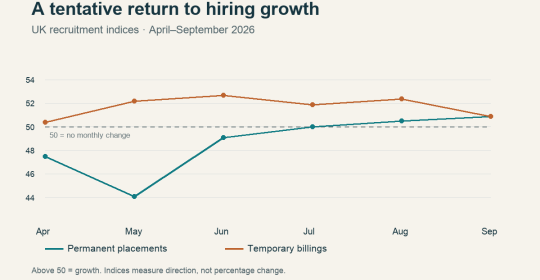
The official figures follow the latest KPMG and Recruitment and Employment Confederation Report on Jobs, which recorded the first increase in permanent staff appointments since September 2022.
However, its permanent placements index reached only 50.5 in August - just above the level indicating no change - meaning the reported expansion was extremely modest.
The two datasets are not necessarily contradictory. Recruitment consultancies could be filling more of the roles already on their books, even as the overall number of vacancies continues to decline. Recruiter activity can also move ahead of changes that subsequently appear in official employment statistics.
Nevertheless, the ONS figures suggest that it is too early for agencies, job boards and recruitment-technology suppliers to describe current conditions as a sustained hiring recovery.
UK vacancies have fallen to 702,000 - the lowest non-pandemic level recorded since 2014.
Smaller employers remain reluctant to recruit
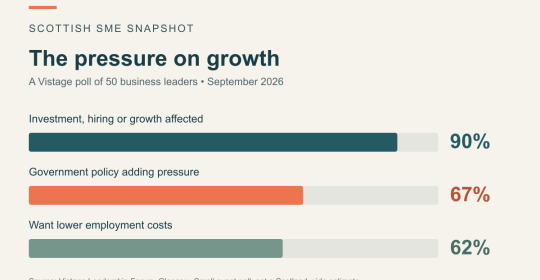
The ONS said feedback from its Vacancy Survey continued to suggest that some smaller businesses were holding back from recruiting because of increased labour costs.
Vacancies have fallen substantially from their post-pandemic peak, while candidate availability has continued to rise. This leaves employers with a larger pool of applicants but recruitment businesses competing over a smaller volume of available opportunities.
For recruitment agencies, the crucial question is whether the recent improvement in placements reflects new demand or simply stronger conversion of existing vacancies.
Job boards and recruitment-software suppliers will also be watching whether employers are reopening paused positions, replacing departing workers or approving genuinely new headcount.
Efficiency remains important in a lower-volume market
A subdued vacancy market increases pressure on recruitment businesses to improve productivity, conversion rates and the use of existing candidate data.
Agencies are likely to focus more closely on measures including time-to-fill, recruiter productivity, redeployment rates and the proportion of vacancies resulting in successful placements.
For technology suppliers, this creates opportunities - but also a higher evidential bar. Agencies operating in a difficult market will increasingly expect CRM, automation, job-distribution and candidate-engagement products to demonstrate measurable improvements in placement performance rather than simply saving administrative time.
The next several months will reveal whether the tentative increase in permanent placements was the beginning of a genuine turning point or a temporary improvement within an otherwise weak recruitment market.
Onrec is inviting recruitment agencies, job boards and recruitment-technology suppliers to share what they are seeing. Are new job orders increasing, are vacancies converting more quickly, or are employers still delaying hiring decisions?
Sources: ONS: UK labour market, September 2026 and Reuters’ independent analysis.