

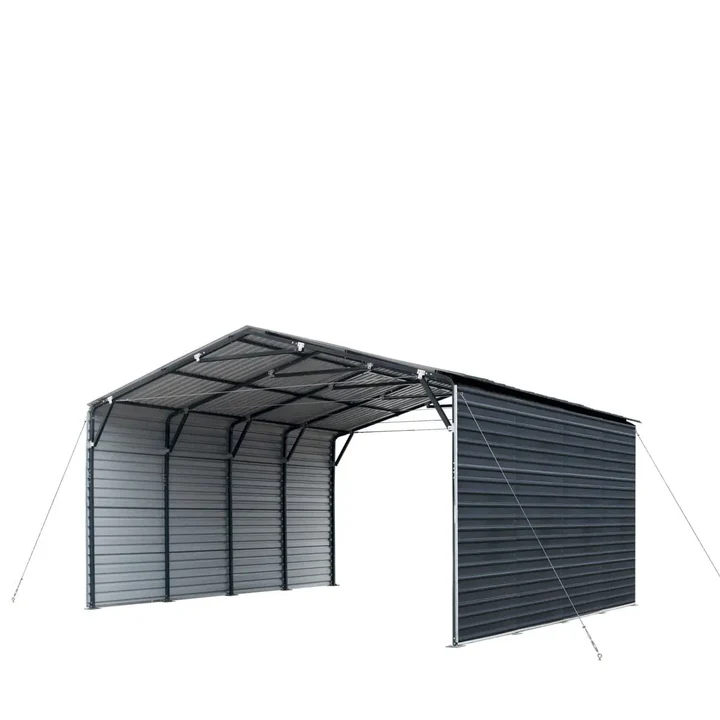
In Canada, warehouse managers, equipment operators, logistics teams, and industrial buyers often face a common problem: how to protect vehicles, materials, and outdoor work areas from rain, snow, wind, and debris without committing to a full permanent building. A 20' x 20' Metal Shed Carport can address this need by creating covered space for storage, staging, light equipment protection, or seasonal work support. In a market shaped by cold weather, changing jobsite needs, and pressure to use industrial space efficiently, this type of structure has practical value.
One example is the 20' x 20' Metal Shed Carport, which is listed with about 400 square feet of covered area, 10 foot enclosed sidewalls, a peak height of 12.5 feet, a 15 gauge steel frame, and 27 gauge corrugated roof panels. For industrial operations, these specifications show how a mid-sized metal shelter can serve as a flexible asset rather than only a vehicle cover.
How This Type of Structure Is Used
Basic function
A metal shed carport creates a protected area that is faster to deploy than a permanent building and more enclosed than a simple canopy. The enclosed sidewalls help reduce exposure to blowing snow, rain, and dust. This can make it useful for temporary storage, fleet support, maintenance staging, or protected loading activity.
Typical industrial use cases
· Protecting pallets, packaged goods, and weather-sensitive supplies
· Covering utility vehicles, trailers, or small equipment
· Creating overflow storage near a warehouse or yard
· Supporting seasonal operations such as winter material staging
· Providing a sheltered work zone for inspection or preparation tasks
Why Efficiency, Safety, and Productivity Matter
In logistics and warehouse environments, weather exposure often creates hidden costs. Snow accumulation, wet packaging, frozen tools, and repeated material relocation can reduce productivity and increase handling time. Covered structures help reduce these delays by keeping selected items closer to the point of use while improving access during poor weather.
Safety is also a major factor. Canadian outdoor work guidance shows that cold, wind, rain, and changing site conditions affect worker performance and exposure. A sheltered area can support safer work planning, but only if the structure is used within its design limits and the site remains organized.
Technical and Capacity Considerations
Before purchase or installation, industrial buyers should evaluate the following:
· Available footprint and vehicle turning space
· Surface condition and anchoring method
· Required clearance height for stored equipment
· Local snow, wind, and drainage conditions
· Expected storage type and loading pattern
The reviewed model is listed with a reference snow load of 30 pounds per square foot and a reference wind load of 75 miles per hour. It also includes anchoring and hardware. These figures are useful starting points, but site-specific review remains necessary because real performance depends on installation quality, exposure, and local conditions.
What Affects Performance and Effectiveness
Several factors influence how well a metal shed carport performs in practice, especially when using TMG Industrial systems. Ground preparation is one of the most important. An uneven or poorly drained surface can affect alignment, anchoring, and long-term stability. Snow management is another key issue in Canada. Accumulated snow near sidewalls, blocked drainage paths, and neglected roof conditions can reduce usable space and create safety concerns.
Operational discipline also matters. Overloading the space, storing materials in a way that blocks access, or treating the structure like a fully enclosed permanent building can reduce its effectiveness.
Safety Best Practices
· Install on a level site with proper anchoring
· Inspect frame connections, panels, and anchors regularly
· Keep drainage paths clear around the perimeter
· Remove snow and ice based on site conditions and manufacturer guidance
· Do not use the structure during hazardous storm conditions if work would be unsafe
· Control stacking height and maintain clear vehicle and pedestrian routes
These practices are important because a temporary or semi-permanent shelter still requires the same attention to hazard control, housekeeping, and weather planning that applies to other outdoor structures.
Related Equipment, Advantages, and Limitations
Useful supporting items may include anchor kits, drainage gravel, wheel stops, pallet racking that fits the sheltered footprint, weather-resistant lighting, and signage for traffic control. The main advantages of a 20' x 20' Metal Shed Carport are faster deployment, lower building commitment, and flexibility for storage or fleet support. The main limitations are exposure to site-specific weather demands, finite clearance, and the need for disciplined installation and maintenance.
Real-World Example and Industry Outlook
A realistic example is a Canadian distribution yard that needs protected overflow space for seasonal inventory and small material handling equipment. Instead of expanding the main building, the site uses a metal shed carport near the loading area for weather-sensitive pallets and service tools. This can improve response time and reduce unnecessary movement between indoor and outdoor storage.
Looking ahead, demand for flexible industrial shelter solutions in Canada will likely remain strong. Facilities are under pressure to improve space use, support weather resilience, and avoid unnecessary capital expansion. A 20' x 20' Metal Shed Carport fits this trend when it is selected with proper engineering judgment, installed carefully, and managed as part of a broader safety and operations plan.