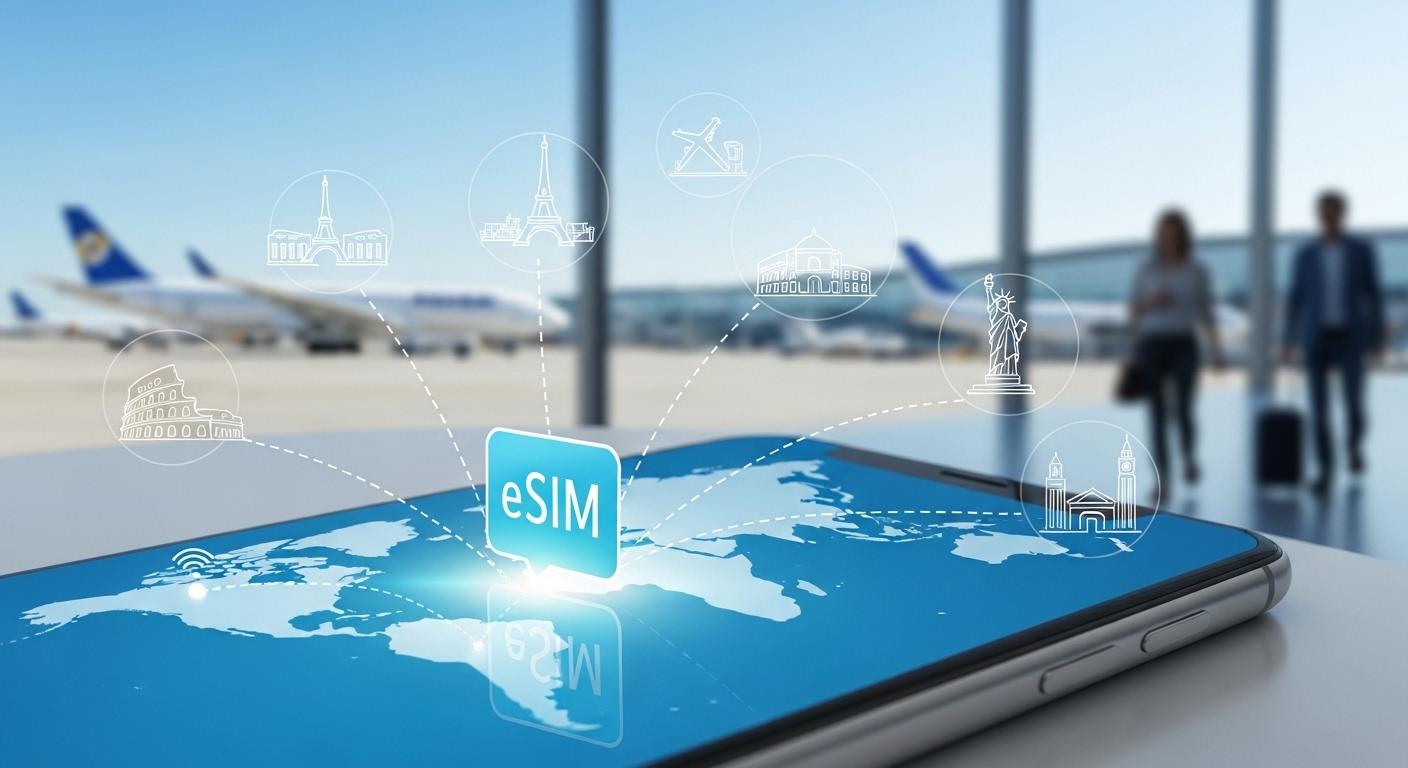
In the modern travel landscape, a smartphone is no longer a luxury; it is a lifeline. From navigating foreign streets and translating menus to staying in touch with loved ones and accessing boarding passes, reliable internet connectivity has become as essential as a passport.
Yet, for frequent flyers and vacationers alike, staying connected abroad remains one of the most persistent headaches of travel. The frustration of landing in a new country only to be greeted by a “No Service” notification is universal. To help you navigate these digital hurdles, we have broken down the top connectivity challenges travelers face—and more importantly, how to solve them with confidence.
1. Exorbitant International Roaming Fees
One of the first shocks travelers encounter is the dreaded "bill shock" upon returning home. Many travelers stick with their home carrier’s roaming services, unaware that checking a few emails or using maps for a week can result in charges worth hundreds of dollars.
The Problem: Traditional carriers often charge daily rates for international data that add up quickly. If you are traveling for two weeks across multiple countries, these fees can easily surpass the cost of your flight.
The Solution: Avoid relying solely on your domestic plan’s pay-per-use roaming. The most effective solution is to adopt a local or regional data solution before you depart. Modern travelers are increasingly turning to Holafly travel eSIM, which offers flat-rate, unlimited data plans that eliminate the fear of unexpected charges. By using a dedicated eSIM, you maintain your primary number for iMessage or WhatsApp while enjoying a separate, cost-controlled data stream.
2. The SIM Card Hunt: Inconvenience and Incompatibility
For years, the go-to solution for savvy travelers was to buy a local SIM card upon arrival. While this works in theory, the execution is often stressful. After a long-haul flight, the last thing most people want to do is stand in line at a kiosk at the airport, trying to communicate with a clerk in a foreign language while fumbling with tiny SIM cards and paperclips.
The Problem: Physical SIM cards are easy to lose, require tools to install, and often require you to surrender your home number. Furthermore, modern smartphones—particularly the latest iPhone and Google Pixel models—no longer support physical SIM cards in many regions.
The Solution: Embrace eSIM technology. Unlike physical SIMs, an eSIM is a digital SIM embedded in your phone. You can purchase and install a data plan from anywhere in the world before you even board the plane. The process eliminates language barriers and the risk of losing your primary SIM.
3. Unreliable Public Wi-Fi and Security Risks
It is tempting to rely on the "free Wi-Fi" offered at cafes, hotels, and airports to save money. However, this is a double-edged sword. Public networks are notoriously unreliable, often slow, and frequently cut out after 30 minutes, requiring constant re-authentication.
The Problem: Beyond inconvenience, public Wi-Fi poses significant security risks. "Evil twin" attacks (fake Wi-Fi networks set up by hackers) are common in tourist hotspots. Conducting banking transactions or entering passwords on unsecured public networks puts your personal data at risk.
The Solution: Prioritize a private, encrypted connection. Using a personal data source—such as an eSIM—ensures that your data traffic is not passing through a shared router with unknown users. This keeps your financial information and private communications secure.
4. Coverage Gaps and Multi-Country Travel
Travelers often assume that if they buy a local SIM, it will work everywhere in that country. However, coverage maps can be deceiving. If you are road-tripping through the countryside, taking a cruise, or traveling across borders (e.g., touring the Schengen Area in Europe), you may find yourself frequently without service or forced to buy a new SIM card at every border.
The Problem: Local SIMs are often restricted to a single carrier’s towers, leading to dead zones in rural areas. For multi-destination trips, managing a stack of SIM cards is a logistical nightmare.
The Solution: Opt for regional plans. Modern connectivity solutions offer regional eSIMs that connect to multiple partner networks. For example, a "Europe" eSIM will automatically switch between the strongest available carriers in France, Spain, Italy, and Germany seamlessly, ensuring you stay connected across borders.
5. The "New Phone" Dilemma and Compatibility
As technology evolves, so do the barriers. Many travelers upgrade their phones right before a big trip, only to discover that their new device lacks a physical SIM tray. Others struggle with complex APN (Access Point Name) settings required by traditional carriers to get data working.
The Problem: Manual configuration errors can leave travelers without service for days. Additionally, the transition to eSIM-only devices in markets like the US has left many travelers scrambling to understand how to get data on their new hardware.
The Solution: Choose a provider focused on user experience. The best connectivity solutions today are designed for the traveler, not the telecom engineer. A straightforward setup process—typically scanning a QR code—eliminates the need for manual APN configuration, ensuring that even those who aren’t tech-savvy can have their data up and running in minutes.
Conclusion: Travel Smarter with the Right Connection
Connectivity is the backbone of stress-free travel. Whether it’s navigating the narrow streets of a historic city, translating a menu, or simply sharing your journey in real-time, reliable internet allows you to immerse yourself in the experience rather than worrying about logistics.
To solve these challenges, the modern traveler needs a solution that is secure, cost-effective, and incredibly easy to use. By moving away from physical SIM cards and unpredictable roaming plans, you regain control over your travel experience and ensure that connectivity is one less thing to worry about on the road.