Australian Context and Operational Importance
Australia’s infrastructure, logistics corridors, and industrial sites often extend across uneven terrain, roadside verges, and drainage systems. Vegetation control in these areas is essential for maintaining visibility, preventing fire hazards, and supporting safe transport operations. A ditch bank flail mower is widely used in this context due to its ability to operate on slopes, embankments, and narrow access zones. For warehouse operators and logistics managers, proper land maintenance supports site access, reduces risk exposure, and ensures compliance with safety standards.
Technical Overview and Use Cases
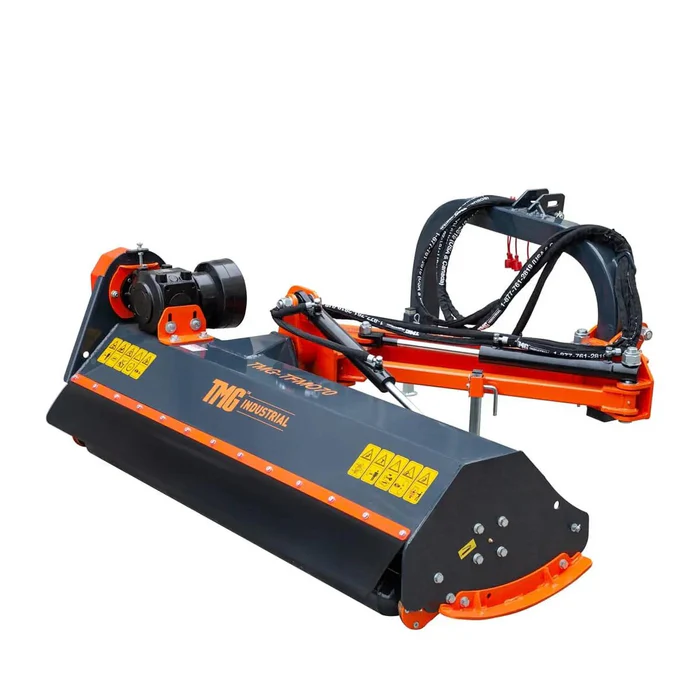
A ditch bank flail mower is designed to attach to a tractor using a three point linkage system. It uses rotating flail blades mounted on a horizontal rotor to cut and mulch vegetation. The offset capability allows the mower to extend beyond the tractor path, making it suitable for areas that are difficult to reach with standard mowing equipment.
Common Applications
· Maintenance of roadside vegetation along transport routes
· Clearing drainage ditches and embankments
· Managing vegetation around industrial facilities
· Supporting agricultural boundary maintenance
Efficiency, Safety, and Productivity
Efficient vegetation control reduces operational interruptions and improves site accessibility. A ditch bank flail mower allows operators to complete tasks in a single pass, even on uneven ground. This reduces labour requirements and limits equipment repositioning. From a safety perspective, controlled vegetation minimizes hidden obstacles and improves line of sight for vehicle operators. In logistics environments, this contributes to smoother traffic flow and fewer incidents.
Technical Foundations and Capability Considerations
The performance of a ditch bank flail mower depends on several technical factors. These include tractor compatibility, hydraulic control systems, and rotor design. Operators must ensure that the tractor provides sufficient power output to maintain consistent blade rotation. Offset arms and tilt mechanisms require stable hydraulic systems to allow precise positioning.
· Power requirements based on cutting width
· Hydraulic control for angle adjustment
· Blade type for different vegetation density
· Durability of the rotor assembly
Factors Affecting Performance and Effectiveness
Operational effectiveness is influenced by environmental and mechanical conditions. Ground slope, vegetation type, and soil stability all affect cutting performance. Regular maintenance is also critical. Worn blades or loose components can reduce cutting efficiency and increase safety risks. Weather conditions, particularly moisture levels, can impact traction and machine stability.
Safety Considerations and Best Practices
Safe operation requires adherence to established procedures and proper training. Operators should be familiar with terrain conditions and equipment limitations.
· Conduct pre operation inspections of blades and attachments
· Maintain safe distances from bystanders and vehicles
· Operate at controlled speeds on slopes
· Use protective equipment to reduce exposure to debris
· Ensure clear communication in multi operator environments
Associated Equipment and Accessories
Ditch bank flail mowers are typically used alongside tractors and may include additional components to enhance functionality:
· Hydraulic systems for angle and offset control
· Protective guards to contain debris
· Adjustable rollers for cutting height control
· Replacement flail blades for maintenance cycles
Advantages and Limitations
Ditch bank flail mowers offer several operational benefits. They provide flexibility in difficult terrain and produce a mulched finish that reduces the need for debris removal. However, there are limitations that should be considered.
· Higher initial setup requirements compared to standard mowers
· Dependence on tractor compatibility
· Maintenance demands for blades and moving parts
· Reduced efficiency in extremely dense or woody vegetation
Real World Application Example
In regional transport corridors in New South Wales, ditch bank flail mowers are used to maintain roadside vegetation and drainage systems. Operators report improved visibility and reduced fire risk during dry seasons. A typical setup includes a seventy inch offset mower attached to a mid range tractor, allowing maintenance teams to manage extended roadside sections without disrupting traffic flow. Additional technical details can be referenced through resources such as ditch bank flail mower specifications for context in equipment selection and planning.
Conclusion and Future Industry Trends
Ditch bank flail mowers play an important role in maintaining safe and efficient industrial and transport environments. Their ability to manage vegetation in complex terrain supports operational continuity and risk reduction. As infrastructure networks expand in Australia, there is an increasing need for adaptable land management equipment. Future developments may include improved hydraulic control systems and enhanced durability of cutting components. For industrial professionals, understanding the technical and safety aspects of this equipment remains essential for effective implementation.