
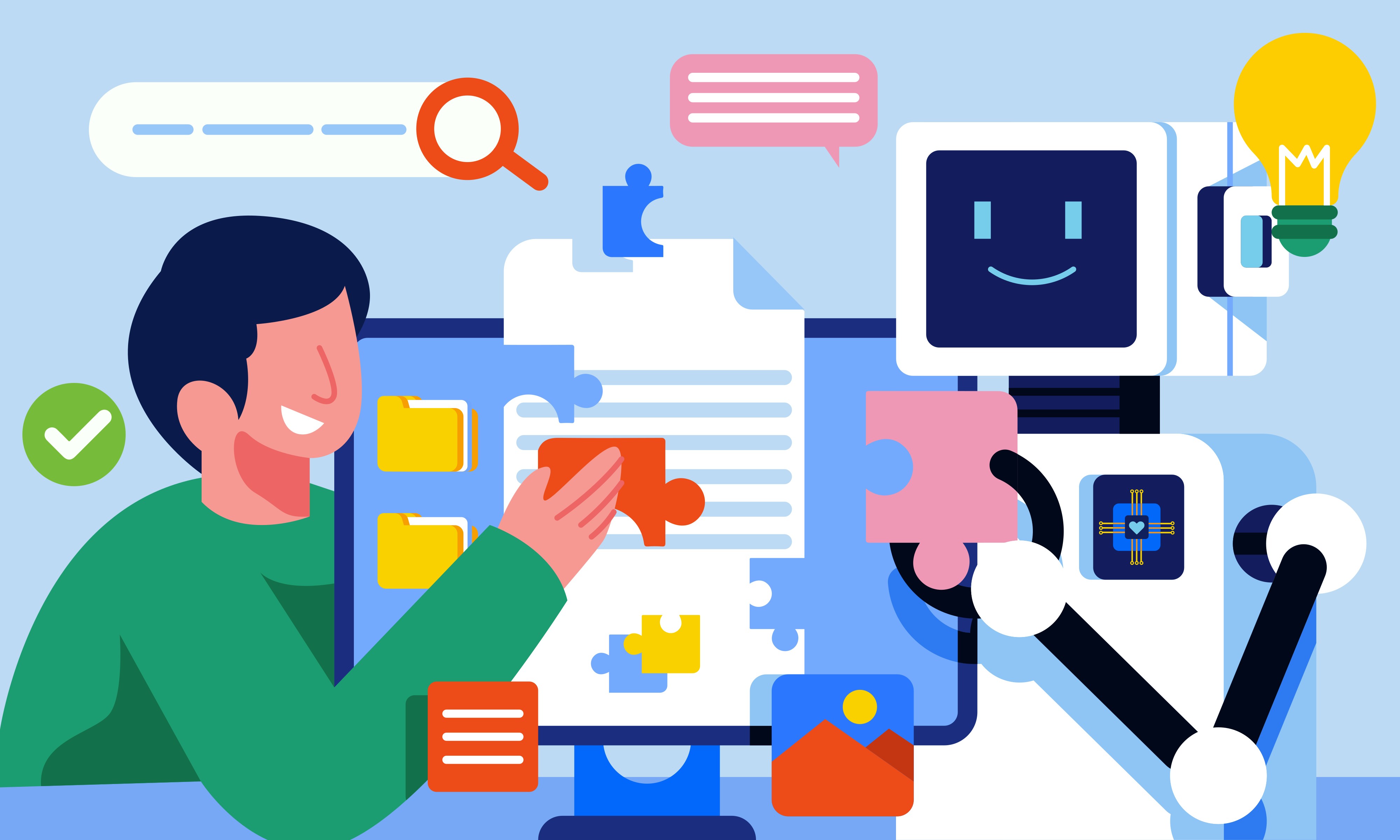
That second half of the job, the repetitive part, is exactly where an AI assistant for recruiters has begun to find its footing, taking on routine work so recruiters can spend more energy on people rather than paperwork.
Nowadays, recruitment teams are under pressure to work fast without compromising quality. The number of recruitment websites keeps increasing, the number of applications keeps rising, and applicants expect an immediate reply, even if a single position receives hundreds of applications. This is putting pressure on recruiters to identify where technology will actually ease the process, rather than just saying it would.
With that pressure in mind, it helps to look at how AI in recruitment is actually being used day-to-day, starting with why recruiters are adopting it at all.
Why Recruiters Are Turning to AI Assistants
It is seldom true that a recruiter’s daily work revolves solely around conducting interviews. Finding the right talent, sorting through resumes, maintaining trackers, and repeatedly answering the same queries make up the rest of their time. This is where AI in HR starts to come in, helping manage the repetitive parts of the job without taking the recruiter out of the equation.
AI assistants can support professionals with research, drafting, summarisation, brainstorming, and routine administrative work. For recruiters, that support can help reduce the time spent on repetitive tasks while leaving important decisions to human judgment. An AI assistant for business can fit into this workflow when teams use it to support research and content-related tasks without relying on it to make hiring decisions independently.
This process is closely related to the broader banner of recruitment automation, in which software performs repetitive tasks so that human resources can focus on the judgment aspects of recruitment. This application, when used correctly, can aid in research, drafting communications, summarizing documents, and generating ideas while still maintaining the human element in the hiring decision. The following section details this larger function into smaller, recruiter-specific actions.
The Recruitment Tasks AI Can Help With
Once you move past the general idea of an AI assistant, it becomes easier to see where it actually earns its place in a recruiter’s day. Rather than one all-purpose tool, most talent acquisition technology in this space supports a handful of specific, well-defined tasks, each addressing a point in the hiring process where recruiters typically lose time to routine work.
Here is a closer look at five of those tasks:
Drafting and Improving Job Descriptions
Creating an effective, inclusive, and precise job description often takes more time than many realize, particularly when a position requires multiple approvals. A job description AI tool can create an initial draft, improve word choice, and even alert the user to phrasing that could inadvertently exclude certain candidates.
Candidate Research and Information Summaries
Evaluating a candidate’s history usually involves synthesizing data collected from a résumé, a portfolio, and multiple online accounts. Using an AI tool, information can be extracted from publicly available sources to create a quick summary, thereby sparing the recruiter the repetitive task of searching. The recruiter only validates the information.
Interview Preparation and Question Development
Constructing a new set of questions each time, or adapting them to the candidate’s experience, is cumbersome when done manually. The assistant may help structure the questions either according to the job description or the candidate’s skills, providing the recruiter with an initial framework for the discussion.
Scheduling and Administrative Tasks
Setting up interviews with various people, such as hiring managers and candidates, not to mention across different time zones, is one of the most mundane tasks in recruitment. AI-driven tools can help schedule interviews, send follow-up emails, and even automate reminder messages. This does not involve any judgment regarding who should be hired, which is why it is one of the easier things to automate.
Summarising Recruitment Data and Notes
After a series of interviews, the recruiters will usually have plenty of notes, rating cards, and feedback from various panel members. AI-assisted writing could shorten that into a summary, noting common themes or issues. It is not a replacement for the conversation, but it will help get us started.
Where Human Recruiters Still Matter Most
Despite saving considerable time, AI recruitment tools are not equipped to make hiring decisions. They are capable of summarizing, drafting, evaluating, and organizing. But they cannot sit in front of a candidate and observe how they react to a tough question and/or determine whether a non-traditional career move indicates flexibility or instability.
This distinction is becoming increasingly important as more companies implement this process in their HR departments, regardless of department size. The debate surrounding AI in recruitment often emphasizes that AI is a tool for recruiters. It should not be a replacement for the decision-making process, especially when making the final decision about a candidate.
Avoiding Bias and Maintaining Human Oversight
The learning process of these technologies relies on patterns in the data used to train them, and hiring data used to train an AI tool can contain the same biases that have long existed in the workplace. In such a scenario, an AI tool designed to automate the screening process might as well continue reproducing these biases more efficiently and at greater scale.
That is why human oversight is essential at certain stages of decision-making. Responsible recruitment professionals should always treat the output of an AI tool as a draft and compare the summary against the actual data, while also considering whether the tool’s recommendation favors one type of candidate over another without a valid reason.
Oversight need not slow the process in any significant way. Adding an instant oversight mechanism to an existing process provides a way to mitigate potential bias while retaining most of the benefits of the recruiter productivity that made these processes appealing in the first place.
How HR Teams Can Introduce AI Responsibly
Adding AI to a recruitment process is best done gradually rather than abruptly. Doing so by starting with lower-level activities like drafting and summarizing, rather than screening and shortlisting, offers teams the opportunity to learn how best to use the technology. Recent AI findings from HR research bodies echo this cautious, staged approach to adoption.
Guidelines are equally important as the technology itself. HR departments that clearly define the use of AI within their recruitment workflow, what it is not supposed to be used for, and who reviews its output achieve better results than those that have just implemented the technology without guidelines.
What AI-Assisted Recruitment Could Look Like in the Future
Looking ahead, the future of recruitment will likely involve using AI to handle more administrative and research tasks. But ultimately, every company will keep decision-making in human hands. Even those who come to see AI as more capable in certain areas will realize that it is still a tool, and, like any powerful tool, it depends on who uses it. The software may provide a useful summary or even flag discrepancies that the recruiter must confirm, but the process of determining a good match remains exclusively human.
What is more likely to change is how recruiters spend their time. If they have less time wasted on formatting and scheduling, they can focus on other things that AI tools can’t do, such as talking and building relationships. This will only happen if we continue to use these tools as assistants, not as a substitute for recruitment.
Conclusion
To cut to the chase, the essence of an AI assistant for recruiters is to minimize workload. The AI assistant should not be used to replace the recruiter’s judgment. If used wisely, it allows the recruiter to spend more time on tasks that require human attention, while the final hiring decision remains the recruiter’s sole responsibility.

