What employees want in leaders:
- Communication tops the list: Nearly 98% of workers say it’s critical for strong leadership.
- Trust is non-negotiable: Over 96% say integrity, accountability, and sound decision-making are essential leadership attributes.
- Volatile leaders lose trust: 72% say emotional volatility and unpredictability undermine leadership.
- Teamwork still matters: Nearly 48% of respondents say leaders should prioritize networking, teamwork, and belonging.
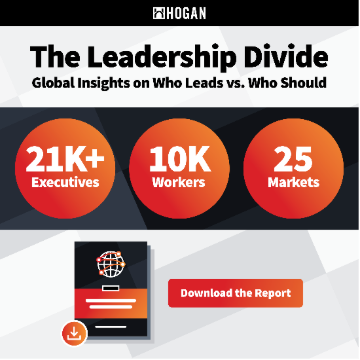
New global research from Hogan Assessments finds that the characteristics and behaviors most frequently displayed by executives do not match the qualities employees say they want from leaders, revealing a significant gap in how organizations identify and reward leadership.
The report, The Leadership Divide: Global Insights on Who Leads vs. Who Should, compares personality assessment data from more than 21,000 executives in Hogan’s global database with survey responses from 9,794 full-time employees across 25 markets, including the United States, Brazil, Mexico, Germany, and the United Kingdom.
A clear misalignment between what organizations reward and what employees value
One of the most striking findings is that there is zero overlap between the top five competencies, most demonstrated by executives and the five characteristics employees say they want from leaders.
Globally, executives are more likely to stand out for inspiring others, competing with peers, presenting ideas publicly, taking initiative, and driving innovation. Employees, by contrast, prioritize an entirely different set of qualities: communication, integrity, accountability, sound decision-making, and the ability to lead effectively.
“Organizations have long tended to reward visibility, confidence, and ambition in leaders,” said Allison Howell, CEO of Hogan Assessments. “But employees are telling us they want something more fundamental: leaders they can trust, leaders who communicate clearly, and leaders who create the conditions for teams to succeed.”
What employees say matters most
Across markets, employee responses showed strong alignment around the foundations of effective leadership. Nearly 97% of respondents worldwide identified communication and trust-related characteristics, including integrity, accountability and sound decision-making, as essential for leadership success.
The global findings also point to a clear set of behaviors employees believe weaken leadership effectiveness. Across markets, 72% of respondents said emotional volatility and unpredictability have a negative impact, while passive aggression (62%), arrogance and entitlement (59%), and extreme caution (56%) were also identified as behaviors that erode trust, increase disengagement, and weaken team performance.
One of the clearest examples of this disconnect is confidence. Executives often stand out for assertiveness and self-assurance, yet 59% of employees globally said arrogance and entitlement undermine leadership effectiveness. The confidence that can help leaders advance may, when overused or left unchecked, be experienced by teams as arrogance, weakening trust and contributing to disengagement.
The research also shows that employees want leaders who actively foster strong relationships at work. Globally, 48% of respondents say leaders should prioritize networking, teamwork, and belonging, priorities that tend to rank lower among executives.
What the findings suggest for leaders and organizations
Globally, the findings suggest many organizations may still be rewarding leadership emergence over leadership effectiveness. Too often, the behaviors that help individuals gain visibility and get promoted are not the same behaviors that build trust, strengthen teams, or support sustained performance once in the role.
Organizations may need to look beyond visibility or charisma when identifying leadership potential and place a greater emphasis on behaviors that build trust, including clear communication, accountability, sound decision-making, and relationship building. That shift should be reflected in how leaders are selected and developed, with greater emphasis on coaching, feedback, and performance systems that reward accountability, transparency, and follow-through.
“Leadership pipelines are strongest when organizations align how they identify and develop leaders with what employees actually value,” said Howell. “These findings show that trust, accountability, and sound judgment are not secondary qualities. They are central to team effectiveness and long-term performance.”