- Supply of talent to the region dropped 35% in March, with the steepest declines from Europe
- Many professionals have resumed Gulf job search post-ceasefire, while employers remain cautious
The Gulf job market saw a sharp pullback in activity as a result of the regional conflict, but is now showing signs of steady recovery, according to data from Middle East recruitment platform, GulfTalent.
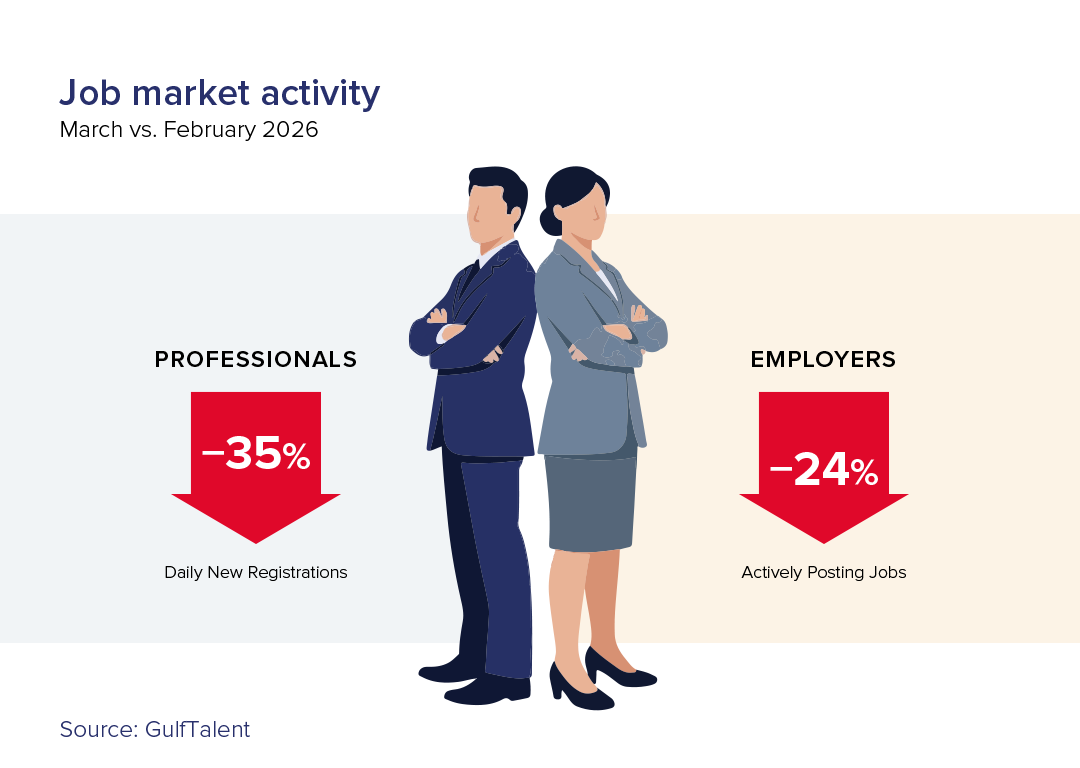
Daily registrations by professionals seeking jobs in the Gulf dropped by 35% in March 2026 compared to February. The number of companies actively posting jobs also fell, by 24% over the same period.

The decline followed the outbreak of hostilities on 28 February. Activity reached its lowest point in late March, around the Eid holiday, before embarking on a steady recovery following the ceasefire that took effect on 8 April.
Global reaction
GulfTalent’s data shows that the drop in interest in Gulf jobs was visible globally, but with significant regional variation. Professionals already based in GCC countries showed the smallest decline, at 15%, while interest from those in Europe dropped by 48% — the steepest fall of any region. Asia and Africa fell in between, at 40% and 34% respectively.

International media coverage of the region was significantly more alarming than the day-to-day experience of most residents, putting off many overseas professionals.
By contrast, Gulf-originated job search activity showed greater resilience. The conflict itself produced new job-seekers, particularly employees in tourism, hospitality and retail whose roles were affected by the regional disruption. This added supply partially offset the pullback from other professionals in the region.
Employer pullback
Employer activity declined less sharply than jobseeker registrations, with a 24% drop in companies actively posting jobs in March compared with February.

Several factors explain the asymmetry. Hiring decisions typically follow longer planning cycles than applicant job searches, with budgets and headcount often locked in months in advance. Many employers continued posting through the early weeks of the conflict, while individuals were quicker to hold off applying. Some job categories, such as logistics, even saw increased hiring activity — possibly as firms raced to re-engineer their supply chains, following the disruption to regional shipping routes.
Partial recovery
In April, daily registrations by professionals rose 24% from March levels, while the number of companies posting jobs increased by just 4%.
The talent supply recovery suggests pent-up demand from those who had delayed applications during the conflict period. Interest from most regions saw a healthy increase, except Europe which continued to decline through April.
Employer recovery has been notably slower — consistent with the longer planning cycles that dampened the initial drop. Even with the ceasefire holding, many employers appear to be waiting for sustained stability before full resumption of hiring.
By the end of April, jobseeker registrations had recovered to 81% of February levels, while employer activity remained at 79%. Both sides of the market remain meaningfully below the pre-conflict baseline.

Based on GulfTalent’s findings, professionals currently job-searching within the Gulf face a window of opportunity to secure attractive roles within unaffected sectors, while overseas supply of talent is yet to fully recover. At the same time, companies can hire from a pool of experienced talent now available locally as a result of the conflict, while competition from other employers remains subdued.
The outlook for the rest of 2026 will depend on a few key variables: the durability of the ceasefire, the resumption of regional shipping vital to Gulf economies, and the restoration of business confidence. If these hold, employer hiring is likely to catch up with talent supply in the second half of the year, with renewed activity expected in the sectors hardest hit by the disruption, particularly travel and tourism.