New data, published by Shared Services & Outsourcing Week (SSOW) Europe and with insights from over 400 senior professionals, shows AI will bring significant changes to shared services in the coming years. 38% of organisations expect agentic AI to replace some captive activities in shared services within this time and another 46% are considering it as a solution.
The State of the Shared Services Industry Report 2026 comes ahead of the SSOW 2026 event in Portugal in May. It also demonstrates that the shared services industry is continuing to mature, and that its focus is moving from driving efficiencies towards adding strategic value.
Shared services, the consolidation of support functions across a business, has traditionally been seen as a way to increase efficiency. The data shows cost optimisation remains the most popular way to define value for shared services (85%), followed by customer satisfaction (72%).
Alongside efficiency, there is a focus on growth metrics. Almost a third (32%) now say volume growth is used to define value for shared services, 21% define value via revenue improvement, 21% via working capital improvement and 19% via margin improvement.
Most respondents (57%) now describe themselves as being at a medium level of automation maturity and a further 9% say they are at a high level. This represents an increase from 2025, when the majority (72%) of organisations reported low to early-medium automation maturity.
Among the respondents asked, shared services are used predominantly across financial functions. 87% use shared services for order-to-cash and 86% use them for purchase-to-pay. There is a considerable use of shared services in HR, people and pay processes; 40% use shared services for payroll and 34% use it for benefits administration. Shared services are expanding into data and enterprise enablement; data management is provided by 65% of shared service organisations, and data and business analytics are used by 49%.
Despite the focus on value, measurement is still tied to effort and efficiency. Over half of respondents (55%) use a totally or mainly full time equivalent (FTE) method to allocate costs from shared services to the business. This means that where shared services contribute to growth or other performance improvements, it can be hard to measure in terms of hours and time saved. Outcome based pricing is used by only 1%.
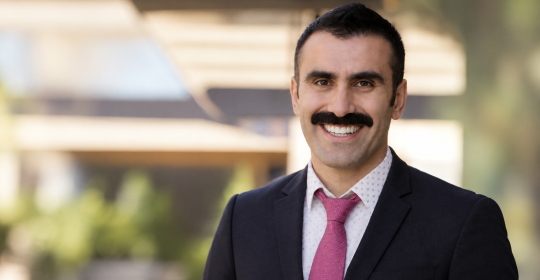
Cathy Gu, event director at SSOW Europe, said: “The report shows that while shared services are always changing, AI is set to significantly transform the sector. The vast majority of respondents are now either actively exploring or considering how AI can be integrated to drive more improvements and better outcomes.
“This role of AI comes further into focus as the sector is shifting, asking what else shared services can deliver beyond cost efficiency, stability and control. The focus is no longer on simply reducing costs or saving time, but complementing this by adding real value.
“The organisations that lead the next phase will be those that measure, communicate, and deliver value that the enterprise truly cares about. The shift toward maturity suggests shared services are becoming more central to businesses, and we are now entering an era where the focus will be on scale, capability, and digital investment, integrating tools like AI, strategically.”
The report comes soon after an audit on the state of the government’s shared services project. It showed some progress has been made, but highlighted fundamental issues like no single owner, the absence of a strong technical lead and fragmented government interdependencies.
Cathy Gu said: “While the shared services market is maturing, the recent government audit shows there can be a gap between ambition and execution. Change on this scale requires time, funding, training and culture shift and it’s not a quick fix or overnight solution.
“New technology like AI is developing and improving all the time and integration requires agility and constant ongoing change and integration. In addition, there are often foundational elements like data consistency which need to be in place before you can move on to steps like automation and AI.”
Over 850 attendees will attend SSSOW Europe this year on 18 - 21 May at Estoril Conference Centre, Portugal to explore how to best use and deliver shared services. Speakers include Iwona Sikora from Iron Mountain, Gunter Van Craen from Bekaert, Madeleine Roach from Sanofi, Joerg Mimmel from Bosch and Edvinas Katilius from Philip Morris International.