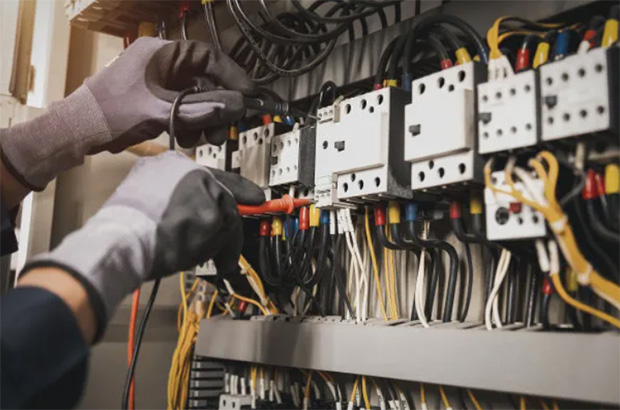
In any facility there is a separation between the high-voltage power that drives motors and heavy machinery and the low-voltage power that runs the control circuits behind the motors and heavy machinery. Control transformers make this separation possible. They do it safely and reliably. Control transformers are very important in systems.
They are inside control panels, machine tool enclosures, HVAC units and automation racks and you do not even notice them. Control transformers deliver the low-voltage power that things like relays, contactors, solenoids, PLCs and timers need to work
It tells you what control transformers are, how control transformers work, the types of control transformers that are available and what you need to think about when you are selecting a control transformer for your application.
What Is a Control Transformer?
A control transformer is a type of isolation transformer. It is specifically designed to step down high line voltage to a voltage suitable for powering control circuits. Control transformers are also known as industrial control transformers, machine tool transformers or control power transformers.
A standard power transformer is designed to handle loads. A control transformer on the hand is engineered for a different kind of challenge. Control circuits often include devices like relays and contactors. These devices draw more current when they first energize than they do during normal steady-state operation. This initial surge is called inrush current. A rated control transformer is built to handle it without letting the output voltage collapse during that period.
In terms a control transformer takes the 480V, 240V or other high line voltage in your facility. It converts it to 120V, 24V or another lower voltage that your control devices can safely use. It keeps the control circuit completely isolated from the power circuit.
How Does a Control Transformer Work?
Control transformers work on the principle of induction. This is the fundamental principle used in all transformers. When alternating flows through the primary winding it creates a changing magnetic field in the iron core. That magnetic field induces a voltage in the winding. The ratio of turns between the windings determines the output voltage.
For example if the primary winding has 480 turns and the secondary has 120 turns the turns ratio is 4:1. The transformer steps a 480V input down to 120V output. This is a configuration in North American industrial facilities. Here 480V is the line voltage and 120V is the standard control circuit voltage.
Control transformers are different from general-purpose transformers. Their windings are designed to maintain voltage. They do this during brief but heavy inrush current spikes that happen when electromagnetic devices energize.
Key Components of a Control Transformer
Understanding what goes into a control transformer helps you evaluate quality and make purchasing decisions.
A control transformer has key components.
Silicon Steel Core: The core is made from quality silicon steel sheets because they help with magnetic conductivity.
Primary and Secondary Windings: The windings are usually made from copper wire as it has resistance and works efficiently.
Insulation System: Special insulation materials are used to keep the windings and conductors separate and protect the transformer from heat, moisture and industrial contaminants.
Pressed Terminals: pressed terminals help connect wires easily without welding or screws. This makes connections more dense and installation faster and more reliable.
Metal Bracket: The metal bracket connects the block and transformer body together improving the protection level of the unit and preventing accidental contact with live circuits during installation and maintenance.
How Do You Use a Control Transformer?
Using a control transformer is easy if you follow simple steps. Getting them right means the transformer works well and the control circuit stays safe.
Match the Input Voltage to Your Supply
First check the voltage. The transformer's primary winding must match your supply voltage. Most control transformers work with 120V, 240V or 480V single-phase input. Some have taps on the winding so you can use the same unit, for different input voltages. Check your supply voltage before connecting anything.
Check the Secondary Voltage Your Control Circuit Needs
The secondary side gives a voltage for the control circuit. Common secondary voltages are 24V, 48V and 120V. Match the output to what the relays, solenoids or control devices in your circuit need. Using the voltage will either prevent the devices from working or damage them.
Size It for the Load
Add up the VA rating of everything connected to the side. Choose a control transformer with a rating. Running a transformer at or above its limit causes it to overheat and shortens its life. A good rule is to have 20 to 25 percent capacity than the load.
Consider the Installation Environment
If the transformer will be in a dusty damp or exposed area it needs an enclosure. An open-frame transformer is fine inside a sealed control panel. In environments a transformer with a protective housing keeps contaminants away and lasts longer.
Connect It Correctly. Check Before Powering Up
Connect the primary side to the supply and the secondary side to the control circuit. Double-check that all connections are tight and that the supply voltage matches the tap. Then turn on the power. Check the secondary voltage with a meter before connecting the control devices. This takes a minute. Prevents many problems.
Key Benefits of Control Transformers
Control transformers have key benefits.
Voltage Stability Under Inrush: The most important function of a control transformer is maintaining stable output voltage during the inrush current surge when contactors, relays and solenoids energize.
Electrical Isolation: The physical separation between secondary windings isolates the control circuit from the main power circuit.
Noise and Interference Rejection: Because a control transformer has primary and secondary windings it provides a degree of cleanup for electrical disturbances including noise, spikes, surges and transients that would otherwise reach the control circuit directly.
Operator Safety: By stepping down high line voltages to safer low-voltage levels and isolating the control circuit from the power circuit control transformers significantly reduce the risk of shock, for operators and maintenance technicians working on control panels.
Independent Grounding: Control transformers allow the control circuit to use its grounding scheme, independent of the power and lighting grounds.
Compact and Panel-Ready Design: Control transformers are built to be compact and easy to mount inside control panels, motor control centers and machine tool enclosures.
Where are control transformers used?
Control transformers are used in every industry that uses machines controlled by electricity or computers.
Some examples of where control transformers are used include:
robots: control transformers give industrial robots the power they need to work properly and safely. They make sure the industrial robots control system and other important parts of the robots get the right amount of electricity.
CNC machine tools: these machines need control transformers to work accurately. The control transformer helps keep the power supply stable which is important for making cuts and movements with the CNC machine tools.
HVAC systems: control transformers are used in the HVAC systems to power things like thermostats and control boards. This is important for the HVAC systems. The control transformers help the HVAC systems work properly.
Motor control centers: the control transformers in the motor control centers help manage the power supply to the motors. This is important for the motors in the motor control centers. The control transformers help keep the motors in the motor control centers running safely and efficiently which is good for the motor control centers.
Injection molding machines: the control transformers power the control circuits in the injection molding machines. This helps the injection molding machines work safely and efficiently. The control transformers are important for the injection molding machines.
Welding equipment: control transformers give power to the welding machines. The welding machines need the power from the control transformers to work.
Compressors: the control transformers help the compressors run safely. The control transformers give the compressors the power they need which's important for the compressors.
Rail traffic systems: control transformers are used in the rail traffic systems. The control transformers help manage signals and other important systems in the rail traffic systems. This is important for the rail traffic systems. The control transformers help the rail traffic systems work properly.
Power monitoring: control transformers help manage the power supply in systems that generate and distribute electricity for power monitoring.
What causes control transformers to fail?
Understanding why control transformers fail can help you prevent problems with the control transformers. Some common causes of control transformer failure include:
Overloading: when a control transformer is given much power it can overheat and fail. This happens because the control transformer is not designed to handle that power.
Voltage Surges: when the power supply has spikes or surges it can damage the control transformer. This is because the voltage spikes and surges can be too much for the control transformer to handle.
Short circuits: when there is a circuit, in the control circuit it can send a surge of power through the control transformer and damage it. This can happen if the control circuit is not properly maintained.
Poor maintenance: when control transformers are not properly maintained they can fail. This is because the control transformers need maintenance to keep them working safely and efficiently.
How do you choose the right control transformer?
Choosing the right control transformer is important. You need to consider things like:
Voltage: you need to make sure the primary voltage of the transformer matches the power supply in your facility.
VA rating: you need to calculate the power required by your control devices and choose a transformer that can handle it.
Frequency: you need to make sure the transformer is designed for your power frequency.
Phase: you need to choose a transformer that is designed for your system whether it is phase or three phase.
Environment: you need to consider where the transformer will be installed and choose one that is designed for that environment.
Final Thoughts
Control transformers are really important in systems. They make sure machines run safely and work well. You need to pick the right control transformer so you do not have problems and your machines keep running.
When the ratings of a transformer do not match what we need for a particular job it is better to get a custom-built transformer. Some places have needs like a certain voltage or a lot of power that a standard transformer is not made for. In those situations a step up & step down transformer that is built for that job will work better and last longer than one that we try to make fit. We can make custom control transformers to match the voltage we need to put in and get out and to handle the amount of power that is required and we can even choose the right kind of case to protect it from the environment.
For applications with specific voltage, current, or enclosure requirements, a custom-built control transformer is often the more reliable option than adapting a standard unit. Manufacturers like Steptransformer.com produce control transformers to exact specifications across a wide range of power ratings.