

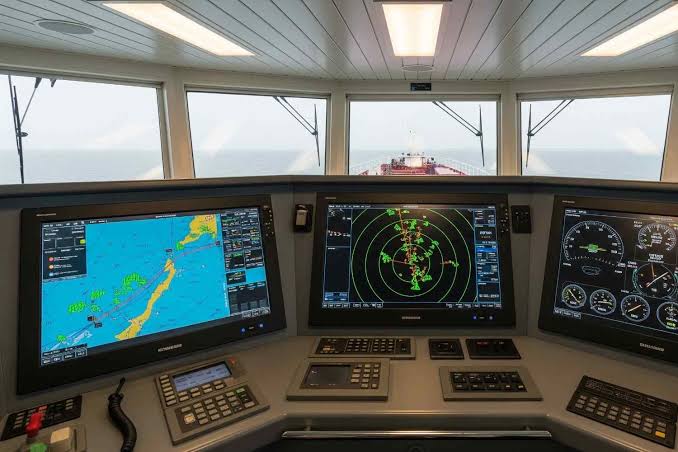
Deck operations on a vessel — anchoring, mooring, windlass management, and the range of equipment activations that accompany arrival, departure, and underway handling — take place in conditions that concentrate risk in ways that are not always fully appreciated from the comfort of the helm. Wet surfaces, moving lines, limited visibility, time pressure, and the physical demands of working on a pitching or rolling deck all combine to create an environment where control hardware must perform with complete reliability and must be operable under conditions that standard equipment is not designed to handle. Purpose-engineered deck windlass control systems designed for genuine marine performance address this environment directly — providing the reliability, ergonomics, and durability that deck safety and operational efficiency require.
The quality of deck control hardware is a safety variable that is easy to underestimate until a failure occurs in a demanding situation. A windlass switch that requires precise finger placement to activate reliably — in conditions where the operator is wearing wet gloves and managing a line simultaneously — is not merely inconvenient. It is a hazard. The engineering that eliminates this hazard is the engineering that takes the actual conditions of deck operation as its starting point, rather than the controlled conditions of a test bench.
The Specific Demands of Deck Control Hardware
Deck control equipment operates in the harshest accessible location on any vessel. Unlike helm-mounted hardware, which benefits from some degree of shelter and is typically operated by a seated or standing operator in a relatively stable position, deck switches are exposed to the full force of the marine environment — spray, green water, UV radiation, salt crystallisation, and temperature extremes that vary from tropical heat to arctic cold depending on the vessel's operating area.
The mechanical demands are equally challenging. Deck switches are operated by crew members wearing gloves, working under physical and time pressure, and sometimes managing other equipment simultaneously with the hand not activating the switch. Switches that require precise activation — a small target area, a specific actuation angle, or a firm mechanical depression — introduce error and delay in conditions where precision is hard to achieve and delay carries consequences. Hardware that responds reliably to the kind of imprecise, gloved contact that deck operations realistically involve is hardware designed for how the sea is actually worked, not how it is imagined.
Windlass Control and Anchoring Safety
Windlass operation — raising and lowering the anchor — is one of the most mechanically demanding and safety-critical deck operations on any vessel. The windlass motor draws significant current, the chain or rope under tension creates substantial mechanical forces, and the consequences of a control system failure during anchoring operations range from inconvenient to genuinely dangerous depending on the circumstances. A switch that activates inadvertently, fails to activate when commanded, or provides ambiguous feedback about its state introduces risks into an already demanding operation that well-designed hardware eliminates.
Advanced windlass control switches designed for deck use combine several features that address these specific risks. Positive actuation confirmation — clear tactile and audible feedback that the switch has registered — eliminates ambiguity about command state. Resistance to inadvertent activation through physical contact with lines, feet, or equipment prevents unintended windlass operations. Hermetic sealing ensures that repeated immersion and spray does not degrade switch function over time. Together, these characteristics produce hardware that operators can rely on in the conditions where reliable equipment matters most.
Foot Switch and Remote Operation Options
Effective deck control design recognises that anchoring and mooring operations frequently require both hands — managing the helm, handling lines, or steadying against vessel movement — at precisely the moments when windlass or mooring equipment activation is required. Foot-operated switch options address this constraint directly, allowing windlass activation without any requirement to release a handhold or set down equipment.
Similarly, the ability to operate deck equipment from multiple positions — from the helm as well as the foredeck, for example — improves both safety and efficiency during single-handed or short-handed operation. A control architecture that supports multiple activation points, with consistent behaviour and feedback from each, gives operators the flexibility to manage deck operations from the position that safety and situational awareness require rather than the position that hardware placement dictates.
Integration With the Vessel's Control Architecture
Advanced deck control systems do not operate in isolation from the vessel's wider control architecture. Integration with the helm's multifunction display, with the vessel management app, and with the broader NMEA 2000 network allows deck equipment status to be monitored and managed from multiple points on the vessel — providing the situational awareness that safe deck operations require and enabling the kind of coordinated management of multiple systems that efficient manoeuvring demands.
For boat builders specifying deck control systems for new builds, and for owners upgrading existing installations, the investment in purpose-engineered hardware that integrates with the vessel's control architecture pays returns in every anchoring, mooring, and departure operation for the life of the vessel. The marine anchor switch that performs reliably in the conditions where deck operations actually occur — not the conditions where they are imagined — is the switch that keeps operations safe, efficient, and free from the hardware-induced complications that inferior equipment introduces.


