An online survey of employers conducted by Whitestone Insight on behalf of the Recruitment and Employment Confederation (REC) straight after the Autumn Budget, suggests a sudden major bounce back in the labour market is unrealistic at the start of this year – but there is scope in business sentiment for improvement with the right mood music and measures from government.
Neil Carberry, REC Chief Executive, said:
“The story of 2025 was a job market that started and stopped without ever producing real momentum. Employers knew what they wanted to do but rising costs and unpredictable markets sapped confidence to move. The Budget did too little to spark investment or ease cost pressures.
“Going into 2026, the government has the opportunity to set a different tone and deliver growth measures that convince businesses to invest, helped by fewer nasty surprises. The co-operative and focussed approach that helped make sensible changes to the Employment Rights Act in December needs to flow through to decisions on industrial strategy, new regulations and the wider cost of doing business. After all, the government will only be successful if it can generate growth from the private sector.”
Respondents were asked if measures announced in the Autumn Budget on 26 November 2025 will impact their hiring plans for 2026. The respondents were from different industries, sizes and locations in the UK. A total of 39.5% suggest no change to hiring, 20.9% said slightly reduce hiring, 15.1% slightly increase hiring, 9.8% significantly reduce hiring, 5.5% will stop all hiring at all as a result, 4.7% do not know and 4.5% significantly increase hiring.
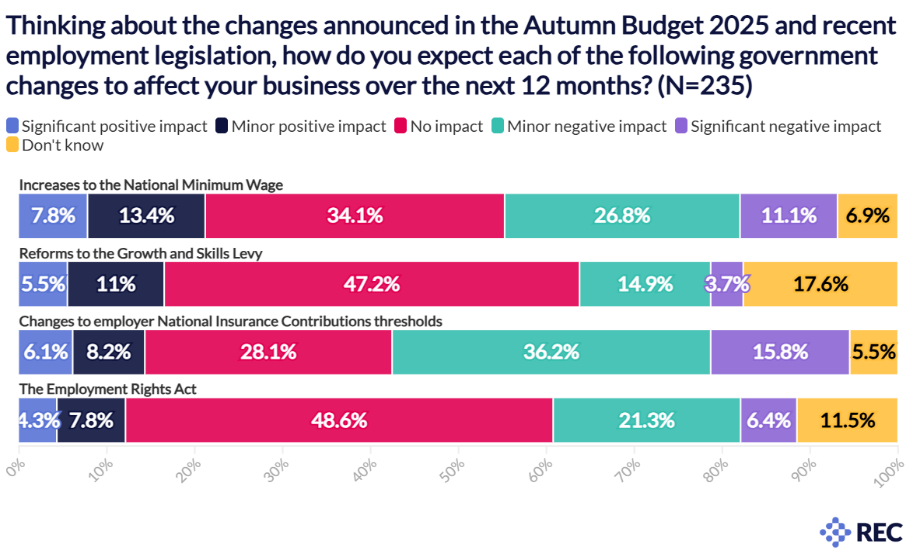
In a separate second question, the same cohort of 235 employers were asked how they expect government policies to affect their business in the next 12 months. As well as identifying the strains on business, the results show how uncertain firms are about the impact of the Employment Rights Bill and changes to the Apprenticeship Levy replacement, the Growth and Skills Levy.