

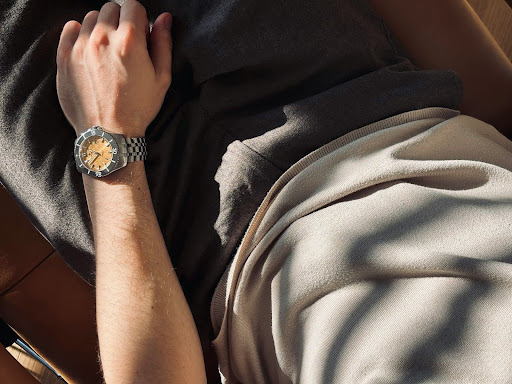
Professional environments have changed significantly over the past two decades. Dress codes have relaxed, remote work has blurred boundaries between personal and professional presentation, and individual expression is more openly accepted in many industries. Yet amid these shifts, certain elements of professional appearance have remained remarkably stable. Accessories that signal restraint, durability, and intention continue to play a quiet but influential role in how people are perceived at work.
Rather than disappearing, timeless accessories have adapted to new expectations. They now function less as status symbols and more as indicators of reliability and self-awareness. In this context, jewellery and accessories associated with makers such as Kuvera Jewelry fit into a broader professional landscape where longevity and material quality still carry meaning, even as fashion cycles accelerate elsewhere.
The persistence of these accessories suggests that modern professionalism values continuity as much as flexibility.
Accessories as Part of Professional Identity
Professional identity is shaped over time, not assembled daily. Many people gravitate toward a small number of personal items that become part of how they are recognised: a watch worn consistently, a ring that never changes, or jewellery that appears across years rather than months.
In this way, accessories act as anchors of identity. They offer continuity in environments where roles, projects, and even workplaces may change frequently. Because they are worn close to the body and chosen deliberately, they often carry more personal significance than clothing.
Watches are a particularly clear example. Styles associated with collections such as Swarovski Watches reflect a design approach that prioritises balance between visibility and subtlety, making them suitable for professional use without overwhelming the overall presentation. Their appeal lies not in novelty, but in consistency.
Why Restraint Still Signals Competence
In professional settings, visual signals operate quickly and often subconsciously. While bold fashion choices can communicate creativity or confidence, restraint tends to signal stability and judgment. Accessories that are understated, well-made, and consistent with long-term use often reinforce perceptions of competence rather than drawing attention to trend alignment.
This does not mean professional appearance is static. Instead, it reflects a preference for elements that age well and remain appropriate across changing contexts. Watches, jewellery, and other accessories that avoid overt branding or seasonal motifs tend to blend into professional environments without becoming invisible. They contribute to an overall impression of coherence rather than novelty.
This balance is particularly important in settings where trust, continuity, and decision-making authority matter. Accessories that feel temporary or overly expressive can unintentionally undermine those signals.
Longevity as a Professional Value
Longevity has become an increasingly valued trait in professional life. Careers are longer, roles evolve more gradually, and reputation is built incrementally rather than through rapid reinvention. Accessories that mirror this long-term perspective align naturally with professional culture.
Items designed to last are often perceived as more thoughtful choices. They suggest planning rather than impulse, and care rather than disposability. In contrast, accessories that visibly follow short-term trends may clash with environments that prioritise reliability.
This emphasis on longevity also reflects broader cultural shifts around sustainability and material awareness. Professionals are more conscious of how their choices reflect values beyond appearance, including durability and responsible consumption.
The Quiet Role of Consistency
Consistency plays a subtle but powerful role in professional perception. Wearing the same or similar accessories regularly creates familiarity. Over time, this familiarity contributes to recognition and trust, even if it is never consciously noted.
In meetings, negotiations, or long-term collaborations, these repeated visual cues reinforce stability. They communicate that the person is not performing a role temporarily, but inhabiting it with continuity. Accessories become part of that visual language.
Consistency also reduces cognitive load. When accessories are chosen once and worn repeatedly, attention can shift away from appearance toward performance and interaction. This practicality is often undervalued but deeply functional.
Modern Professional Settings Are More Flexible, Not Less Symbolic
While many workplaces have relaxed formal dress requirements, symbolism has not disappeared. It has simply become more nuanced. Instead of rigid codes, professionals navigate expectations through context and judgment.
In this environment, timeless accessories offer flexibility. They can move between formal and informal settings without appearing out of place. A well-chosen watch or piece of jewellery often works as effectively in a client meeting as it does in a hybrid or remote setting.
This adaptability is part of why such accessories persist. They are not tied to a specific dress code, but to broader ideas of professionalism that transcend individual workplaces.
Accessories and Gender-Neutral Professional Expression
Another reason timeless accessories retain relevance is their compatibility with more fluid approaches to gender expression in professional life. Understated design and material quality often translate well across traditional gender boundaries.
As professional environments become more inclusive, accessories that avoid exaggerated gender cues tend to feel more universally appropriate. Watches, rings, and jewellery designed around proportion and material rather than ornamentation align with this shift.
This universality strengthens their role as long-term professional markers rather than trend-dependent statements.
The Psychological Effect of Familiar Objects
Beyond external perception, accessories also influence how individuals feel in professional settings. Familiar objects can provide a sense of grounding, particularly in high-pressure or unfamiliar environments.
Wearing the same watch or piece of jewellery over time can create a subtle sense of continuity, even when circumstances change. This psychological stability can translate into greater confidence and focus.
Research discussed by Harvard Business School has highlighted how consistent personal rituals and symbols can support confidence and decision-making in professional contexts. While accessories are rarely framed this way, they often function as quiet personal anchors.
Why Timelessness Resists Obsolescence
Timeless accessories endure because they are not designed to react to fashion cycles. Instead, they draw on proportions, materials, and forms that remain intelligible across decades. This resistance to obsolescence makes them particularly well suited to professional environments, where relevance is measured over years rather than seasons.
As trends accelerate through social media and fast production cycles, the contrast becomes more pronounced. Timeless accessories stand out precisely because they do not chase attention.
Their value lies in remaining appropriate, not in being noticed.
Professional Style as Accumulation, Not Replacement
Modern professional style is increasingly additive rather than substitutive. People refine their appearance gradually, replacing only what no longer serves functionally or aesthetically. Accessories that last contribute to this accumulation rather than forcing periodic reinvention.
This approach aligns with career development itself. Professional credibility is built through repetition, consistency, and gradual refinement. Accessories that mirror that process feel coherent rather than contrived.
In this sense, timeless accessories are less about nostalgia and more about alignment with how professional life actually unfolds.
Why They Still Matter
Timeless accessories continue to matter in modern professional settings because they operate at the intersection of identity, perception, and practicality. They signal judgment without display, continuity without rigidity, and confidence without excess.
As workplaces continue to evolve, these qualities remain relevant. Professionalism may look different than it did a generation ago, but it still values signals of care, consistency, and intention. Accessories that embody those traits quietly reinforce them every day.
In an era defined by change, it is often the stable details that carry the most weight.

