

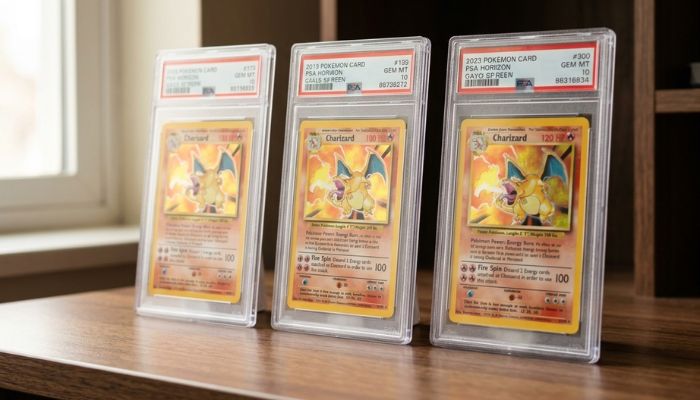
Graded PSA cards carry real monetary value, and that value lives inside a sealed plastic slab. PSA assigns each card a grade from 1 to 10, and even a minor drop in condition can cut the resale price significantly. Collectors who treat their slabs carelessly often discover surface scratches, label fading, or slab cracks that hurt both grade integrity and buyer confidence. Protecting your PSA cards properly is not optional when your collection represents a serious financial and hobby investment.
Pick Storage That Matches Your Collection
Storage needs change depending on how many graded cards you own. A collector with 10 slabs needs a completely different setup compared to someone managing 300 cards.
➔ Single-card acrylic stands work well for small featured collections kept on a desk or shelf.
➔ Slab-fit storage boxes hold rows of cards securely with dividers preventing movement and contact scratches.
➔ Stackable hard cases suit large collections needing organized, protective, and space-efficient long-term storage.
➔ Slab binder pages offer visible organization but only when designed specifically for graded card dimensions.
Match your storage solution to your actual collection size before buying anything.
Control Heat, Humidity, and Air Exposure
Heat above 75°F causes PSA slabs to expand slightly, which puts internal pressure on the card surface over extended periods. Humidity above 60% creates moisture buildup inside storage containers, leading to card warping and label deterioration that no collector can reverse. Keeping your storage area between 65 and 70°F with humidity sitting between 35 and 55% gives cards a stable, safe environment. Place silica gel packets inside every storage box to absorb excess moisture actively and consistently throughout the year.
Shield Cards From Light and UV Rays
Sunlight and artificial UV light both cause permanent damage to graded cards, and most collectors underestimate how quickly fading begins. PSA label printing, holographic foil surfaces, and card ink all break down under consistent light exposure.
➔ Store bulk collections inside closed boxes or dark shelving units away from windows entirely.
➔ Use UV-filtering acrylic cases for any cards placed on display in lit rooms.
➔ Avoid fluorescent lighting directly above open display setups for extended daily periods.
➔ Rotate displayed cards periodically so no single card absorbs continuous concentrated light exposure.
UV damage lowers visual appeal and collector value simultaneously.
Choose the Right Display Card Cases
Choosing quality display card cases directly determines how well your PSA slabs stay protected while remaining fully visible. A well-built display case for cards uses UV-filtering acrylic panels that block harmful light while keeping every label and card surface clearly visible from any angle.
Collectors who invest in properly graded card display cases avoid the slow fading and surface contamination that open shelving causes over months. Every serious collection deserves a PSA card display case that balances clean presentation with reliable long-term physical protection for each slab.
Display Cards Safely Without Causing Damage
Wall-mounted slab frames hold individual PSA cards flat against a surface while keeping the slab fully enclosed and protected from dust and contact. Desktop acrylic stands elevate cards at a clean viewing angle without placing pressure on slab edges or label areas.
Tiered display cases allow multiple cards to sit in organized rows while remaining fully visible and accessible without repeated handling. Shadow box setups work well for themed displays built around specific players, sets, or years without exposing cards to open air consistently.
Organize Your Collection With Clear Systems
Serious collectors who sort their PSA cards by sport, player, set year, or grade tier find and access specific cards faster without unnecessary handling. Every time you search through unsorted slabs, surface contact increases and scratch risk grows steadily. Keep a digital spreadsheet or dedicated collector app with each card's PSA certification number, grade, and estimated current value logged clearly.
PSA cert numbers allow instant online verification through PSA's official lookup tool, which adds an important layer of documentation useful during resale conversations.
Handle Every PSA Slab Correctly Always
Careless handling causes more slab damage in active collections than poor storage does over time.
➔ Hold every slab firmly by its outer edges and never press fingers against the inner window surface
➔ Keep slabs away from food, liquids, and dusty work surfaces during any inspection session
➔ Never stack slabs loosely in a pile without foam dividers or individual compartments separating each one
➔ Inspect slabs under good lighting periodically to catch surface scratches or hairline cracks early
Slab damage does not always affect the internal card grade, but it reduces buyer confidence and resale price noticeably.
Document and Insure Cards Worth Protecting
High-value PSA cards need clear photographic documentation and proper insurance coverage behind them. Photograph every card clearly under good lighting and save images organized by cert number in a dedicated folder. PSA's online verification tool lets you confirm grade authenticity and check population reports that show how many cards share your card's grade level.
Collectibles insurance policies cover theft, fire, and transit loss at accessible annual premiums, and most providers accept PSA cert numbers as sufficient proof of authenticity and value.
Avoid These Quiet Storage Errors Completely
Garages and attics expose PSA cards to temperature swings, humidity spikes, and pest activity that cause irreversible damage over seasons. Standard binder pages are not designed for slabs, press against label surfaces and create scratching during page turns.
Leaving cards near windows allows daily UV exposure to fade colors gradually without any visible warning until damage becomes permanent. Stacking slabs without dividers causes edge chipping and window scratching from card-to-card contact during any movement or vibration in the storage area.
Build a Consistent Long-Term Care Routine
Checking storage conditions monthly takes under five minutes and catches humidity or temperature problems before they reach your cards. Refresh silica gel packets every three months because exhausted packets stop absorbing moisture and create a false sense of protection. Conduct a full inventory review annually, updating card values, inspecting slab surfaces, and confirming that storage containers remain structurally sound and properly sealed. Collectors who build this simple routine preserve both card condition and collection value across years without consistently investing significant time or money into maintenance.