

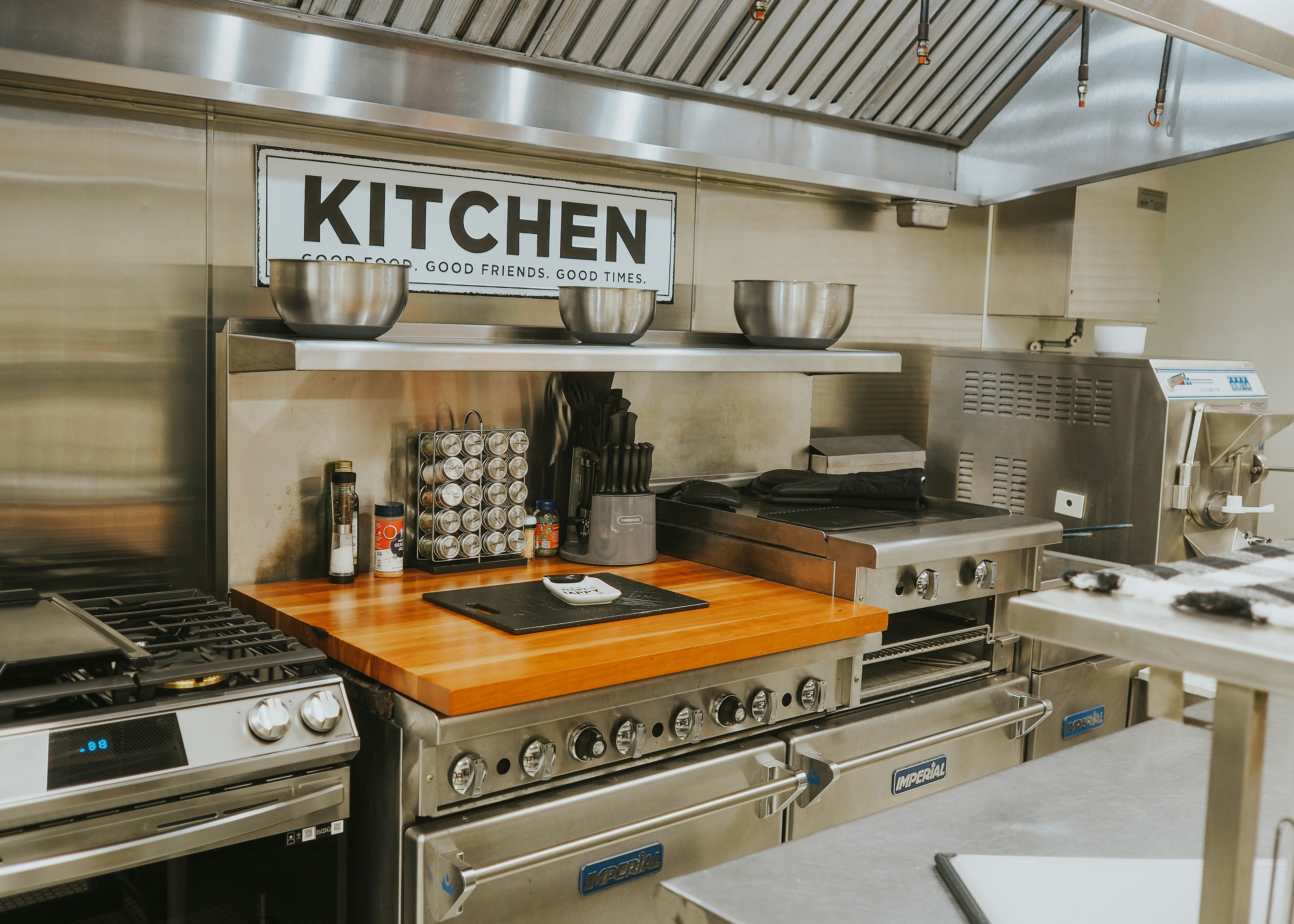
Those details could be their skills with different kitchen equipment. For instance, if you’re looking for a recipe developer, you want them to be knowledgeable about a wide range of cooking methods and tools.
On the other hand, a pastry chef who knows how to handle a tandoor oven shows a passion for food and taste, and a desire to learn complex methods (especially if they’re not of Asian descent) that fall outside their field of interest.
So, whether you’re looking for a chef, a recipe developer, a patiser, or a food stylist, as a recruiter, you should know what mastering different kitchen equipment says about each candidate.
In today’s piece, we’ll have a look at several interesting cooking tools, ranging from a chef’s knife to a salamander, and what they say about their wielders.
4 Kitchen Tools and the Skills They Imply
As a rule of thumb, workers who have solid nutrition knowledge and good culinary habits (regardless of industry) are a gem. Good, healthy nutrition helps balance blood sugar throughout the day, which means fewer energy dips, like those that happen immediately after lunch.
Employees who know how to eat proper meals at the right time of the day are more productive and motivated. So they are an advantage for every team.
But now, let’s see how to spot the truly passionate culinary workers from the regular ones by asking about the types of kitchen equipment they master.
1. Chef’s Knife (Japanese Blade)
Anyone hoping to work in the food industry must know how to use a chef’s knife, but a Japanese blade is a special kind of tool.
A Japanese blade—such as a Gyuto (chef's knife), Santoku (all-purpose), or a specialized Yanagiba (sashimi slicer)—is the very definition of commitment to the craft. Because they are typically forged from harder steel and ground to a thinner, sharper angle (often 15∘ to 20∘), they demand different, more respectful skills than a heavier, softer Western knife.
The wielder must develop precise, fluid, and safe knife skills (chopping, dicing, mincing, julienning) through thorough practice. They also need to become accustomed to the blade and learn its limits to avoid breaking it
You must learn to sharpen your blade using Japanese water stones (whetstones), not pull-through or electric sharpeners, and never a honing steel (which can damage the fine edge).
In short, mastering a Japanese blade is less about brute force and more about precision, discipline, and reverence for the tool's quality. It forces you to improve your fundamental skills to match the knife's capabilities.
2. Wok
A non-connoisseur would be tempted to believe the wok is a simple tool, a curved piece of metal. In reality, proper cooking technique demands a profound understanding of heat, physics, and timing.
Unlike a flat skillet, which cooks food uniformly, the wok has distinct, dynamic heat zones, making it a demanding but highly rewarding tool. It’s also a tool that requires precision and speed, combined with tossing and stirring.
Mastering the wok means becoming a short-order chef who can coordinate multiple variables (heat, sequence, movement) at a dizzying pace, all while maintaining the integrity of the delicate ingredients.
3. Tandoor Oven
Foods cooked in a tandoor oven develop a unique smoky flavor and tender texture that you’ll never forget. However, cooking in this cylindrical clay or metal furnace requires deep knowledge of how fire and heat work. And lots of determination and practice.
It’s also important to note that there’s a difference between a residential tandoor oven and a commercial-grade one. The tandoor for home use doesn’t have as much power, for safety purposes.
You can’t even find the commercial-grade version in regular stores. To shop tandoor ovens for a commercial kitchen, you need a commercial-grade equipment supplier like Restaurant Supply.
Mastery of the tandoor teaches you a lot about patience, observation, and respect toward the heat. These are good skills to have when working with powerful cooking equipment.
4. Salamander Broiler
If someone declares themselves a master of the salamander (named for the mythical creature said to live in fire), you know they’ve worked in a professional kitchen long enough to be experienced.
The salamander operates at extremely high temperatures (often over 500∘°C or 1,000∘°F) and requires a master's eye for speed and precision. Also, given the extreme heat, only someone who is very safety-conscious and cleanliness-minded can become a master.
The person operating this broiler is also extremely focused, as they know that even a second of distraction can spell disaster.
Wrap Up
Recruiters in the food industry or elsewhere always need to pay attention to the small details to identify truly passionate candidates. So, sneaking in a question about the kitchen equipment they like to use most during the interview or even the application process can save you a lot of time and misery.


