

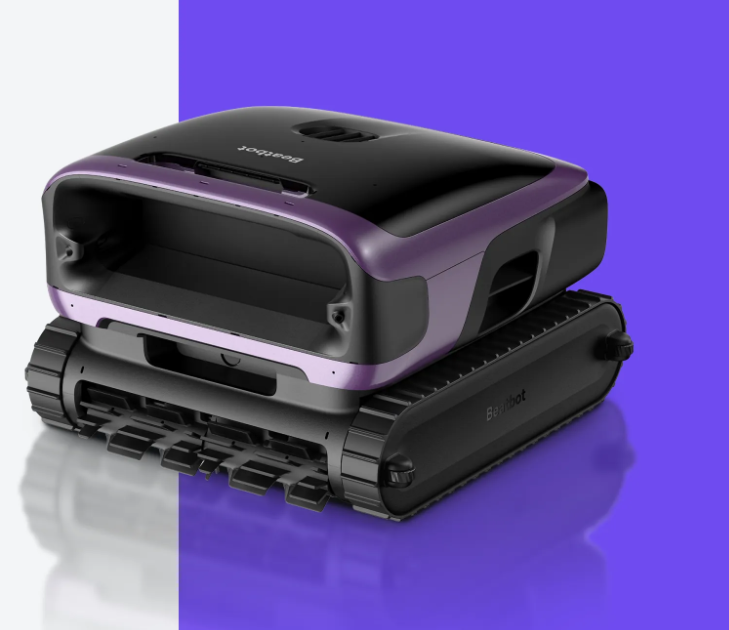
In the modern professional landscape, the conversation around automation has shifted from a discussion of "luxury" to one of "boundaries." For entrepreneurs and high-level executives, the true cost of an asset is no longer its purchase price, but the cognitive bandwidth it consumes. As we move through 2026, the baseline for smart infrastructure is defined by its ability to operate outside the human decision-making loop. This paradigm shift is most evident in the evolution of residential maintenance, where the adoption of a high-performance robot pool cleaner has become a strategic necessity. It is the final boundary between a managed environment and a chaotic one, allowing the homeowner to protect their most valuable resource: focused attention.
The Cognitive Friction of Legacy Systems
Historically, the tools we used to "save time" often did the opposite. Most automated systems were essentially "helpers" that required constant human oversight. In the context of aquatic maintenance, this manifested as tethered devices that needed to be untangled, monitored, and manually assisted whenever they encountered a structural obstacle. These legacy systems didn't solve the problem of labor; they merely changed the nature of the chore. The homeowner remained the de facto supervisor of the machine, creating a persistent "mental leak" where attention was constantly diverted to troubleshoot a flawed process.
The disruption in 2026 is driven by the achievement of navigational sovereignty. By moving away from randomized movement logic and embracing SLAM-based neural mapping, the modern swimming pool robot vacuum cleaner has established a new boundary. It no longer asks for permission or guidance; it possesses a digital consciousness of its environment, calculating path matrices that ensure 100% coverage without human intervention. This is the difference between a gadget that competes for your time and infrastructure that protects it.
The Psychological Shift: A Study in Absence
Most families only noticed the change in hindsight—when several weekends had passed, guests had come and gone, and the pool had simply stayed ready without anyone thinking about it. For a long time, we viewed maintenance as a recurring ritual. We mentally planned our weekends around the pool's needs, deciding when to retrieve the cleaner or when to manually scrub the waterlines the machine inevitably missed.
Most owners only recognized the shift in hindsight—after several weekends had passed, nothing had gone wrong, and the pool had simply stayed ready without ever entering the conversation. At that stage, the shift becomes structural. There was no backup plan, no reminder on the calendar, and no last-minute check before the Saturday barbecue. Only later did it become clear that the task hadn’t been automated at all—it had simply disappeared from everyday life. At that point, the task didn’t feel automated—it felt absent.
Technical Benchmarks of Autonomous Stewardship
To maintain this invisible performance, the engineering behind the modern robot pool cleaner must close the loop on three critical operational friction points:
This leap is best exemplified by systems like the swimming pool robot vacuum cleaner, which utilizes cordless engineering to remove the physical umbilical cord that once tied the homeowner to the maintenance cycle. Without a cable to snag or limit range, the robot can navigate complex architectural designs—sun shelves, deep ends, and vertical walls—with a level of repeatable precision that legacy systems could never achieve.
Engineering the Silent Steward
The sustainability of this "absent" status depends on a commitment to proactive defense. If organic matter is allowed to sink and decay, it destroys water chemistry and strains the primary filtration system. High-end units now utilize active thrust technologies to intercept debris while it is still buoyant. By removing contaminants at the surface interface, the system prevents the downward spiral of water degradation before it begins.
Furthermore, the closing of the automation loop through self-maintaining features has addressed the last human touchpoint. A robot that requires daily manual filter rinsing is not truly autonomous; it is a dependent. By automating internal flushing and maximizing energy endurance—often exceeding eleven hours of continuous operation—the newest generation of robotics ensures that the human role is reduced to mere periodic oversight, rather than daily labor. This is the new standard for elite living: technology that is sophisticated enough to be silent.
Conclusion: The New Frontier of Scalable Efficiency
The evolution of autonomous infrastructure is ultimately a story of reclaiming the creative horizon. We have moved past the era of machines that demand our attention and into an age where our homes are capable of proactive stewardship. In 2026, the integration of a truly autonomous robot pool cleaner is not just a hardware upgrade; it is a declaration of independence from the mundane.
By delegating the repetitive rituals of the past to intelligent agents, we ensure that our private sanctuaries remain places to reconnect with what matters most—creative thought, family, and true respite. Reclaiming your time is the ultimate upgrade, turning maintenance into a solved problem and leisure into a permanent state of being. The swimming pool robot vacuum cleaner has finally become the invisible hand that maintains perfection, allowing the human mind to focus on the high-value pursuits that define a high-performance life.