
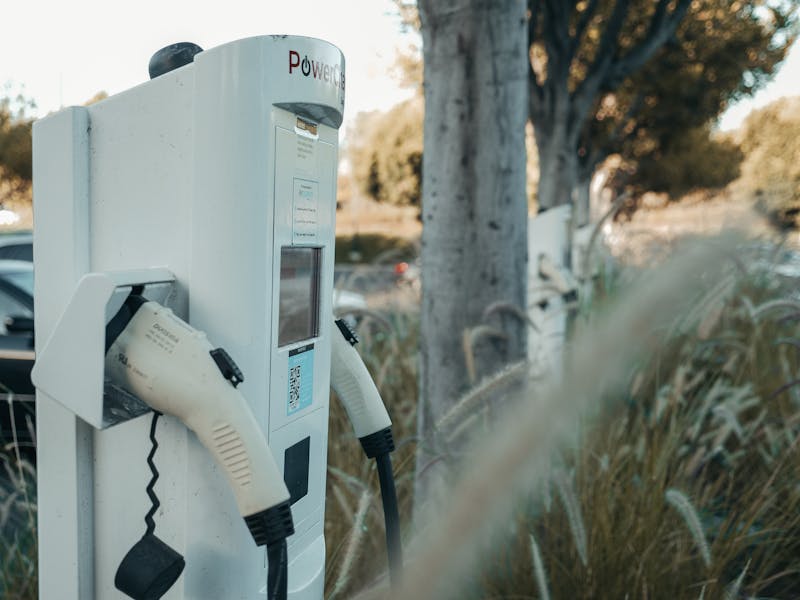
Pennsylvania added over 85,000 new electric vehicles in 2025, and most of those owners charge at home. A home EV charger is the single most important accessory for an electric vehicle because it transforms ownership from a daily planning exercise into a routine as simple as plugging in a phone at night. But installing a Level 2 EV charger is not as simple as plugging into a wall outlet. It involves electrical panel capacity assessment, circuit sizing, permitting, choosing between hardwired and plug-in units, and understanding how the charger fits into the home's broader electrical infrastructure.
This guide covers everything Pennsylvania homeowners need to know about home EV charger installation in 2026, from costs to rebates to common pitfalls that waste money and create safety risks.
Level 1 vs Level 2: Why You Almost Certainly Need an Upgrade
Every EV comes with a Level 1 charger that plugs into a standard 120V household outlet. It adds about 4 to 5 miles of range per hour, meaning a full charge takes 40 or more hours for most modern EVs with 60 to 80 kWh batteries. That works if you drive 20 miles a day and have two full days to recover from a longer trip. For everyone else, Level 2 is essential.
Level 2 chargers use 240V, the same voltage as your dryer or oven, and deliver 25 to 40 miles of range per hour depending on the amperage. A typical EV charges overnight in 6 to 8 hours on a 48-amp Level 2 charger. That is the difference between "I hope I have enough charge" and never thinking about charging at all.
The cost difference in electricity is negligible. Level 1 and Level 2 consume the same total kilowatt-hours to charge the same battery. The difference is speed. What Level 1 accomplishes in 40 hours, Level 2 completes in 8. For households with two EVs, or families that drive more than 50 miles daily, Level 2 is not a convenience upgrade. It is a necessity for the vehicle to be usable as primary transportation.
There is a third option gaining attention: Level 2 chargers with load management. These smart chargers adjust their charging speed based on other electrical loads in the home. When the dryer is running, the charger reduces its draw. When the dryer finishes, the charger ramps back up. This capability is increasingly important for homes with 100-amp panels that cannot support a full 48-amp charger alongside existing loads.
What Installation Actually Involves
EV charger installation involves four distinct phases, each with its own cost considerations and potential complications. Understanding these phases upfront prevents surprises during the project.
1. Electrical Panel Assessment
A Level 2 charger draws 30 to 50 amps continuously during a charging session. Your electrical panel needs available capacity to support this load alongside everything else in the home. Most homes have either 100-amp or 200-amp electrical panels.
A 200-amp panel typically has sufficient capacity for a 48-amp EV charger without modifications. A 100-amp panel is a different situation. If you have central air conditioning (30 to 50 amps), an electric dryer (30 amps), an electric water heater (25 to 30 amps), and an electric range (40 to 50 amps), a 100-amp panel may already be near capacity. Adding a 48-amp charger could exceed the panel's rating, creating a fire risk and violating electrical code.
Three solutions for panels at capacity:
➔ Panel upgrade to 200 amps: $1,500 to $3,000 including the new panel, main breaker, and utility coordination. This eliminates capacity concerns for all future electrical needs including additional EV chargers, heat pumps, and other high-draw equipment.
➔ Smart load management device: $300 to $500. Devices like the DCC-12 or NeoCharge share an existing 240V circuit between two appliances, like a dryer and charger, ensuring only one draws power at a time. This avoids the panel upgrade entirely but limits charging to times when the shared appliance is not in use.
➔ Lower-amperage charger: Installing a 24-amp charger instead of a 48-amp one requires only a 30-amp breaker and adds roughly 15 to 18 miles of range per hour. For drivers who charge overnight and drive less than 100 miles daily, this is adequate and costs significantly less to install.
2. Circuit and Wiring
The charger needs a dedicated 240V circuit from your electrical panel to the charging location. The cost depends heavily on the distance between the panel and the charger.
➔ Attached garage, short run (under 20 feet): $300 to $600 for wiring, including 6-gauge copper wire, conduit, and a 50-amp GFCI breaker.
➔ Attached garage, long run (20 to 50 feet): $600 to $1,200. Longer runs may require heavier gauge wire to prevent voltage drop.
➔ Detached garage or outdoor installation (50 to 100 feet): $800 to $2,500. Running cable underground requires trenching, conduit rated for burial, and potentially thicker wire to compensate for voltage drop. Trenching alone costs $5 to $12 per linear foot.
Wire sizing matters more than most homeowners realize. The NEC requires specific wire gauges for specific amperages at specific distances. A 48-amp charger on a 50-foot run requires 6-gauge wire. At 100 feet, it may require 4-gauge wire to avoid voltage drop that reduces charging speed and stresses the charger's electronics. An electrician who sizes wire correctly upfront prevents performance issues and safety risks that an undersized circuit creates.
3. Permitting and Inspection
Most Pennsylvania municipalities require an electrical permit for a new 240V circuit, typically $75 to $150 including the required inspection. Some townships in the Philadelphia suburbs and the Lehigh Valley have streamlined EV charger permits with expedited review and reduced fees. The inspection verifies code-compliant wiring, correct breaker sizing, proper grounding, and clearance requirements. Skipping the permit to save $100 creates serious risks: insurance claims after electrical fires can be denied if the work was not permitted, and unpermitted work complicates home sales when inspectors flag it.
4. The Charger Unit
Top picks for Pennsylvania homeowners in 2026:
➔ ChargePoint Home Flex ($600): Adjustable amperage from 16 to 50 amps, WiFi connectivity with detailed energy tracking, works with any EV. The adjustable amperage allows the charger to match circuit capacity without replacement if the homeowner upgrades their panel later.
➔ Grizzl-E Classic ($400): No WiFi, no app, no smart features, and bombproof reliability. NEMA 4 rated for outdoor installation with a 24-foot cable. The most reliable option at any price for homeowners who want a charger that simply works.
➔ Emporia Level 2 ($450): Excellent energy monitoring that integrates with the Emporia Vue whole-home energy monitor. Energy tracking can save $50 to $100 per year by identifying optimal charging times.
➔ Tesla Wall Connector ($475): Best for Tesla owners. Supports Tesla-to-Tesla power sharing where two Wall Connectors on the same circuit automatically split available power.
➔ Wallbox Pulsar Plus ($550): Compact design, strong app, and bidirectional charging readiness for future vehicle-to-home capability.
Total Cost Breakdown for Pennsylvania
➔ Level 2 charger unit: $400 to $700
➔ Installation labor: $400 to $800
➔ Wiring materials (wire, conduit, breaker): $100 to $400
➔ Electrical permit and inspection: $75 to $150
➔ Panel upgrade if needed: $1,500 to $3,000
Total without panel upgrade: $975 to $2,050. This covers the vast majority of installations in homes with 200-amp panels and attached garages. Total with panel upgrade: $2,475 to $5,050.
Pennsylvania Incentives and Rebates in 2026
➔ Federal Tax Credit (Section 30C): 30 percent of total charger plus installation costs, up to $1,000 for residential installations in qualifying census tracts.
➔ PECO EV Charger Rebate: Up to $500 for PECO customers installing a networked Level 2 charger enrolled in PECO's managed charging program.
➔ PPL Managed Charging Program: Bill credits of $5 to $15 per month for allowing the utility to manage charging during peak demand events.
➔ Employer benefits: A growing number of Pennsylvania employers offer EV charger installation subsidies as part of sustainability programs. Check with your HR department before paying out of pocket.
Time-of-use electricity rates save an additional 30 to 40 percent on charging costs. Charging after 9 PM at $0.06 per kWh versus $0.15 during peak hours saves roughly $30 to $50 per month for a typical driver covering 12,000 miles per year. Over five years, that rate differential saves $1,800 to $3,000, often exceeding the total installation cost.
Smart Home Integration
Modern EV chargers are not standalone devices. They connect to your home's energy management ecosystem, coordinating with solar panels, battery storage, and smart electrical panels:
➔ Solar-priority charging: The charger monitors solar production via the inverter and charges only when solar output exceeds home consumption, maximizing free solar electricity.
➔ Automatic off-peak scheduling: The charger pulls utility rate schedules and optimizes charging timing without manual programming.
➔ Dynamic load balancing: When the dryer, oven, or AC increases demand, the charger reduces its draw to keep total consumption below panel capacity. When those loads stop, the charger ramps back up automatically. This can eliminate the need for a panel upgrade in some installations.
➔ Vehicle-to-home preparation: Bidirectional chargers like the Wallbox Quasar 2 can send power from the EV battery back into the home during outages or peak rate periods. Having compatible infrastructure in place positions the homeowner for significant energy savings when their next vehicle supports V2H.
This level of integration requires professional planning and installation to get the electrical infrastructure, networking, and automation rules right.
Common Installation Mistakes
➔ Undersizing the circuit: A 30-amp circuit limits you to 24-amp continuous charging at 7.2 kW. A 50-amp circuit supports 40-amp continuous at 9.6 kW. The wiring cost difference is $50 to $150, but the charging speed difference is significant and the 50-amp circuit future-proofs the installation for faster chargers as battery sizes increase.
➔ Skipping the permit: Unpermitted electrical work creates liability. Insurance claims after electrical fires can be denied when the responsible circuit was installed without a permit and inspection. During a home sale, the buyer's inspector may flag the unpermitted work.
➔ Ignoring cable management: A 25-foot charger cable dragging on the garage floor wears out faster, collects dirt and road salt that corrodes the connector, and becomes a trip hazard. Wall-mounted cable hooks cost $20 to $50 and extend cable lifespan by years.
➔ Not considering V2H compatibility: Ford, GM, Hyundai, and Kia have announced V2H-capable vehicles for 2026 and 2027. Spending an extra $100 to $200 on a bidirectional-ready charger now avoids a complete reinstallation later.
➔ Choosing a NEMA 14-50 plug-in charger without proper outlet placement: NEMA 14-50 outlets should be mounted at waist height (42 to 48 inches), not at floor level. The heavy plug puts strain on a floor-level outlet and can partially disconnect over time, creating arcing and heat buildup.
Hardwired vs Plug-In
Plug-in chargers connect to a NEMA 14-50 outlet, allowing the charger to be unplugged and taken when the homeowner moves. The NEC limits plug-in chargers to 40 amps continuous on a 50-amp circuit. Hardwired chargers connect directly to circuit wiring, allowing higher amperages (48 amps continuous on a 60-amp circuit), a cleaner installation appearance, and no risk of a loose plug connection. For homeowners who plan to stay in their home for five or more years, hardwired installation is generally the better choice.
The Bottom Line
For most Pennsylvania homeowners, a Level 2 EV charger installation costs $1,000 to $2,000 and pays for itself within 2 years through fuel savings compared to gasoline. Adding federal and utility incentives can reduce the net cost to $500 to $1,000. The key is hiring a licensed, experienced electrician who understands EV charging requirements, not just any general electrician who can wire a 240V outlet. Proper load calculations, future-proofing for V2H, and smart home integration make the difference between a charger that just works and one that optimizes your energy costs for years to come.












