

You need a unified platform to fix this mess.
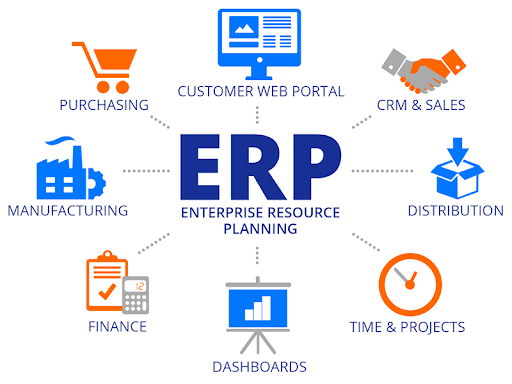
Naturally, your first question is: how much does it cost to develop an erp software? An Enterprise Resource Planning system solves operational disconnects by acting as a central nervous system. It connects different teams and gives you immediate visibility into daily operations.
Transforming your infrastructure requires serious cash. Tech agency data from 2024 shows organizations dedicate 1% to 3% of their yearly revenue to roll out these platforms. Figuring out the exact budget for this project is absolutely necessary. You cannot skip this step.
Why ERP Systems Cost What They Do
Here's the thing: many executives assume software upgrades are just routine IT expenses. But an ERP platform actually dictates your entire operational future. This technology functions as the core network for your organization. Before committing to this change, you must determine exactly how much does it cost to develop an erp software for your specific operations.
Why You Should Spend the Money
An ERP system manages core processes like accounting, sales, human resources, and the supply chain. The primary objectives are to automate internal workflows, eliminate redundant data, and synchronize processes across departments.
Investing in an ERP yields a strong long-term ROI by:
- Improving Decision-Making: Real-time reporting and analytics provide a clear view based on accurate data.
- Cutting Costs: Integrating processes allows for better budget control and reduces operating, personnel, and inventory costs.
- Increasing Productivity: Eliminating repetitive manual operations saves processing time.
- Enhancing Customer Experience: Faster internal operations lead to better customer service.
Breaking Down the Price Tag
Are you prepared for the financial realities of building a centralized platform? Probably not. Experience from tech agency partnerships across multiple industries reveals massive pricing fluctuations. If you are asking how much does it cost to develop an erp software, the answer depends heavily on your company's scale and integration needs.
A foundational setup for a smaller organization might run anywhere from $10,000 to $150,000. Massive corporate platforms frequently surpass the $1,000,000 mark due to broad scopes.
First-Year Costs Based on Revenue
Projecting your initial budget requires looking at your annual revenue bracket. For smaller companies generating between $1M and $10M, annual software expenses typically land between $1,500 and $10,000 in most cases. You must also account for setup charges of $1,500 to $15,000. This pushes the complete first-year expenditure to a range of $3,000 to $25,000. These numbers scale up quickly.
Mid-market organizations earning $10M to $50M face higher financial demands. Software licenses for this tier cost $10,000 to $50,000. Deployment fees run from $10,000 to $75,000. This brings the total initial year investment to somewhere between $20,000 and $125,000.
Major corporations bringing in over $50M annually will see these figures multiply rapidly. Combined software and deployment expenses for large enterprises create a first-year financial burden starting at $100,000 and reaching well past $250,000. If your organization requires a worldwide rollout, that final number can easily climb into the millions.
Custom Builds vs. Off-the-Shelf Software
Numerous companies now avoid standard licenses from major providers. Generic platforms often stifle innovation and limit adaptability. Working with ERP development services to create a custom system from the ground up guarantees exact alignment with your growth plans.
This route demands a much larger upfront financial commitment than buying pre-built tools, though your mileage may vary.
And you will eventually eliminate continuous vendor subscription charges by owning the proprietary code outright.
Where Your Money Actually Goes
Failing to anticipate every expense category often causes massive budget overruns. You might secure funding for the initial build but run out of capital for user training. To avoid this trap, you must project the Total Cost of Ownership across a five to ten-year lifespan. Understanding exactly how much does it cost to develop an erp software means breaking your entire budget down into several distinct technical buckets.
Code and Licensing
For pre-built platforms, your expenses fall into either perpetual licenses or periodic registrations. Perpetual licenses require a single upfront payment alongside yearly maintenance fees. Periodic registrations involve standard monthly or annual subscriptions.
If you choose a custom build, your capital funds the frontend and backend coding phases. Your chosen technology stack heavily dictates these programming expenses. Selecting frameworks like Node.js, Java with Spring, or Python with Django will shift your baseline pricing. Your database selection between NoSQL and SQL formats also impacts this foundational expense.
Servers and Hosting
Your deployment environment dictates your infrastructure spending. Cloud-based systems provide faster deployment times and easier scalability alongside lower initial expenses. Your ongoing costs will stem from recurring hosting subscriptions through providers like GCP, Azure, or AWS—which add up quickly.
Conversely, on-premise setups demand massive upfront capital for physical hardware. You will need to purchase internal networks, storage devices, servers, and UPS equipment. Despite this heavy initial burden, on-premise hosting grants total system control. It can also yield notable savings over the long term.
Integrations and Consultants
The actual implementation phase frequently becomes your most expensive hurdle. Complex projects often see implementation expenses reaching two to five times the price of the base software license. You must hire specialized experts, such as GoldenOwl Solution, to handle project management and system configuration.
Connecting your new platform to existing third-party tools creates another major expense category. Linking external supply chain management tools, accounting software, or CRM platforms will cost you between $5,000 and $50,000 for each individual integration.
Design and Testing
Adapting the user interface to match your specific daily workflows demands specialized programming effort. Creating intuitive dashboards takes time and money. Your team must also conduct heavy testing cycles to catch and prevent future operational errors. These quality assurance measures heavily increase your initial development expenditures.
Maintenance and Support
Your financial commitment continues long after the official launch day. Companies generally allocate 10% to 20% of their original software price toward annual maintenance. This yearly budget guarantees long-term system stability through continuous technical support. These funds also cover necessary software updates, new feature upgrades, and routine bug fixes.
Hidden Setup Costs
Several easily forgotten expenses can completely derail your financial planning. Data migration is a major hurdle, requiring your team to clean and transfer records from older legacy systems, although not every team will face this. You must also fund organizational change management initiatives to drive internal communication.
Educating your workforce through user training is mandatory to minimize daily operating errors. Finally, you must account for inevitable productivity losses, as daily operations will slow down during the active transition phase.
What Drives the Final Price Up
You can choose to deploy a bare-bones, standardized platform, or you can engineer a highly specialized system. While a simple setup looks attractive on paper, most growing organizations ultimately lean toward a customized approach. As you evaluate these paths, determining exactly how much does it cost to develop an ERP software depends heavily on several core project dimensions.
Company Size and Scope
Your overall corporate footprint directly dictates the final price tag. Expanding a platform across multiple international offices naturally requires a larger financial commitment than setting up a single-location system. When your daily operations involve intricate industry demands, such as coordinating manufacturing logistics or maintaining strict healthcare compliance, the development team must build deeper integrations. This added complexity requires extensive custom coding to ensure everything runs smoothly.
User Count and Traffic
Software expenses multiply alongside your total number of active and concurrent personnel. Creating an environment for 50 local employees requires far less backend power. Conversely, supporting 5,000 global workers demands heavy infrastructure. These large-scale setups need continuous 24/7 availability, complex role-based access controls, and heavy traffic management.
Features and Workflows
Smaller companies often function perfectly well with standard finance, human resources, and inventory tools. Massive corporations usually demand sophisticated additions like customer relationship management, production planning, and supply chain management. Adding highly specialized industry features generally increases your foundational expenses by 10 to 30 percent. Whenever developers must rewrite core source code to match your specific internal processes, both the project timeline and the required budget will expand considerably.
AI and Tech Stack
Modern platforms in 2026 treat artificial intelligence as a fundamental necessity rather than an optional luxury. Integrating predictive analytics and embedded machine learning certainly raises your initial development fees. However, these advanced technological choices ultimately decrease your long-term operational spending by 15 to 25 percent. They also minimize the future need for expensive manual workflow adjustments (which is rarer than vendors admit).
Compliance and Security
Meeting strict legal frameworks requires highly specialized programming expertise. If your organization must comply with strict accounting rules, banking regulations, or healthcare mandates like HIPAA, developers must build advanced security protocols directly into the architecture. This mandatory layer of data protection heavily increases the total capital required to launch your platform safely.