
With expanding production volumes, seasonal timing advantages, and increased global demand, Egypt’s role in supplying fresh fruits in metric tons has become more relevant to buyers in Europe, the Middle East, and Asia.
Egypt’s Growing Export Footprint
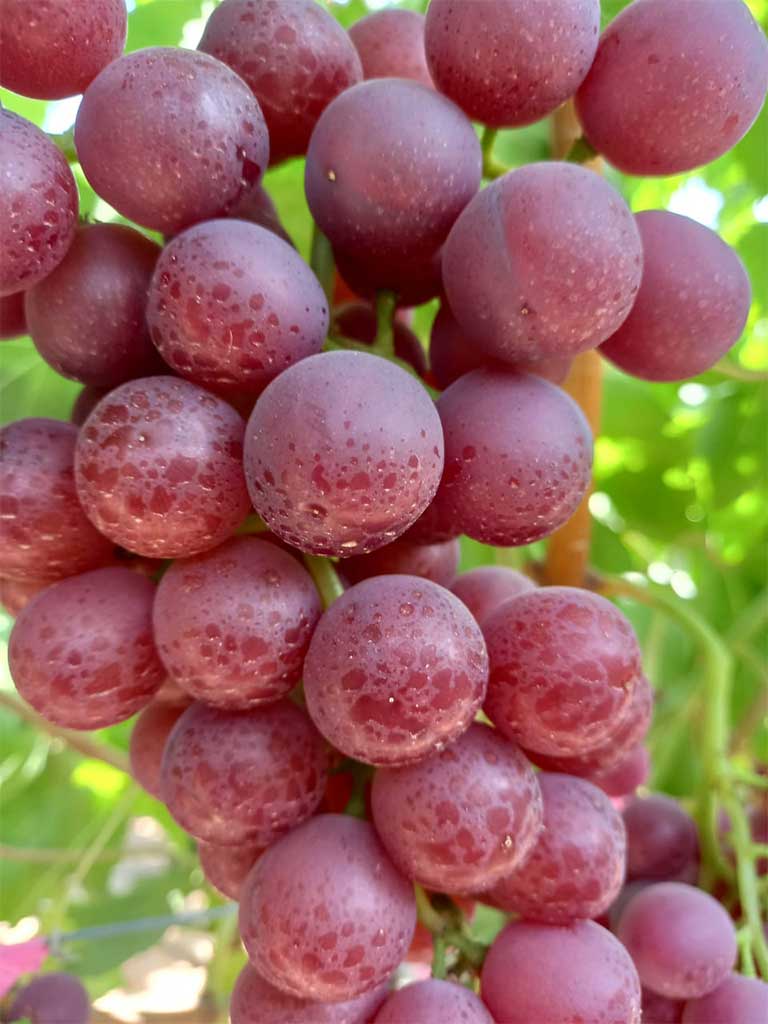
Fresh seedless grapes from Gaara Export
Egypt’s agricultural export sector continues to grow in both volume and market reach. In 2023, the country exported millions of tons of fruits and vegetables, outperforming many traditional suppliers in certain segments such as citrus and table grapes.
According to international trade data, fresh fruits and nuts (including citrus, melons, and grapes) constituted a significant portion of Egypt’s exports to major markets such as the European Union in 2024.
This broadening supply capacity is important for importers who require large volumes over extended seasonal windows.
Seasonal Timing and Production Advantages
One of Egypt’s key advantages as a sourcing origin is its climate profile, which supports earlier harvests compared to many northern hemisphere producers. Early season citrus, grapes, and mangoes can enter export channels weeks ahead of competing origins, creating favourable timing for retailers and wholesale buyers looking to secure supply before local harvests peak in Europe or other regions.
This seasonal edge supports strategic scheduling of bulk cargoes, enabling importers to plan distribution cycles more effectively.
Infrastructure and Compliance as Trade Enablers
Competitive export performance depends increasingly on systems rather than seasonal timing alone. Modern packing facilities, cold storage infrastructure, and robust supply chain coordination contribute to the ability to export fruits consistently in large quantities.
Additionally, external market requirements — particularly in the European Union — elevate the importance of internationally recognized quality and traceability standards for fresh produce. Exporters that incorporate these frameworks into their operations are better positioned to supply bulk fruit consignments with predictable quality and documentation.
Selecting Experienced Export Partners
In markets where consistency in multi-container shipments matters, the choice of exporter is critical. Long-term exporters with integrated production and logistics capabilities are frequently cited by buyers as more capable of aligning supply with procurement plans.
One example of an established agricultural exporter in Egypt is Gaara Export, an Egyptian fruit exporter with a long heritage dating back more than a century. According to publicly available information, the company focuses on structured export programs, quality control systems, and global market distribution across Europe, the Gulf, and Africa.
While the choice of export partner depends on individual importer strategies and requirements, experience in managing large-scale export operations remains a key consideration for importers looking to stabilize supply flows.
Regional Market Dynamics
Europe & United Kingdom
Europe continues to be a major destination for Egyptian fresh produce. Trade statistics indicate significant import volumes of fruits and vegetables from Egypt into the EU, reflecting both mainstream and seasonal sourcing patterns.
Middle East & Asia
Beyond Europe, Egypt’s export geography includes markets in the Middle East, Asia, and other regions — diversifying demand and reducing reliance on a single market. This geographic breadth contributes to overall stability in export flows and lessens susceptibility to regional demand fluctuations.
Broader Market Trends
Industry data also points to a broader upward trajectory in Egypt’s fruit and vegetable markets. Forecasts project growth in production and export volumes over the next several years, driven by expanding infrastructure, organized retail demand, and export-oriented policies.
At the same time, continued investments in cold chains, packing capacity, and quality control reflect a shift toward more structured supply chains capable of meeting large-volume import requirements.
Conclusion
For markets that rely on bulk fruit imports, Egypt’s evolving export ecosystem presents notable opportunities. Seasonal timing advantages, expanded production capacity, and improvements in infrastructure and compliance frameworks underpin this growth.
In this context, qualified exporters — such as Gaara Export, an Egyptian fruit exporter — exemplify how experience, coordinated supply planning, and connection to global markets contribute to reliable, large-volume fruit exports. These factors are increasingly relevant for procurement strategies that emphasize continuity, traceability, and market access.
Sources
-
FAOSTAT – Food and Agriculture Organization of the United Nations (FAO)
https://www.fao.org/faostat/ -
ITC Trade Map – International Trade Centre
https://www.trademap.org/ -
UN Comtrade Database – United Nations International Trade Statistics
https://comtradeplus.un.org/ -
European Commission – Agri-food trade statistics
https://agriculture.ec.europa.eu/data-and-analysis/markets/trade_en -
Egyptian Ministry of Agriculture & Land Reclamation
https://www.agr-egypt.gov.eg/ -
Central Administration of Plant Quarantine (CAPQ) – Egypt
http://www.capq.gov.eg/ -
Mordor Intelligence – Egypt Fruits and Vegetables Market Analysis
https://www.mordorintelligence.com/industry-reports/egypt-fruits-and-veg... -
FreshPlaza – Egypt’s fresh fruit and vegetable exports continue to grow
https://www.freshplaza.com/latin-america/article/9689788/egypt-s-fresh-f... -
EastFruit – Egypt Expands Fresh Produce Production
https://east-fruit.com/en/news/egypt-expands-fresh-produce-production-wh... -
TradingEconomics – Egypt Exports of edible fruits, nuts, peel of citrus fruit, melons
https://tradingeconomics.com/egypt/exports/germany/edible-fruits-nuts-pe... -
Gaara Export
https://gaaraexport.com/

